
Hispanic Heritage Month: Honoring Our Roots, Strengthening Our Future
We believe that stories shape the way people see themselves and each other. Every campaign, partnership, and conversation we’re part of is rooted in the belief that representation matters and that honoring where we come from is essential to moving forward together.
Each year, from September 15 to October 15, the United States celebrates Hispanic Heritage Month, a time dedicated to recognizing the histories, cultures, and contributions of Americans whose ancestors came from Mexico, the Caribbean, Central America, South America, and Spain. The dates are significant: They encompass the independence anniversaries of several Latin American countries, including Costa Rica, El Salvador, Guatemala, Honduras, Nicaragua, Mexico, and Chile.
But more than dates on a calendar, Hispanic Heritage Month is a celebration of identity, one that is both collective and deeply personal. It’s an opportunity to celebrate the communities whose stories, strength, and innovation continue to move our country forward.
This year, our team at SE2 took time to reflect on what this month means and how it connects to the work we do every day.
Elizabet Garcia Hernandez | Public Relations & Community Outreach Specialist
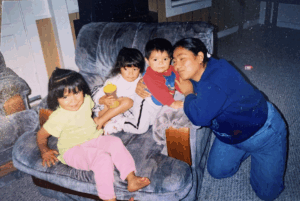
As I think about Hispanic Heritage Month this year, I find myself sitting with a mix of emotions. On one hand, it’s hard to ignore the ways in which our communities continue to face resistance, moments when our contributions aren’t fully seen or valued. But alongside that tension, I feel a deep sense of gratitude. Working at SE2 has given me the opportunity to stay connected to my roots and to uplift the very communities that raised me.
This past year, I’ve had the privilege of helping distribute mini-grants and building partnerships for SE2’s work with the Behavioral Health Administration’s 988 Colorado Mental Health Line marketing campaign. Through that work, I’ve collaborated with incredible community partners who are making a real difference in people’s lives, especially in moments when access to care and understanding truly matter.
I also had the chance to take part in community events across Colorado, including Fiestas Patrias and the Greeley Stampede, events that mean so much to me personally because I grew up in Greeley. Standing there, surrounded by the same kind of energy and pride that shaped my own story, I felt a renewed sense of purpose. It reminded me that representation is not just about visibility; it’s about belonging.
Another meaningful project this year was SE2’s alcohol moderation campaign in the Yampa Valley, where I worked directly with Spanish-speaking community members to gather their stories. Hearing them share their experiences and emotions in their native language was incredibly powerful. It reminded me how essential it is to create space for people to express themselves authentically, to give agency to their voices, not shape them for convenience.
This year has reinforced why I do this work. Despite the challenges, it’s moments like these, standing in community spaces, listening to people’s stories, and seeing them reflected in campaigns that honor their experiences that keep me going.
Willy Chamu | Graphic Designer
As a recent addition to the SE2 team, I feel so honored to be part of such a talented group of people whose values and commitment to positive change are at the forefront of all the work they do. As a recent graduate of MSU Denver, at the start of my career, being part of this team is a huge honor and privilege.
My new role as SE2’s graphic designer is invaluable for helping me stay connected to what’s going on with the diverse communities around me.
Having people within my family and community – whose stories and contributions have impacted not only me, but others whose stories are woven into the history of this country – serves to encourage reflection on how their stories can continue to be told through the work I produce in this role.
As a graphic designer, I am fully aware of the importance of written and visual language within design. With the perspective my diverse background brings, I am able to create visuals that convey narrative, inform and resonate with audiences in ways that go above and beyond simple, written language.
I am grateful for projects like Adelante Connect, where I can look to people within my own community who struggle with language and technology. I see first-hand how limited access to the technological knowledge, and common grasp of the English language, that we take so much for granted make life increasingly difficult for these people in a world that is becoming more and more digital.
Working on deliverables for the Safe Yakima Valley County schools in Washington brings to mind my personal experiences in my local public middle and high school. I consider how I can utilize my background to create items that will leave a lasting impact on these students to make better choices that will positively influence their future.
This position serves as a powerful reminder to appreciate my Latino heritage and unique life experiences, which serve as a wellspring of inspiration and an opportunity to connect with the audiences I intend to help serve.
Alvina Vasquez | Principal
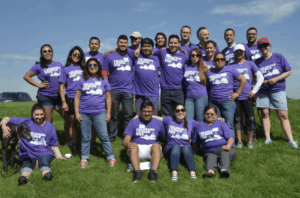
My commitment to Community is rooted in generations of resistance and resilience. The challenges Latino families face today are not new—they are part of a long, ongoing struggle for equity and dignity. My ancestors fought colonialism and oppression; Colorado Civil Rights leaders like Rudy Gonzales, Nita Gonzales, and former State Senator Polly Baca paved the way; and my grandparents and parents stood up to everyday racism. I honor their legacy by dedicating my work to advancing children, women, Latine, and other under-resourced and at-risk communities.
At SE2, our mission is to move people to action through powerful, purpose-driven communication—and that begins with truly listening to the communities we serve and understanding their lived experiences. Through our work in behavioral health, substance use prevention, and public health, we’ve seen how culturally relevant storytelling can break down stigma and build genuine connection.
Language equity, cultural representation, and authentic partnership aren’t seasonal values for us—they’re the foundation of everything we do. Whether we’re collaborating with local nonprofits, uplifting bilingual voices, supporting grassroots organizations, or learning from the wisdom and leadership of community trailblazers like Polly, Nita, and many others, we are grateful to work alongside leaders who continue to shape and strengthen our communities. SE2 remains deeply committed to ensuring that every story we tell reflects the richness, resilience, and diversity of Colorado’s people.
The Celebration Doesn’t End Here
As Hispanic Heritage Month comes to a close, we’re reminded that this celebration doesn’t end here. The spirit of la comunidad—of resilience, pride, and solidarity—continues in every campaign, every partnership, and every story that moves someone to act.
At SE2, we carry that spirit forward. We celebrate the people who make this work possible, the partners who inspire us, and the stories that connect us.
Because honoring heritage isn’t just about looking back. It’s about shaping a future where every community sees itself represented, respected, and heard.


A New Chapter in the Heart of Denver: Our Move to The Sudler
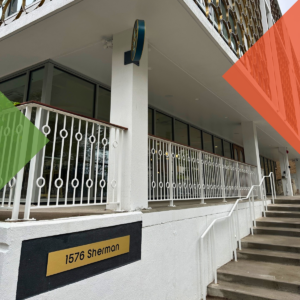
Big news—we’ve officially moved into our new office in The Sudler building, right in the heart of Denver! We’re now just a block from the State Capitol, surrounded by energy, history, and some of the best coffee in Denver.
Why We Chose The Sudler
The Sudler is a beautifully restored mid-century building with big windows, lots of natural light, and cool design details that make it feel both modern and full of character.
It’s the kind of place that sparks creativity—something that’s really important to us.
Being downtown also helps us stay connected.
We’re close to the people and organizations we work with every day, whether that’s in public health, education, or community outreach. It puts us right where we need to be to do our best work: in the mix, face-to-face, and part of what’s happening in our city.
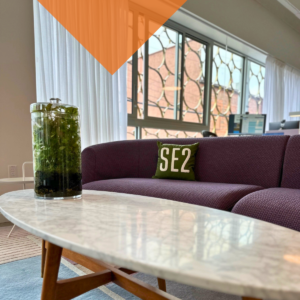
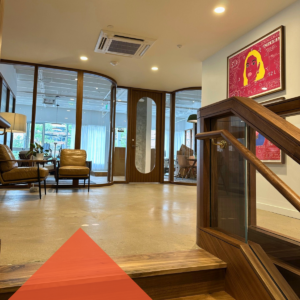

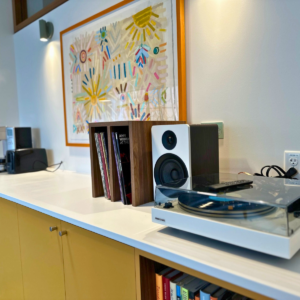
A Moving Experience That Meant Something
We also want to shout out the amazing team that helped us move: The Other Side Movers. This isn’t your typical moving company. They hire people who are rebuilding their lives after time in prison or recovery. And they do an incredible job.
For us, choosing them wasn’t just about getting boxes from point A to point B—it was about supporting a mission we believe in: creating opportunity, building community, and lifting people up.
Come See Us!
We’re proud of our new space and what it represents. It’s more than just an office—it’s a place where ideas can grow, partnerships can thrive, and we can stay grounded in the community we care so much about.
If you’re ever in the neighborhood, come by and say hi. We’d love to show you around.


PowerMapping: Why We Must Double Down on Human Interaction in the AI Age
In recent years, the landscape of communication has undergone a seismic shift, driven by the rise of artificial intelligence (AI) and a notable decline in trust towards legacy news media. As AI technologies become increasingly capable of generating content, the implications for communications professionals are profound and multifaceted.
The Rise of AI in Content Creation
AI has transformed how we produce and consume information. Tools like natural language processing and machine learning enable AI to create articles, reports, and even creative writing with remarkable efficiency and accuracy. This democratization of content creation means that anyone with access to AI can generate high-quality material, blurring the lines between professional journalism and amateur content.
Benefits of AI in Communication
Speed and Efficiency: AI can analyze vast amounts of data and produce content in seconds, allowing for real-time reporting and updates.
Personalization: AI algorithms can tailor content to individual preferences, enhancing user engagement and satisfaction.
Cost-Effectiveness: Organizations can reduce costs associated with content production, reallocating resources to other critical areas.
However, this rapid advancement also raises concerns about quality, authenticity, and the potential for misinformation.
Declining Trust in Legacy Media
As AI-generated content becomes more prevalent, trust in traditional news outlets has waned. Factors contributing to this decline include:
Perceived Bias: Many consumers believe that legacy media outlets have inherent biases, leading to skepticism about their reporting.
Misinformation: The rise of fake news and sensationalism has eroded public confidence in the accuracy of information disseminated by established media.
Alternative Sources: Social media and independent platforms provide alternative narratives, often bypassing traditional gatekeepers and allowing for a wider range of voices.
The above distillation of the challenges facing communicators in today’s rapidly evolving landscape was written in seconds by the free-to-use Microsoft Copilot based on my one-paragraph prompt. I didn’t make a single edit. (It went on, but you get the idea.)
Besides hitting the mark, this AI-generated copy highlights that the talented people at our communications and marketing agency shouldn’t be spending our time creating things that AI can do nearly as well and much, much faster.
Our clients will soon have the keys to the car. They won’t need us to drive them anymore.
Sure, humans will still be needed to proof content, check for accuracy, ensure it’s on message, and refine it (at least the AI prompts, if not the output).
When it comes to creativity, AI is not ready for prime time – as this year’s cringey AI-produced Coke Christmas ad showed – and it’s been shown perpetuate racist stereotypes and bias.
But it’s going to get better and take over more and more roles that once required the human touch.
How can communications and marketing professionals avoid becoming this century’s version of the Luddites, the 19th century textile workers who smashed the mechanized looming frames they knew would make their skills obsolete?
This raises two questions:
- What valuable communications and marketing tasks can AI not do today – or ever?
- What strategies will cut through the fast-rising flood of unreliable, inaccurate content that’s drowning audiences in a sea of junk?
The answer to both questions is the same, and surprisingly simple. We must focus more on what humans have been doing since the dawn of time: communicate in person.
People crave connections and trust, especially in a world where digital interactions are increasingly mediated by algorithms and bots. The election highlighted that the “broadcast” model is dying as people increasingly rely on friends and families for trusted info on pressing issues.
AI can only fake empathy. AI can’t sit across from someone and react naturally and with genuine understanding and concern.
By focusing on human-centered strategies, we can cultivate meaningful relationships with audiences, understanding their unique needs, values, and aspirations by actually getting to know them.
Long before digital networks, societies were built with people networks. People naturally come together and organize to bring solutions to societies’ biggest challenges.
Established relationships and trust power human networks, with influential people or organizations serving as the connectors.
Our community engagement initiatives allow us to tap into the collective wisdom and spirit of the communities we serve, creating campaigns that resonate on a deeper, more personal level, and leverage these organic networks to authentically reach our key audiences where they are.
The trust and loyalty we build through genuine human interactions are irreplaceable and invaluable.
The phone call, the meeting over coffee, the community meeting. Inefficient? Yes. Irreplaceable? Absolutely.
Mapping out how communities are connected, identifying the trusted messengers, authentically energizing these networks, and co-creating solutions with them provides the playbook for creating sustainable behavior and systems change.
Communications 3.0 is really a return to communications 1.0, minus the fax machine.
Relationships are key and they’re developed the old-fashioned way: meaningful connections built on trust, reputation and expertise. In other words, there are no short cuts.
Pick up the phone. Get out of the office. Replace that video conference with an in-person discussion.
That’s the guiding philosophy of SE2 PowerMap™ . We activate community networks to tackle urgent public challenges. Our strength is our relationships with diverse community connectors. We build those, nurture them, and map them. We are partners, united in our belief of people-powered solutions are the future, not AI.
When these people share their insights, credibility and trust, we can achieve the extraordinary.


Meet Elizabet Garcia: A New Voice for Community-Centered Advocacy at SE2
SE2 is excited to introduce Elizabet Garcia (she/her), a dedicated advocate for community-centered change and a powerful new voice on our team. With a career rooted in amplifying underrepresented voices and fostering lasting impact, Elizabet brings a passion for equity and inclusivity that aligns seamlessly with SE2’s mission. Her experience spans leading strategic campaigns and building connections that empower communities, making her a perfect addition as SE2 continues driving meaningful change across Colorado and beyond. Get to know her through these three questions.
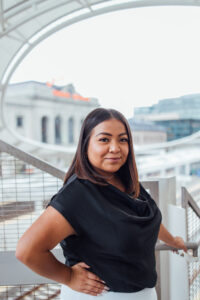
What made you want to focus your career on making change for good through causes and issues?
I’ve always been driven by the idea of creating meaningful, positive change, which has shaped my career focus on advocacy and public service. From leading comprehensive communications strategies with the American Federation of State, County, and Municipal Employees to founding Verbo LLC, where I advised on inclusive community outreach initiatives, my work centers on connecting people to causes that matter. I find fulfillment in amplifying the voices of historically marginalized groups and developing messages that engage diverse communities. Working on campaigns that promote equity and representation fuels my passion for making an impact that lasts and resonates.
Each project, whether addressing urgent political issues like affordable housing, creating community-centered messaging in places all around Colorado, or helping underrepresented voices be heard, has reinforced my understanding that genuine change comes from within communities. My goal has always been to not only address the immediate issues but also to inspire lasting engagement and build pathways for sustainable change.
What do you like to do when you’re not working?
When I’m not working, I stay actively involved in my community as a volunteer on the Colorado Consumer Health Initiative Board of Directors, where I contribute to supporting the work they do in the health equity and advocacy space. I also love spending my downtime traveling to new places, swimming, and getting lost in a good book. Above all, I genuinely value the time I spend with family and friends, whether we’re eating together, exploring new places, or simply catching up.
Where did you grow up and how did your early experiences help shape who you are today?
I grew up in Greeley, Colo., a community with diverse cultural backgrounds that deeply influenced my values and career direction. Growing up in a bilingual household, I was naturally immersed in the diversity of languages and stories that make up our community. This environment sparked my passion for communication and community outreach as I saw how effectively bridging cultural divides can empower people and amplify underrepresented voices.
From a young age, I became involved in civic activities, which taught me the power of collective action and the importance of advocacy. These early experiences, along with the mentorship I received in local organizations such as the Colorado Latino Leadership, Advocacy & Research Organization or CLLARO, shaped my commitment to supporting communities in need. Today, in my work, I draw on these experiences to create impactful messaging and foster relationships that advance positive change.

Leadership in Action: Alvina Vasquez on Political Engagement and Networking
SE2’s newest Principal, Alvina Vasquez brings a wealth of experience and passion for community outreach. She reflects on her journey of professional growth, shares advice on how to make a meaningful impact in today’s political climate, and offers insights on building a strong, supportive network. Whether you’re looking to engage with your community or elevate your career, Alvina’s perspective offers real, actionable advice to help you succeed.
Q: Since joining SE2, what ways have you felt challenged/grown in?
A: I didn’t invent community outreach, but I’ve dedicated my career to professionalizing it. This approach is new to many, and one of the biggest opportunities I’ve encountered is inspiring others to see its significance. It’s immensely rewarding to communicate the importance of building strong relationships and to demonstrate how our efforts create positive, lasting impacts in our communities.
Q: In our current political climate, what advice do you have for folks to get involved and make a difference, outside of just voting? How can people get together? Especially post-election?
A: The easiest way to get started in working in and advancing political messages is meeting people where they are at, listening to their pain points and finding common ground. Hosting themed gatherings to bring awareness to issues that matter is a great way to help. Also not just voting but telling people that you are voting. Social pressure is a great tool to make others make time to vote. Colorado has the safest and most accessible voting process in the country, help a friend out on how to get registered and how to vote.
Q: What’s your advice for building up your network and connections?
A: My advice for building a network is to meet in person, make yourself valuable to others by asking them how you can help them succeed, and do it if it’s within your skill set. We are all trying our best to do our best work, and if you can help others feel good about themselves and the work that they do, your network will grow, and you will also be trusted and sought out.


Change That Lasts: Lessons from SE2’s CEO
In a rapidly changing world, SE2’s Principal and CEO Susan Morrisey sees “change for good” as both a responsibility and a privilege. Reflecting on her team’s legacy, she shares insights on creating lasting impact, connecting authentically with audiences, and the progress and persistent challenges women face in executive roles. Her guidance emphasizes the power of amplifying real voices, embracing community-driven change, and advancing meaningful conversations in every project.
Q: What is the “change for good” SE2 has had a part in that you’re most proud of?
A: If I look for the throughline of our impact over the past 25 years, it’s been generating energy and enthusiasm around issues and stories that might have gone unnoticed. Whether we’re working to change policy, public opinion, or personal behavior, these are the issues that have real impact on people’s lives. Moving forward, our challenge is to support community conversations and priorities – not the other way around. That’s how we get to meaningful, sustainable change.
Q: What’s your biggest piece of advice for copywriting/storytelling?
A: Our role as storytellers is to simply amplify the real, authentic stories people want to tell. Often, we come into it with our idea of what makes a compelling story driving the narrative. If we listen, rather than direct, the results can be surprising and moving.
Q: As a woman in business, especially in an executive role, what challenges do you feel women still today face? What challenges have improved or gotten worse?
A: I think it depends on where women are “in business”. In many areas – including government, nonprofit, and corporate settings – women’s power and influence has continued to grow. But there continues to be a barrier for many top executive roles. I look forward to a time when women aren’t only appreciated for the “soft skills” we bring to the table but are judged fairly for and in positions of power.


Brandon Zelasko on Growth, Technology, and How to Drive Change
Brandon Zelasko, Principal at SE2, combines a love for data and creativity to drive impactful work that changes lives. In this Q&A, Brandon shares insights into his personal growth at SE2, the future of AI in communications, and the campaigns he’s passionate about. From mentoring others to bridging the urban-rural divide, Brandon’s perspective showcases the powerful role of strategic communications in addressing today’s most pressing issues.
Q: What is the biggest way you’ve felt you’ve grown since your first role at SE2 to now?
A: The biggest way I’ve grown at SE2 is through learning how to better support and mentor others in their career journeys, something I’m still working on but find really rewarding. I’ve also started to step back from being in the weeds of the work, creating more space for others to lead. As a result, I have a wider perspective on how the issues we work on are interconnected, which has helped me apply lessons and strategies from one project to others across the agency.
Q: What new technology are you most excited about as a communications/marketing professional?
A: I’m excited about the potential of AI and how it’s going to shape the work we do at our agency in the coming years. I see AI enhancing the value we provide to clients by allowing us to work more efficiently, analyze data with greater precision, and create more personalized, targeted campaigns. While it won’t replace the human insight and creativity that are at the core of what we do, it will give us new tools to optimize our efforts and deliver even better results for the people we serve.
Q: What sort of work/issues would you love to see SE2 tackle more often?
A: I am excited to work on more workforce and alternative learning pathway campaigns, especially as the world continues to evolve and the traditional ways of learning no longer keep pace. We need professional education that helps people stay competitive so they don’t fall behind, ensuring that families and communities thrive. This shift is also key to creating more opportunities for economic growth in rural areas, helping to bridge the urban-rural divide and empower these communities to thrive in today’s economy. I would also be excited to work on more harm reduction public health campaigns because they meet people where they are, offering practical strategies to minimize the negative health, social, and economic consequences of risky behaviors. These campaigns improve public health by focusing on safety, reducing stigma, and encouraging individuals to take incremental steps toward healthier behaviors—without necessarily pressuring them to stop altogether.

Three Big Insights from SE2’s Eric Anderson: Change, Connection, and Fun
SE2’s Principal Eric Anderson has been with the company since the beginning. He is an ex-journalist chancing new communications challenges. Get some of his fresh perspectives and get to know him a little better through these three questions.
Q: In what ways has SE2 shifted in the 25+ years of change-making marketing and communications?
A: From the start we committed to focus exclusively on pressing public issues – not products — and that’s remained a constant. Most of the shifts since then have been evolutionary.
When we started, we still relied on the “sneaker net” (i.e., sharing files between computers by carrying floppy disks). Faxed and hand-delivered media releases were the norm. But the the foundations of success, regardless of the technology, are the same. For example:
- Strong messages are everything.
- Meaningful relationships matter.
- Pay attention to the forest and the trees.
- Find the courage to make bold strokes.
Along with technological advances, we’ve seen the science of behavior change and the best practices for building successful movements become clearer over the years. It’s our job to stay on top of those developments as we innovate.
Q: How do you suggest bringing people together to create change in this polarized election season and beyond?
A: From the start, SE2 existed in a sort of empty space between ideological extremes. I had friends and SE2 colleagues who were politically diverse. When we spent a lot of time together, we learned that we had a lot in common.
Unfortunately, these days fewer opportunities exist in society to interact in person and find this common ground. Social media sniping may provide a dopamine rush, but it can become an addiction that just pushes us further to our corners.
The best advice I have is that we all take the time to get to know people around us, even if that pushes us out of our comfort zones. And we need to engage in person whenever we can!
Q: What’s one way you suggest making work more fun?
A: We’ve always been committed to having fun doing serious work. That means creating a community that offers opportunities for everyone to take part and be themselves. This is less about staff outings, though those can be fun, and more about finding joy in everyday activities.


Alvina Talks Shift: Breaking Barriers: Women's Journeys in the Professional World
SE2’s newest principal, Alvina Vasquez, interviewed SE2 Principal Susan Morrisey in another episode of her podcast, Alvina Talks Shift. They reflected on the challenges they faced, such as harassment and being pigeonholed, both as women and as a Latina in business. Alvina shared her journey from the male-dominated broadcasting industry to working in a women-dominated environment. Susan talked about balancing work and parenting. The women also contemplated the significance of Women’s History Month and stressed the importance of reflecting on its implications in their own lives and experiences.
Begin Transcript:
Alvina Vasquez:
Let’s talk about creating a life and country we are proud of together. Welcome to Alvina Talks Shift. I am your host, Alvina Vasquez.
This is part two of an amazing interview we had last week with Susan Morrisey. We connected after the first episode, and I said that I didn’t think we got to discuss everything that we needed to. Susan has some questions for me too, so let’s kick it off.
Susan, welcome back.
Susan Morrisey:
Thank you. I’m so excited to be working with you every day and I do have some questions for you.
In our first episode together, we talked about what it was like for me coming up in the working world. Now I want to hear what’s it been like for you, coming up as a woman and a Latina in business. What kinds of barriers or obstacles did you encounter?
AV:
I started in broadcasting, which was very male dominated. That’s why the issue of workplace harassment and hostile work environments was so ingrained in me – because that’s what the broadcasting world was like. Very male dominated, very macho. People could say whatever they wanted to you. I mean, I had men telling me they were having dreams about me, very gross stuff that. I just had to deal with it and move on. There wasn’t an HR department where you could go because they were very small stations. There was no one you could complain to.
I feel like women now have so much more voice than they used to. We had to cover up because we didn’t want to be harassed at work. But then I moved into the advocacy world and worked with women almost exclusively. So, it was super interesting to make that switch.
Just like with any leader, you have good ones and bad ones, no matter which gender they are or how they identify. I think it’s given me resiliency and the opportunity to decide, what are the things that are worth fighting for? What are the things I’m going to pick at and what are the things that I just need to let go and move on? And just set those expectations for myself.
I’ve been thinking a lot about leadership. Of course, I was the owner of my company before I became an owner of SE2. But I was thinking about it this weekend because last week I was really sick and really tired, and I was like, okay, I think I need to take some time off. It was because I was wrestling a bit with what I think an owner of a company should be like and act like – and wondering whether I’m living up to that. I feel like that was kind of setting me back, so I needed the weekend to reset and get myself to a place where I am confident in what I’m doing. Stuff was just piling on and I thought, ugh, I just need a breath.
Every new environment gives us new challenges, and we have to know when it’s time to take a break and just reset, so that we can refocus on what needs to get done.
SM:
Absolutely. And, by the way, you are doing just fine, the way you’re acting as an owner of a business. You don’t need to worry about that. There’s no imposter in how you’re perceived, whatsoever.
So, that gives me some insight into some shared experiences that you and I had in terms of coming up as women in business. What’s different, however, is that I was a white woman coming up in business and you’re a Latina. Can you reflect on that experience and how it might have been different for you?
AV:
Yeah, I get pigeonholed a lot – like, I’m only good at Latino stuff, at Latino outreach. That’s why working with the governor’s campaign as the political director for all constituencies was so important to me. It got me out of a box and into other rooms and talking to different people.
Also, I’m a third-generation Latino, so may not know exactly the experiences of an immigrant family. Sometimes, I might not be the right person or have the right experiences. But I know how to engage with those audiences and those constituencies. I’ve learned, over time, how to relate to them and understand and be open to listening to their experiences. But just because I’m Latina doesn’t mean I know the immigrant experience.
I don’t know if we’re given the grace to have multiple life experiences and have multiple generations. We’re kind of like put in a box, like, oh, Latino, immigrant, Spanish speaker. And then there’s the issue of whether you speak Spanish well enough, whether you get enough credit for speaking Spanish. When I went through the Latino Leadership Institute, they talked about language justice in a different way. When my parents moved here, they were told never speak Spanish at home because my brother was stuttering. In fact, what he was doing was translating. So, it was a reverse racism. We lost our language and I had to relearn it. New immigrants come here and they’re like, oh, you don’t know how to speak Spanish, so you get judged on that. It kind of puts you in a weird place. I identify with white community and middle-class family – that stuff. But I also understand how the impacts of all this racism from the past has impacted me, my future and my kids as well.
SM:
Speaking of kids, how is Romero?
AV:
Oh my god, he’s so much fun. What’s interesting about a toddler is that you kind of see their brain expand every day. Every day there’s a new word or you see him make sense of something that didn’t make sense yesterday. It’s pretty amazing to see that experience.
SM:
You’re going through a period right now that’s also similar to what I went through. My kids are in their mid-20s now. Being a working mom, trying to work and, in your case, own a business and be out in the community and having a toddler – that’s a heavy load. How do you balance all that?
AV:
I mean, you don’t. You’re good at some things one day, then other days you’re good at something else. But I’m glad you brought that up because I wanted to talk about when I came to the office last year, when we were still talking and negotiating about the ownership and I had to bring the baby with me. I was on my way to the airport and so I didn’t have anywhere to take him. He just had to come with me. And you said something in that meeting; something like, how amazing is it that you’re a business owner selling your business and your toddler’s here with you.
SM:
Hey, I remember trying to coach my kids’ soccer – being in the field coaching little, little kids – while also getting calls about bills that clients were working on at the Capitol. And I just had to do both. I knew I had to have that moment where I was, you know, being a good mom by taking my turn at coaching soccer. But I also had to keep those other plates spinning.
So, he is welcome anytime that you need to combine those two roles of yours. Because I get it. Been there, done that!
AV:
It’s so exciting because that’s the legacy he’ll have now. Oh my God, I’m getting emotional. That’s the legacy he’s going to have because you all invested in me and I invested in that business. So, I think that’s really exciting. And, you know, he’s adopted, so who knows what the outcomes could’ve been in his life. It could have been anything. And so, thank you for your support.
SM:
Something tells me that his outcomes are going to be good, with you as a mom, as a working mom.
AV:
He’s a good networker. He is always shaking hands. He knows how to work a room.
SM:
Those experiences of combining parenting with working, I think they only add to who you are and how effective you are. It’s tough, I’m not going to lie. It’s tough to keep all the plates spinning, but ultimately it’s a good mix.
AV:
Changing subjects, now that I’m on the SE2 team, what do you think is the future of our work and what we’ve talked about in terms of developing community relationships?
SM:
Doing this kind of work has really changed. I think the way that agencies like ours used to work with communities is that we would come to them pretty late in the process and say, Hey, we’ve developed this campaign. Can you push this out in your community? You know, can you take our work and share it with your community? And that has really shifted. Now we’re making sure that we’re doing research directly with them. We’re testing messages and creative directly with them. We’re getting their input on a strategic level and on a creative level for the campaigns that we’re creating. We can’t just go to them with an ask. It has to be a mutually beneficial dynamic.
And that’s where you come in, to help us stay focused on continuing that evolution and making sure that we’re working with communities early, often, and in an authentic way. Not to check a box, but to really make sure that we’re really hearing their voices and incorporating their perspectives and stories into the work we’re doing.
AV:
So, we’re going to wrap up here in a minute, but this is Women’s History Month, and I made a comment on my Facebook that everybody loved, because I was like, I’m celebrating me. I have this whole support network of people, but I’m the one who made changes. I’m the one who took chances and I’m the one who got these things done. So, when people do these big celebrations, like women’s day, blah, blah, blah, what do you think about that? Is it good? Is it worth it?
SM:
I think the celebration month or day is only meaningful if you reflect on its application in your own life and in your own experience. I don’t know that those days really achieve anything if you don’t take a take a minute to think about it. You know that saying, Think globally, act locally. I think it’s the same thing. Recognize the global celebration going on but think about how to give meaning to it in our own experiences and circles of influence.
AV:
Well, thank you Susan, for another amazing episode of Alvina Talks Shift. We’re going to have lots of conversations. I love our chats. I know we’re the two women partners, but every time I walk away from a conversation with you, I’ve learned something. And I just feel safe, I feel like you’ve got my back. So, thank you for that, Susan. And thank you for joining me on this episode.
SM:
Absolutely. Thanks for having me.
AV:
Thank you for listening to Alvina Talks Shift. Please like, share, and subscribe and as always, engage, empower, evolve. If you like this episode, or if you want more content like this, go to alvinatalksshift.com or wherever you listen to podcasts.

Alvina Talks Shift: Women's Rights, Policy Battles, and Mentorship with Susan Morrisey
SE2’s newest principal, Alvina Vasquez, interviewed SE2 Principal Susan Morrisey in her latest podcast, Alvina Talks Shift. Susan shared her experiences working with the late Congresswoman Pat Schroeder, a champion for the rights of women and families, and reflected on the sometimes-lengthy battles for policy change. She also discussed the importance of commitment to long-term advocacy, challenges and misconceptions faced by women in political and business spaces, and the significant impact of mentorship in her own career.
Begin Transcript:
Alvina Vasquez:
Let’s talk about creating a life and country we’re proud of together. I’m your host, Alvina Vasquez. Welcome to Alvina Talks Shift.
Today I have a very special guest, Susan Morrisey. We’ve been working together for around three years, but now are partners since I sold my business to SE2.
I’m so excited to have you on, Susan, because I feel that you and I have similar backgrounds in the political and nonprofit space. So, I want to explore that a little with you today and where you think the future is for communications, marketing, and PR.
But first, I want to tap into your experience of working with the late Pat Schroeder, who was given credit for mentoring a lot of young people when she was in Congress. That was a time when very high-profile things were happening that really changed the trajectory of women in the workplace. Like the case involving Clarence Thomas: We learned about hostile work environments and all these new terms that changed how women were interacting and interfacing in professional settings.
Susan Morrisey:
Yes, it was an interesting time for women and in my own career. There were a lot of high-profile issues affecting women and families. Pat had been working on the Family and Medical Leave Act at that point for many years, and it finally passed – groundbreaking legislation that made sure that people didn’t have to choose between going to work and taking care of important family needs, like the serious illness or death of a loved one, or the birth or adoption of a child.
So, there were some pivotal as well as some negative things happening with respect to women. Sexual assaults in the military became a very high-profile issue. As you mentioned, Clarence Thomas and the treatment of Anita Hill when she testified before Congress, and the Violence Against Women Act. Pat was that champion who was unafraid to take on some of these issues, whether it was defending women or working to advance the rights of women, including taking care of their families. She never shied away from these issues and was a champion until the end.
AV:
And just to highlight how long these fights take, in Colorado paid family leave was only passed in 2020, just four years ago. That expands the rights for workers to take time off for, like you said, death, family illness, adoption in addition to having a child or even taking on family children. So that’s how long it takes to win some of these battles.
SM:
Yes, and I think advocates, including those who are working on behalf of women and family issues, have to be committed to the long haul. When I think about some of the women I was fortunate to work with on these issues when I was working with Schroeder, many of them are still doing that same work today. Childcare has taken on a whole new level of importance in the collective conversation now, especially since COVID happened, and there’s just much more attention being given to that issue. But I remember working with Anna Jo Haynes, who was a fierce and relentless advocate for quality childcare 40 years ago. So, these things do take a long time and you might be looking for incremental change at a policy level year after year. You just have to stay committed to the fight.
AV:
It’s interesting that you bring up Anna Jo, because she is a huge influential person in our community. I think she’s credited with so many big wins for children and education. So, I’m glad you brought that up because it makes me think about the impact of that generation of women leaders, and how we can take those stories to younger women so that they can carry on the torch.
SM:
Yes, I have a daughter who just turned 27, so I get to interact with the young feminists of today – and they do use the word “feminist”. For some time that term carried sort of a negative connotation. But young women today do care about important issues, whether they’re issues that affect women specifically or not. Issues like abortion rights are very important to young women and they may not have fully appreciated, 10 years ago in their lives, the magnitude of some policy decisions being made – in Congress, at the state capitol, or in the courts. As they come into adulthood, however, I think they really get it.
What I would tell young women today that are thinking about how they can become involved in community issues is that you have to stay committed to that long game. Their lives change so dramatically, from the time they go from being children to teens to young adults. The idea of working on an issue for years might seem daunting to young people, in a world where everything around them, in the media and their own lives, changes so quickly. But it can take years or even decades to really change an issue. So, staying committed over the long term – being unafraid to say what you mean and mean what you say, and not being afraid to be called a feminist or somebody who is loud and really using their voice – that’s what our voices are for.
AV:
Speaking of longevity, you’ve been with SE2 for 25 years, right? You all have been around changing lives for 25 years! What made you switch from working on policy issues to being more on the marketing/ communication side of things?
SM:
Well, you’re right: We have been doing this work for 25 years. I’ve been with SE2 for about 23 years, and it really was a seamless transition for me. Working for Pat Schroeder, I got to understand the power and influence that communications can have on important issues. So, I was just able to move pretty seamlessly into the work that we’re doing today because the common thread is talking about important issues. However you’re doing that, whether it’s through media, or through in the work that you do, Alvina, with community outreach – if you’re doing something that you really care about, that transition seems easy. It may not have seemed easy at the time, but when I look back, it really was easy because I was doing something that I loved.
AV:
What were some of the challenges or differences between working in the political space and the business space, especially as a woman?
SM:
There are many more women in policy work and politics today than when we were younger, so that has been interesting to watch. What is the same is that women who really use their voice and are unapologetic about saying and standing up for what they believe are still called “shrill” or even the B word. Women even today are still called those things if they’re very fierce. So, while there are more women in that space, some of the criticisms continue to be the same.
I do think there is a balance that you have to strike when you are a woman in business – between bringing those skills and attributes that are really a natural to women, like hearing a room and mediating differences, with digging in and really advocating for what you believe and being tough. Because in many respects, the business world continues to be a man’s world, and in my experience, men are not necessarily going to wait for you to advocate for what you believe. You have to get out there and do it yourself.
AV:
So, in our conversations, you’ve mentioned to me that you were part of a cohort that provided support to business leaders like yourself. Let’s talk about mentorship and how mentorship never ends. I’ve talked about this with other folks as well and think that at all levels of our career, we should always be looking around for those kinds of support. When have you done that during your career and what was most impactful about those experiences?
SM:
One of the most important mentors I ever had was my mother. Before she passed away five years ago, my mom had her own business. She was a consultant, and I did everything in her office growing up and as a teenager. I traveled with her and would see her just being a woman in business. So, being around other women in business, I think, is important. Whether you call it an official mentorship or not, I learned so much from watching. It was a mentorship that I didn’t really ask for, but inadvertently received and it had probably the most profound influence on my life as a woman in business. But I’ve had other important mentors that are men. I have learned a great deal from our partner, Eric Anderson, who I’ve worked with now for almost 25 years, and have gained so much from those relationships with male mentors as well.
AV:
It’s almost like when you’re in these spaces, you just have to absorb what’s happening around you and just be aware of decisions that people are making, listen to how they’re interacting with the client, and just pick up on those little things. Also, recognizing we’re not perfect and we’re all just trying to do our best, at the end of the day.
What do you do when you have a bad day or if something goes wrong? How do you recover from that?
SM:
Well, I want to come back to that in a second. But before I forget it, I want to follow up on something you said in terms of the little things that you pick up by just being with someone, observing them as they do their work. I think a real, very significant change occurred with COVID and everything that is still with us in the business world post-COVID. I believe young people in business today are at a disadvantage because they’re not working in an office with people who have been doing their work longer than them. Not being able to collaborate and work around people in person, I believe, is impacting people in business today. I don’t know if we’ve fully seen the effects of that.
And then back to your question about what I do when I am having a bad day. I am not going to lie: I have had many bad days in my career – days where I had to go get in my car and drive around because I thought I was going to cry at work. I’ve had those experiences. Sometimes just a change of location helps. And talking things through with others, whether it’s coworkers or other people, not even coworkers, can help me get through some tough experiences.
And lastly, the thing that I think is just the greatest gift to all of us is that we live in Colorado. So, just getting outside: It does wonders when you’re having a bad moment. Go for a walk. It’ll change your outlook on the day.
AV:
Yeah, I feel like we should all take our jobs and ourselves seriously, but never so seriously that the rest of the day is going wrong because we’re unable to recover. We’re obviously all trying our best. If we fail at something, in the big scheme of things it’s not going to have a huge impact. And we can make somebody else’s day better by just moving through it.
I had a speech coach that told me I cry a lot. I’m a crier. She said, “If you ever are crying in a speech, just keep talking. That’s the only way for the crying to go away.” I feel like that’s a good lesson for life: Just keep going, keep talking, and try to get through it until it goes to the back of your mind and you’re able to recover and get back to doing whatever you need it to get done that day.
SM:
Absolutely. Whatever terrible thing happened today, whether it was your responsibility or not, in the scheme of things, you’re right: It’s not going to be a big deal when you look back on it.
AV:
I feel like it’s like the rear-view mirror thing. Things in the rear might look closer than they appear, but those things are way back. Just move on.
Well, we’re running out of time, but I wanted to talk a little bit about what do you do for fun. I see you in the office a lot and we’ve done business meetings together, but I want to know more about you. What do you do when you’re just having a day off?
SM:
I have a horse, and it is the thing that just makes me so happy. I get outdoors a lot and try to be active, whether it’s walking or skiing or going up to the mountains. Whatever I can do to be outside is energizing for me.
AV:
Well, Susan, I really appreciate it this time. Thank you so much for taking a chance – for bringing me into the fold and making me a part of SE2. It’s a huge opportunity and I’m so excited about all the things that we can do together.
I remember the first time we talked on the phone: I hung up and said to a coworker of mine, “This is going to be a big deal.” I am so glad this came to fruition and now I’m part of the SE2 team.
SM:
Yes, absolutely. You are bringing a whole new perspective and vitality and network to the work that we do, and I’m so excited.
AV:
Thank you, Susan.
Now concludes another great episode of Alvina Talks Shift. Thank you for watching. Please like, share, and subscribe. And, as always, engage, empower, and evolve.
If you like this episode or if you want more content like this, go to alvinatalksshift.com or wherever you listen to podcasts.
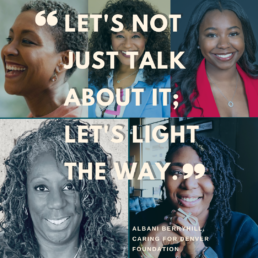
Community Connection: Colorado Black Voices in Focus
In recent years there’s been a fitting shift in communications towards more directly engaging communities. However, there is still a lot more work to do engaging more authentically and deliberately with diverse communities, particularly the vibrant and small yet mighty Black Coloradan community.
How can we engage this community, and why is it crucial? We interviewed a diverse group of Black communication professionals in Colorado who offered their perspectives on how uplifting Black narratives fuels transformative change.
Why is it crucial to actively engage with communities, especially the Black community?
Albani Berryhill, Communications Partner at Caring for Denver Foundation: Actively engaging is not just a checkbox; it’s the heartbeat of progress. Ensuring that diverse voices are heard, embraced and represented is crucial for fostering positive change. By not immersing ourselves in the rich tapestry of the Black community, we’re missing out on key voices and stifling the true potential of our work. It’s about embracing the multitude of beautiful, unique, and nuanced experiences within the Black community. We have to meet the Black community where we are, collaborate authentically, and recognize that together, our strength knows no bounds.
Dianne Myles, CEO/Executive Producer at Dope Mom Life: It allows for establishing genuine relationships. Engaging in a culturally responsive and respectful manner demonstrates that the work being done is not performative. I’ll never avoid this conversation; authentic engagement should be the standard, not the rule. Organizations must demonstrate that their efforts are not just for appearance or to check a box but because they genuinely care. The authenticity of the relationship, or lack thereof, will always be apparent.
Sylvia Lambe, CEO at Lambe PR: Actively engaging with Black communities is about building and sustaining connection, understanding, and trust. As humans, we value authentic representations of ourselves. That is why it is important to authentically thread diversity, equity, and inclusion into communications and brand stories to reflect the Black experience in meaningful ways.
In one sentence, can you tell us why communications professionals should prioritize authentic community engagement?
Albani: Neglecting authentic community engagement is a disservice to you, your efforts, and the community; it negates the very essence of communication, denying both yourself and the community the transformative power of genuine connection that ensures active alignment with community needs and fuels positive change.
Sylvia: It fosters trust, ensures relevance, and amplifies diverse voices, ultimately leading to more impactful and meaningful connections between brands and their audiences.
Tasha Jones, CEO/Founder at LV Jones Consulting: It ensures that our communications resonate deeply, reflect diverse perspectives, and are backed by metrics that prove a commitment to the Black community.
Benny Samuels, President at AYA Foundation: The only way to reach people, facilitate behavior change or action is to be authentic — it has to mean something to the communicator for him/her/they to be able to make it mean something for others.
How are you uplifting Black voices in your communications and/or creative work?
Albani: In my role, I connect Black peers with resources, identify funding opportunities for Black organizations, and ensure Black voices shape grant-making decisions. I‘m dedicated to elevating Black voices in every facet of our work, recognizing their essential contribution to our community.
Benny: We tell stories that emphasize people’s brilliance and their uniqueness in this world.
Dianne: I’m a Black woman in media; we make up less than 4% of the media industry. Having my voice at the table will always change our community’s narratives and how we are represented.
Sylvia: Actively selecting clients whose core missions and activities celebrate, liberate, and engage the African American community, ensuring that their stories, perspectives, and contributions are authentically represented and respectfully showcased. We amplify the voices of the Black LGBTQIA2+ community, honor Black resilience and creativity, promote a deeper understanding of Black history and support initiatives aimed at addressing systemic oppression, actively empowering and representing Black voices in our communications efforts.
Tasha: I see myself as a connector. A bringer together of ideas, places, and people in my communications and creative work, I prioritize amplifying Black voices by actively seeking out Black creatives who can lend their expertise to the projects I’m leading. I set out to elevate diverse narratives, perspectives, and experiences in spaces where Black voices must be heard. I’ll do whatever is within my ability to shine a light on Black excellence.
What can the communications/creative spaces (or more specifically comms for change) do better for the Black community?
Benny: Focus on their brilliance, on their uniqueness, and their backstories. Make the story meaningful, find the person or organization’s essence. Make the stories accessible – people want to and enjoy reading them.
Tasha: The more comms reflects a true interest in supporting and uplifting the Black community, the more people in the community are going to know about it. And consider this—Black consumer spending hit $910 billion in 2019 and is projected to skyrocket to $1.7 trillion in less than a decade. Ignoring the influential role of the Black community is a surefire way to lose trust. Put another way, Black culture is often replicated by mainstream audiences. Preserving individuality within the culture is what drives innovation within the Black community. When creatives aspire to replicate and repurpose content from Black trendsetters, it’s imperative to give credit where credit is due. Acknowledge the originators of the innovative idea or trend; otherwise, it is another case of cultural appropriation.
Sylvia: Authentic representation, genuine partnerships, and economic empowerment are vital for uplifting the Black community. This involves prioritizing platforms for Black voices, investing in cultural competency training, supporting Black-owned businesses, and dismantling stereotypes through positive representation. Transparency, accountability, and ongoing education further drive progress. By prioritizing these actions, the communications and creative sectors can contribute to a more inclusive and equitable society where Black voices are truly valued and heard.
Dianne: Hire people who look like the people you want to engage with and pay them what they are worth! Have those same people in leadership positions and pay them! Don’t expect them to be the voice for their entire community. We are not a monolith. Authentic cultural engagement should be everyone’s responsibility.
Albani: Continuous support, amplification, and intentional listening are key. Let’s not just talk about it; let’s light the way. We have to actively seek and endorse Black businesses and creatives. Keep giving Black voices a platform, not out of obligation, but because it’s an imperative necessity. Continue striving for a cultural shift where bettering marginalized communities moves beyond a mission or DEI efforts as a “trend” but ensures that such initiatives are ingrained inherently and embedded in the very fabric of what we do.
In our work connecting authentically with communities is no longer just a nice-to-have—it’s absolutely essential. When we keep it real, lift the diverse voices we hope to engage, and truly listen. We’re not just talking about change; we’re making it happen. When we continue to weave stories that reflect the beauty and complexity of our communities, we ensure every voice gets a chance to be heard.
Learn more about these Community Leaders.
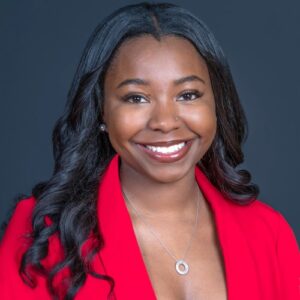 Albani Berryhill: Albani Berryhill serves as the Communications Partner at Caring for Denver Foundation, which works to better mental health and substance misuse outcomes in the Denver community. Hailing from Villa Rica, Ga., she earned her undergraduate degree in Communications Studies with a minor in Spanish from Georgia Southern University. Recently, she attained her Master’s in Strategic Communication from the University of Denver. During her time at the University of Denver, Albani served as a Teaching Assistant in the Media, Film, and Journalism Studies Department and completed internships with the Women’s Foundation of Colorado and Colorado Photographic Arts Center, specializing in digital marketing and social media management.
From her high school days onwards, Albani has been actively involved in community service, dedicating her time to youth coaching, mentoring, and tutoring. Her passion extends to mental health, wellness, and recovery, reflecting in her commitment to making a positive impact on the world and those around her each day.
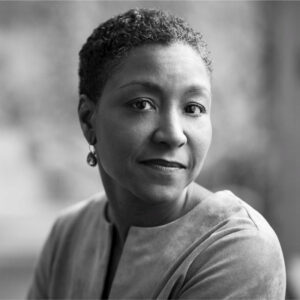
Benny Samuels: Benny Samuels is a seasoned multicultural, multi-lingual leader in health, human service, and social change. Presently, she serves as President of AYA Foundation, Colorado’s first Black-serving community foundation.
In her 35-year career, she has led transformational programs that have resulted in increased access, equity, voice, and power (in the form of self-sufficiency) for children, families, and communities, with an intentional emphasis on supporting communities of color and those living in poverty and furthest from opportunity across Colorado and nationally. Accomplishments in her career include the Statewide Colorado Family Planning Project, which reduced unintended pregnancies in Colorado by 40% in four years. Benny also implemented the W.K. Kellogg Foundation multi-million-dollar grant investment and flagship national demonstration project, Community Voices, enrolling thousands of children in the Child Health Plan Plus and uninsured adults into Medicaid and the Colorado Indigent Care Program.
More recently, Benny served as the chief marketing officer and chief operating officer for Nurse-Family Partnership, where she led the operations of a $56 million investment to scale the model by making it accessible to thousands of first-time mothers living in poverty through a national, cultural– and age-responsive marketing campaign and business development strategy.
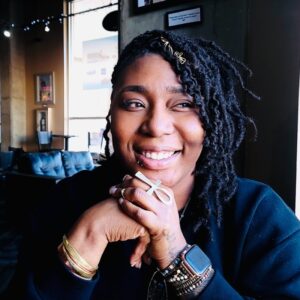
Dianne Myles : Dianne Myles is the CEO of Dope Mom Life. Dianne found her passion for storytelling and community. Her team fulfills the company’s mission daily to tell authentic, impactful stories that shift viewers’ perspectives and garner engagement. Dianne’s life experiences have given her a unique opportunity to be a powerful messenger and connector. Dianne prioritizes spending time with her two adult children, DJ and Tiara, who attend CU Denver, as they are her world. She also spends countless hours volunteering for organizations and serving on boards. Dianne is also a celebrated business leader in the community, having won several awards, including a Heartland Emmy.
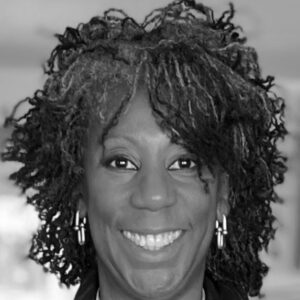
Sylvia Lambe: Sylvia Lambe, the CEO of Lambe PR, is a public relations expert and an accomplished BBC journalist with an insightful skill for impactful storytelling. Her rich background in media and communications, coupled with her award-winning tenure as a radio producer in London, has equipped her with a unique perspective on driving meaningful change through tactical messaging. Sylvia is recognized in Denver, for her dedication to amplifying marginalized voices and her commitment to integrity in journalistic storytelling.
At Lambe PR, Sylvia leads comprehensive media and marketing campaigns for diverse nonprofit and public sector organizations, consistently delivering impactful content and media coverage to engage and inform communities. Her career highlights include pioneering brand awareness strategies for organizations like Black Pride Colorado and Juneteenth Music Festival.

Tasha Jones: Tasha Jones champions the development of integrative marketing strategies meticulously tailored to amplify the significance of diversity, equity, inclusion, and belonging. With an unyielding commitment to storytelling through an inclusive perspective, she brings forth the power of representation by embracing the tapestry of lived experiences and voices from a myriad of identities.
In addition to her vast marketing experience, Tasha has carved a niche as a distinguished executive coach, empowering leaders to navigate their professional journeys with clarity and conviction. She has masterminded an executive session titled “Boldly Forward: Leading with Impact.” This immersive experience is designed to guide participants in charting their imminent career milestones, employing what she refers to as the “Focus Four Principles.” These principles, ingeniously extrapolated from corporate fiscal strategies, serve as a compass to align individual aspirations with organizational goals.


Three Questions with Alvina Vasquez, SE2’s Newest Principal and a Veteran Engagement Strategist
Q: What issues in our community ignite your inner fire, and how do you channel that passion into impactful action?
Alvina Vasquez: I strongly believe that making a genuine impact on people’s lives is more than just addressing specific issues. It’s about providing individuals and families with a real alternative to the societal systems that may not meet their needs.
There are countless tools and resources available to support individuals and families, but many people don’t take advantage of them because they don’t think they apply to their situation. I enjoy finding areas where we can improve and bridge those gaps. Supporting our community leaders and services is crucial, but it’s equally important to challenge the system and ensure we serve individuals and families in Colorado and beyond to the best of our ability.
 Q: What excites you about joining forces to tackle community challenges? What unique blend of perspectives do you imagine creating together?
Alvina: Joining forces with a larger team and utilizing the right tools can significantly enhance your abilities. As a natural team player, I thrive on collaborating with others. When I first experienced working with SE2 in 2021, I immediately recognized its unique qualities. We share the same values and a deep passion for making a positive impact on the world.
My goal is to gain a deeper understanding of how major government projects are initiated and ensure that the services provided are truly beneficial. I aspire to be a catalyst within the SE2 team, expanding our network of stakeholders, strengthening our grassroots outreach, and consistently delivering creative, thoughtful, and impactful work that leaves a lasting influence on our country.
Q: When the clock strikes free time, what passion projects captivate your energy?
Alvina: I love hosting my podcast, Alvina Talks Shift.
With my background in broadcast media, radio has always been a passion of mine. So, I took the leap last year and started my own podcast.
The show dives into the shifts that occur in our lives, both ones we can control and ones we can’t. We cover everything from personal stories and transformations to important political and policy changes that affect our communities. It’s been so much fun!

A quarter century ago, Eric Sondermann helped plant the seeds of SE2 today
In the mid-1990s I was adrift.
A child and sibling of newspaper reporters, all I had ever wanted to do was become one too.
And then, after a half dozen years of journalism in Washington, Hong Kong and Denver, I hit a wall.
My gut, literally a knot in my stomach, told me I was done with newspapers.
But I had no idea what was next. I realized journalism wasn’t how I’d make my mark on the world, but I didn’t know what else I could do.
So, I called Eric Sondermann.
I met Sondermann when I was a political reporter. I came to appreciate his straightforward, spin-free commentary.
Sondermann was (and remains) a political iconoclast.
He grew up as a Democrat but increasingly felt uncomfortable with that party’s orthodoxy. He found common cause with free-market Republicans but had no use for right-wing social dogma.
I was a political and policy junkie, but I, too, didn’t feel completely comfortable in one camp or the other. As a political reporter, I had effortlessly moved back and forth across the aisle – finding thoughtful voices among both Democrats and Republicans – and I didn’t see why I should have to choose sides.
I also was impressed that, back in the day when most political consultants happily cashed checks from Big Tobacco, Sondermann worked only on the scrappy and underfunded side of anti-tobacco rebels. (We continue to fight the tobacco industry today.)
I was hungry and ready to learn, and Sondermann let me learn by his side, initially as a sort of apprentice and then quickly as a business partner, when we co-founded SE2 25 years ago.
Although Sondermann stepped away from the agency in 2014, we carry lessons I learned from him.
Here are three:
- The customer is not always right. Always tell clients the truth, even when they don’t want to hear it.
- Focus on the bold strokes. While it’s easy to become preoccupied with tasks and to-do lists, we must focus on the big strategies that will make a lasting impact.
- Stick to your values. It’s easy to chase the money or go with the flow, but all we have in the end is our reputation and credibility.
Sondermann remains engaged in the community and as insightful as always in his commentary, which includes a regular column in Colorado Politics and the Gazette newspapers and the Colorado Inside Out panel on PBS12.
He’s a voracious reader and deep thinker who loves ideas. I don’t always agree with him, but I appreciate the intellectual rigor in his takes on current events.
Thanks, Eric Sondermann, for helping to set me – and SE2 – on the journey that we continue today. You’ve helped us all make a positive impact on some of the most pressing issues of our time.

PowerMap Ltd. and Alvina Vasquez join SE2, elevating the agency’s capacity to create positive change through communications, marketing and community engagement
DENVER — Alvina Vasquez and her company PowerMap Ltd. have become part of SE2, combining expertise and experience as the Denver-based agency looks forward to its next 25 years of creating positive change around pressing public issues.
Vasquez has joined Susan Morrisey, Brandon Zelasko, and Eric Anderson as a principal and shareholder of SE2, a 16-person integrated marketing and communications agency focused exclusively on pressing public issues.
Vasquez founded PowerMap Ltd. in 2019 with the mission to make Colorado “a place where every person can succeed and every community can thrive.” That mission aligns with SE2’s focus on creating Perpetual Movements: Change for Good®.
“Alvina and SE2 have collaborated for years on impactful campaigns to support healthy and successful communities. She’s established herself as a visionary leader in the field. We know that we will drive even more positive change by fully integrating our talents and expertise,” said Morrisey, SE2’s CEO.
“Our shared expertise in communications, policy, media and marketing is enhanced by Alvina’s proven leadership on community engagement, which will continue to become a growing element of SE2’s strategy for creating positive change,” Morrisey added.
“I am absolutely thrilled to join the team at SE2,” Vasquez said. “This incredible opportunity allows me to build on the impactful work I’ve been fortunate enough to do for my amazing clients for the past five years. It is a true honor to be recognized and valued, and to have the chance to become a leader in an organization that shares my commitment to informing and supporting communities across the state and beyond.”
“Our shared community engagement philosophy recognizes that effective movements require pushing power out to diverse community leaders and organizations. They know their audiences best and bring their credibility and trust to important causes. Key to this success is effectively engaging with ethnically and racially diverse communities, and Alvina will further elevate our commitment to and expertise in this area,” Zelasko added.
Vasquez is a tested and respected community leader and political strategist. In 2018, she served as political director on Jared Polis’s gubernatorial campaign, where she was responsible for building a statewide network of influential leaders and supporters that helped power Polis to his first term as Colorado governor. She also served as senior vice president in the Colorado office of Strategies 360, a public affairs firm, where she led coalition-building and messaging efforts on a variety of local and national initiatives.
“Alvina’s deep roots in Colorado ensure that she can connect with communities across the state, from frontier to rural to suburban to urban, with a wide network of established contacts in every corner of Colorado,” Anderson said. “We also will apply her proven community engagement strategies far beyond Colorado’s borders.”
Vasquez also brings to the table more than 20 years of experience in Spanish-language and general-market broadcasting, working with many of Colorado’s leading editors and reporters, with whom she maintains close ties.
Vasquez has been recognized as one of Denver’s 40 Under 40. She serves on various organizational boards focused on education, equality, and civic engagement. She is a trustee at Western Colorado University and a fellow at the Latino Leadership Institute Executive Program at the Daniels College of Business.
Since its inception in 1998, SE2 has focused exclusively on creating positive change on important public issues in Colorado and nationally. This includes health, the environment, education, housing, early childhood, substance use, economic empowerment, energy, and other pressing issues.
As SE2 marks its 25th anniversary, this announcement reflects the next step in a measured and sustained growth strategy that aims to expand and enhance the services SE2 offers existing and new clients to broaden its positive impact and build on its legacy.

SE2 Marks 25th Year of Challenging the Status Quo to Drive Positive Change

Think for a moment about tobacco.
For the companies that profit from it, it’s quite possibly the perfect product.
Tobacco quickly makes its customers physically dependent – literally addicted to the product.
There’s only one catch: Tobacco kills about half of these customers.
To Big Tobacco, this was not a moral dilemma but a solvable problem: It would create “replacement smokers” by hooking young people.
Putting aside the question of how tobacco executives can sleep at night, this insight suddenly explains why the tobacco industry creates flavored products and youth-oriented marketing campaigns that appeal to kids.
Immoral? Yes. But decades ago, it wasn’t yet a big scandal.
Big Tobacco hired armies of advertising agencies, PR firms, and lobbyists to prop up its profits and give it mainstream legitimacy.
Back then, tobacco companies would pay generous retainers just to “park” firms. It was easy money: You didn’t have to do much besides agree not to derail its gravy train.
This coincided with the genesis of SE2. While many of our competitors happily cashed Big Tobacco checks, we chose the other path — working to stop the deadly toll of tobacco.
In 1998, we launched SE2 as a marketing and communications agency focused exclusively on important public issues like tobacco.
As we mark our 25th anniversary, we still take on the evolving threat of tobacco.
Now, we’re also addressing emerging threats like fentanyl, which grew out of predatory marketing by opioid manufacturers that seemed very familiar to those of us who had analyzed the Big Tobacco playbook.
We’re also promoting mental health for teens, strong starts for toddlers, affordable housing, health care access, education, immunization, and an array of other vital causes.
Our team steadily grew and diversified, now encompassing 15 full-time employees. We’ve occupied five different offices plus a pandemic-caused virtual phase. We’ve expanded our reach across the country.
We increasingly balanced our focus on using communications to make systems change with the principles of individual behavior change and positive social norms. Together, these three pillars create a sustained virtuous cycle that we call Perpetual Movements: Change for Good®. In this model we’ve refined over decades, each step creates momentum for the next.
We’ve had the privilege of collaborating with national experts in public health, social psychology and medicine, building their science-based strategies into our work.
Our work is also informed by the lived experiences of our staff and advisors as we elevate their voices. Their diversity encompasses age, race, ethnicity, country of origin, gender identity, sexual orientation and education. When we view challenging issues from their varying perspectives, we all see a more complete picture and can craft more comprehensive solutions.
No matter what issues we embrace, we bring a mindset we learned while taking on Big Tobacco.
We know that change requires that we challenge conventional thinking and disrupt the status quo.
That philosophy became our tagline: Challengers Creating Change®.
Over our 25th year, we’ll amplify the voices of our staff who will share how they challenge conventions to create change.
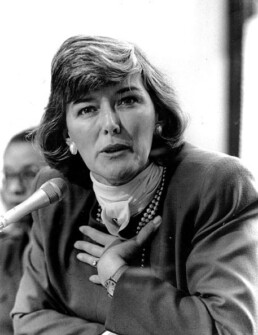
Remembering Pat Schroeder: Champion for My Family and Yours
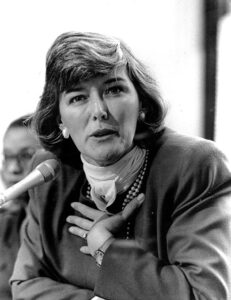
When former Congresswoman Pat Schroeder passed away last month, Colorado and the nation lost one of our most influential champions of women’s rights. She was also a fierce advocate for the needs of American families.
Much has been written about Schroeder’s work spearheading groundbreaking legislation to support families and advance the rights of women. When she started her first term in 1973, there were just 16 women in Congress. Every voice mattered – a lot – and hers was loud and passionate.
Over the next 24 years, Schroeder sponsored legislation to protect pregnant women at work, advance equitable treatment of women in the military, and increase protections for victims of domestic violence. She was relentless in her support of the Family and Medical Leave Act, which took nearly a decade to pass.
Over many years and since her death, I have reflected on the impact Schroeder had on my life and career. I had the honor of serving as a congressional aide in her Denver district office for five years, supporting her work on women, children, and family issues.
Those were pivotal years in my life and career. I worked for Pat when I had my first child, now 28. She made sure I had the time and support I needed as a new mom and working mother.
It was also when I found my passion and commitment to working on important and pressing issues.
Through experience and observation, I learned a great deal from Pat about communications strategy and practice. She had a keen mind, a quick wit, and was a talented orator.
Staff would labor over talking points for her speeches. She would then jot a couple of bullets on a napkin, take to the podium, and talk extemporaneously for an hour, laser-focused on the most important issues and messages.
The media loved her because she always brought a compelling story, delivered with memorable quips.
She referred to then-President Ronald Reagan as the “Teflon president” to describe how it seemed no controversies stuck to him. (While the controversies didn’t stick, her description of Reagan did, and was often repeated.)
When asked how she could be a mother and serve in Congress, she replied, “I have a brain and a uterus, and I use both.”
Those of us who worked with Pat also witnessed first-hand her thoughtful attention to the issues and residents of Colorado’s first congressional district.
For more than two decades, constituents called and walked into Schroeder’s offices in Denver and Washington, D.C.
Many came to advance the priorities of their organization or movement; others came to discuss more individual, personal challenges they faced. When they didn’t know where to turn, people reached out to Schroeder because they knew she would get something done. She remembered their issues and asked after their families. Handwritten notes with her iconic “Pat” signature – a smiley face in the “P” – were common.
Pat Schroeder paved the way for generations of women leaders because she lived and worked by the values and standards set by important women and feminists of history:
Say and do what’s right.
Don’t wait for permission, don’t apologize, and don’t back down.
Keep going until the job is done.
As Pat was known to say, “You can’t wring your hands and roll up your sleeves at the same time.”
The life of the Honorable Patricia Schroeder will be celebrated on Friday, April 28 at 2 p.m. (doors open at 1:30) at History Colorado Center, 1200 Broadway, Denver. The event is free and open to the public.

Why SE2 Won’t be Spending Our Money to Advertise on Twitter Anymore
I really, really liked Twitter.
Want to know how much?
Since signing up in 2008, I have tweeted 14,000 times.
I also have curated and regularly updated a list of more than 1,000 Colorado media accounts on Twitter.
Beyond the numbers, I have found it a great way to explore ideas, see issues through the eyes of others, debate policy (usually constructively), and monitor the news and reporting in real time.
I hesitate to try to calculate how many hours I’ve spent on Twitter.
SE2 also has spent a lot of money on Twitter — well over $100,000 — specifically to boost tweets for our own content and for our clients. This is the way to break through the algorithm and reach a wider audience.
Elon Musk’s takeover of Twitter has made us rethink all that.
As of this week, we won’t be paying Twitter anymore to boost SE2’s own tweets. This won’t impact our clients’ use of Twitter, or our availability and willingness to support them in getting their messages out through Twitter. That’s a decision they must make based on their own assessments.
Despite Musk’s promises to advertisers and users that he wouldn’t allow it to become a “hellscape”, he quickly and predictably opened the doors to new levels of toxicity.
Musk increasingly has demonstrated a disdain for any sort of accountability and he showed why his approach is so harmful when he amplified a corrosive lie over the weekend. His tweet served as a signal to many who were waiting for tacit permission to perpetuate more hate and lies.
The floodgates opened and a toxic stew poured in.
I don’t want to whitewash Twitter’s legacy; It was constantly teetering on the edge of anarchy well before Musk’s takeover. Now it seems to have fallen off the edge.
It’s ironic that SE2 furthers our positive communications and marketing initiatives by using social media platforms, yet those platforms often undermine our work’s goals.
We acknowledged this when we decided to stop spending money on Facebook a year ago.
We understand our spending amounts to just a drop in the ocean so we encourage others in the communications and marketing sector to consider how they spend their ad dollars and whether it undermines their values.
GM has already paused advertising on Twitter and some high-profile celebrities have walked away from the platform.
What are the alternatives?
LinkedIn has become a much more robust arena for ideas and, because it’s a professional networking site without anonymity, users generally behave themselves.
Feel free to follow SE2 and connect with me over there!
For now, I’ll still keep an eye on Twitter but I’ll consider The Washington Post’s suggestions for alternatives, including spending more time reading long-form news stories, subscribing to insightful newsletters and — gasp! — reading e-books.

Facebook is the New Big Tobacco
The recent coverage of Facebook’s manipulative practices is hardly an anomaly. Through its 17-year history, the company has built its fortunes through exploitation, manipulation, and deceit.
Its own internal research showed that its algorithm radicalizes and polarizes many of its users. It helped foment the deadly Jan. 6 insurrection at the U.S. Capitol. It amplifies misinformation that has increased vaccine hesitancy and harmful conspiracy theories. And it has helped radical leaders to come to power by turning a blind eye to disinformation networks.
There is a precedent for this type of corporate behavior.
For decades, Big Tobacco has preyed on people through its deceitful and manipulative practices. The tobacco industry knew perfectly well, as evidenced through a trove of research exposed in the 1990s, that it was addicting kids and killing its customers. Big Tobacco put profits over people.
And just as businesses and communities had to make a choice in the 1990s – to either ignore the clear evidence that tobacco was killing people to make a profit or to take a stand against Big Tobacco – we need to make a choice today.
Back then, most of our competitors in the public affairs sector happily cashed tobacco industry checks. It was easy money but we never took it.
In fact, our roots are in the anti-tobacco movement. More than 20 years ago, CEO Susan Morrisey led the state’s tobacco prevention coalition and hired SE2 to support the nonprofit’s work. She chose SE2 based on our already strong record in the tobacco prevention movement at that time.
SE2 helps clients create meaningful, positive change. We collaborate with clients to improve teens’ mental health and wellness, and bring people together to solve today’s toughest issues.
Facebook and its Instagram platform contribute to teens’ anxiety and depression and amplify content that further divides society.
To put it bluntly: Facebook’s actions stand in direct conflict with our values and our clients’ goals. And so, we can no longer idly sit by and ignore the intentional harm that Facebook commits.
Until Facebook institutes meaningful changes that contribute to our collective good, we will no longer recommend to our clients that they spend money on its products, including paid promotion of their content on Facebook or Instagram. Furthermore, SE2 will no longer spend its own money on Facebook’s platforms. (In just the past two years, our own spending on Facebook platforms totaled over $15,000.)
Just as we turned down Big Tobacco dollars in the late-90s – joining public health’s fight to protect people against deadly products – we now choose to stop supporting Facebook.
We recognize that we’re a small fish and that the revenue Facebook loses from our decision to pull advertising dollars off its platform won’t put the tiniest dent in its earnings.
But when is it enough? For us, it’s now.
We’re asking our clients, other agencies, and advertisers to join us (and the dozens of other human rights, public health, nonprofit and private businesses) in demanding change.
Not giving Facebook our money is one small thing we can do to live our values, but, perhaps more importantly, it also brings greater public awareness and public pressure on Facebook to change and will protect us from other digital media networks that attempt the same harmful tactics.
Together we can solve our world’s biggest challenges – and Facebook is one of the main problems right now.
We welcome the opportunity to discuss and debate this decision with our clients, partners and colleagues across the industry. Do you have questions, comments or concerns? Let’s talk.
Eric Anderson | Eric [at] SE2ChangeForGood [dot] com
Susan Morrisey | Susan [at] SE2ChangeForGood [dot] com
Brandon Zelasko | Brandon [at] SE2ChangeForGood [dot] com

Diapers are a Basic Need that Too Many Colorado Families Can’t Afford
One in every three Colorado families with babies and toddlers need help meeting their diaper needs.
This is an issue with far-reaching impacts – the lack of access to clean diapers negatively impacts babies’ health and the ability of their caregivers to work and provide for their families.
That’s why we’re celebrating the fact that SB 21-027, Emergency Supplies for Colorado Babies and Families, has gotten the final OK from the Colorado legislature and $4 million for diaper assistance over the next two years. The vote of approval in the Senate was 19-13, and now the bill is headed for Governor Jared Polis’s desk.
SE2 is proud to support SB 21-027and we congratulate the bill’s sponsors, as well as the community-based partners that will be instrumental in getting diapers to families that need them. These partners include WeeCycle based in Aurora, The Nappie Project based in Loveland and others. An amendment was also added for a grant program to support food pantries and food banks.
SB 21-027 is a cost-effective solution to the urgent and ongoing need for diapers, which was made more visible by the economic strain of the pandemic on low-income families.
The funding from SB 21-027 will go to statewide community-based organizations, including WeeCycle and The Nappie Project, that are experienced with diaper distribution. These organizations buy diapers at a significantly reduced cost and have broad experience getting diapers to Colorado families that need them.
SE2 believes that we all have a role to play in giving the next generations of Coloradans a strong start, and that’s why we are proud to work on this project.
As parents ourselves and passionate supporters of access and opportunity for all Colorado families, we invite you to learn more about SB 21-027 and the positive impacts this legislation would have on our state’s most vulnerable children and families.

Journalism’s Financial Realities Can’t Snuff Out Sparks of Hope
The author’s dad, Jim Anderson.
As a teen, I watched the contractions of the once-legendary United Press International wire service, where my dad stuck it out as a reporter with the dedication of the Titanic band.
UPI’s decline was precipitated by the death of afternoon newspapers, which were killed by the evening network news. Towns with only a morning paper needed just one wire service and AP dominated.
The monopoly morning newspapers and network evening news had a long successful run before the Internet changed everything and they faced their own reckoning.
UPI’s downward spiral was a story of both media trends and mismanagement by executives far above my dad’s pay grade.
Wage concessions meant my dad’s top union salary of $35,000 was cut by a third. In 1984, the year I graduated high school with journalism dreams, UPI entered its first bankruptcy.
Failing to heed the warning signs, I threw myself into my college newspaper and, after unpaid journalism internships, got a job making $300 a week (before taxes) at a little underfunded D.C. operation called States News Service. Before its demise, it provided virtual Washington bureaus for local newspapers.
I made my way out West in 1990 to the then-struggling Denver Post. Its management had botched a transition from afternoon to morning paper so it was getting its ass kicked by the Rocky Mountain News in one of the nation’s last newspaper wars.
At my job interview, the city editor noted, “We may not be around in six months.” He also pointed out that one of my strengths as a job candidate was that I was starting on the bottom of the union wage scale.
Even in the shadows of these financial challenges, reporters kept delivering quality journalism day after day.
But my father offered me this sage early-career advice: “Journalism has been a wonderful career for me but it is not a growth industry.”
I pivoted to a career in marketing and communications around public issues.
In that role, I helped manage communications around the closing of the Rocky Mountain News in 2009.
I watched the printing presses produce the last edition. The talented Rocky Mountain News staff kept producing important journalism till the bitter end. A photographer took photos of the first of the final copies coming off the presses, sending the images back to the newsroom for its last late edition.
With its path to profitability seemingly clear, The Denver Post brass spoke of big investments to expand news operations.
We all have seen how that has turned out. A new private equity owner took over and focused relentlessly on margins, not journalism. Dedicated reporters were furloughed. The sleek Denver Post downtown edifice was emptied of journalists.
But my belief in the enduring value of journalism remains undaunted by the often brutal economic realities.
Over the past couple of weeks, I had the opportunity to work on a promising project, helping to tell the story of how a team of local and national visionaries — including experts in journalism, philanthropy, and finance — collaborated to keep two dozen Denver-area weeklies and monthlies in local hands.
They developed a model that will leverage foundation dollars to help finance the deal while balancing profitability with quality journalism.
Instead of recklessly cutting costs while alienating readers, creating a death spiral, this mission-driven company will embrace a long-term, sustainable model to grow a loyal audience. (More details are available at ColoradoNewsConservancy.com.)
It’s an inspiration and, I hope, a harbinger of things to come.
As it turns out, my family still has skin in the game.
This fall my daughter starts college as a freshman journalism major.

The Role of Higher Education in the Future of Work
Economists are predicting that the employment rate may not go back to pre-COVID levels until the end of this decade, and that as many as 40 percent of the jobs lost during COVID will never come back.
Which has us thinking a lot about the role that higher education can play in getting people back to work and preparing them today for the jobs of the future.
Does this historic crisis present an opportunity to retool our workforce for tomorrow?
SE2 CEO Susan Morrisey sat down with leaders in the higher education field to gain insights on what getting students back to learning looks like – and what higher education can do now to help prepare people for the future of work post-COVID. Hear from:
- Dave Jarrat, senior vice president of strategic engagement, InsideTrack
- Joe Garcia, chancellor, Colorado Community College System
Watch the video below:
Additional insights from Joe Garcia, chancellor, Colorado Community College System (CCCS):
- “Students are really concerned with costs and crushing student loan debt. That concern has been exacerbated by the individual economic pressures caused by the fallout of COVID-19. The good news is that community colleges, like those that are part of the Colorado Community College System, are a more affordable way to get workers and learners engaged in education, and we have created specialized programs that get workers the skills they need without taking on significant student loan debt.”
- “On the topic of getting people back to work, business and community colleges are great partners to the private sector. Together, we can get people back to work, all while making our workers and workforce stronger than we were before COVID-19. For example, through our Colorado First and Existing Industry Customized Job Training Programs, we grant $4M per year to employers to train and reskill their workers and grow their Colorado-based workforce. Programs like these are a win for employers who can subsidize some of the costs of retraining workers for the future of work. And they are a win for workers who gain skills that will keep them competitive in the workforce.”
- “In terms of the future of work, American workers are staying in the workforce longer than ever. Additionally, any business owner knows that the rate of change in their industry is accelerating. Combined, these trends underscore the need for employers and policymakers to prepare for the future of work now. Community colleges can be great partners in helping you figure out where to start. Continued investment in, and incentives for developing our workforce are critical to meeting the future workforce demands, because the reality that most jobs of the future will require a post-secondary credential. And now is the time to work together to lay the foundation upon which our future economic success depends.”
Insights from Dave Jarrat, senior vice president of strategic engagement, InsideTrack:
- “In terms of getting students back into the classroom, there is a tremendous amount of uncertainty that requires constant backup planning. Additionally, many higher-ed administrators are worried about the existential thread that this poses particularly for those institutions whose value proposition depends on robust residential experience.”
- “We’re also seeing a lot of concern about the mental and emotional impact on students and faculty. Institutions are investing in coaching and capacity building – on topics like trauma-informed care – to better support staff and students. This support is essential to getting students back to learning.”
- “According to the Bureau of Labor Statistics, the American worker will have an average of 12 jobs over their adult lifetime. This means that workers need to constantly learn new skills to stay competitive. The future of work will require adaptability and resilience – not only for workers, but for employers as well. The future of work is constant reskilling and upskilling.”
- “We believe that by empowering students through coaching we can help them achieve the education that they need to be successful in their career. Through this coaching, we’re supporting colleges, employers and others in building a culture of student and employee success where education and work are continuously intertwined, which is so critically important as we look forward to the future of work.”