
The Search for Community Takes Us to New and Different Places
Where do you find community these days?
Where do you connect with people who are different from you?
For many, social media isn’t that place anymore. Sure, we may still spend a lot of time on these platforms, but they’re no longer providing the sense of human connection we crave, and often they add to our stress.
We know that newborns respond to faces from birth, and human touch and closeness are key to their healthy development. Adults need human-to-human interaction too, beyond what any screen can provide.
“Electronic communication is here to stay, so we need to learn how to integrate it into our lives. But if it replaces live interactions, you’re going to be missing some important benefits and probably be less fulfilled,” says a professor whose newly released summary of research found that digital communications are better than nothing but fall short of in-person interactions.
I’ll always choose an in-person meeting over a video call if time and distance allow. A one-on-one meeting provides an opportunity to connect beyond the business at hand, ideally with frequent digressions.
In larger in-person groups, we can read facial expressions and head nodding across the room. I usually find the most important connections in the unstructured time before or after the formal agenda starts. It’s rooted in my experience in journalism, where the best quotes were delivered in the hallway, not the meeting room.
While the big coffee chains have embraced drive-through, it can be hard to find seats inside at my local independent coffee houses. Clearly, these local spots are meeting a need.
Blue Sparrow, the coffee shop in our building’s lobby near the Colorado Capitol, stays full most of the day, and most customers are talking with others while they’re there. I joke that lobbyists could camp out there and run into all the policymakers they’re trying to reach.
The holidays always offer an opportunity to unplug, and our family enjoyed a jigsaw puzzle from Boulder-based Liberty Puzzles, which just celebrated its 20th birthday. A puzzle provides a great opportunity to sit together for a long time and talk about completely unrelated topics.
Interestingly, Liberty Puzzles was co-founded by the son of former Colorado U.S. Sen. Tim Wirth, who got an early taste of the political toxicity that defines today’s D.C. dynamics. Maybe there’s an origin story there.
Of course, digital connections allow us to communicate with people who live far away, when in-person meetings are impractical. And it allows us to communicate at scale.
I had a great video conversation this month with community builder Kenny Andejeski in Chattanooga. We both value in-person conversations, yet he lives 1,200 miles from me. Now that we’ve connected through Teams, maybe we’ll find an opportunity to meet in person this year!
My social media time is now spent almost exclusively on LinkedIn, and I’m not the only person increasingly drawn there.
These days, LinkedIn is not just for job seekers – it’s a good platform for sharing and consuming compelling content, and includes a range of users from students to retirees. It’s got some key benefits I appreciate:
- People use their real names and professional profiles so they’re accountable for what they say. This reduces toxicity and trolling.
- It allows users to limit political content in their feed. Many still offer strong points of view on their areas of interest and expertise, including controversial topics that aren’t restricted by LinkedIn’s definition of political content. But rarely does blatantly partisan and unconstructive content slip through the filter.
- The algorithm doesn’t seem to reward bad behavior and, in fact, offers opportunities to report problematic content.
Yes, there’s also a lot of self-promotional BS on LinkedIn from those who are perpetually “humbled and honored” by awards for which they asked others to nominate them. However, LinkedIn provides tools to help curate our feeds so we can get less of that. And the unfollow button is your friend!
Whether it happens in person or virtually, coming together to listen to one another, increase understanding of our differences, and look for solutions together feels more urgent than ever. People feel they belong when they have a voice and opportunities to help shape the future of their community – neighborhoods, schools, and workplaces. And when people feel heard, connected, and supported, everyone benefits.
Feeling connected and having a sense of belonging is essential for physical and mental health.
In school, belonging improves academic achievement; at work, belonging boosts job satisfaction and engagement. Research shows that belonging also strengthens community well-being and resilience. Unfortunately, only about half of Coloradans say they feel a strong sense of belonging in their local community.
Our friends at Belonging Colorado are working to change that. Through locally based projects across the state made possible by a special fund at The Denver Foundation, communities are working to find new ways to bridge divides and increase belonging.
Learn more about Belonging Colorado here.
But back to you:
Where do you find community these days? Where do you connect with people who are different from you?
Email me at Eric@SE2ChangeForGood.com or find me on LinkedIn if you’d like to share or just connect.


Nicotine: Big Tobacco’s Latest Dangerous Lie
When I started consulting in tobacco prevention nearly three decades ago, some of the anti-tobacco pioneers I came across seemed almost paranoid to me. It was like they saw Big Tobacco conspiracies everywhere they turned.
Well, as the saying goes, you’re not paranoid if they’re really out to get you.
Over time I learned that the tobacco industry’s dirty tricks are stranger than fiction, and much more deadly.
Here’s the simple truth: Big Tobacco’s superpower is that its customers are physically addicted to its products. It’s the best customer retention strategy ever.
This strategy had just one flaw: Cigarettes kill about half of lifelong smokers. So, the customers were hooked, but they then died, an inconvenient fact for the industry.
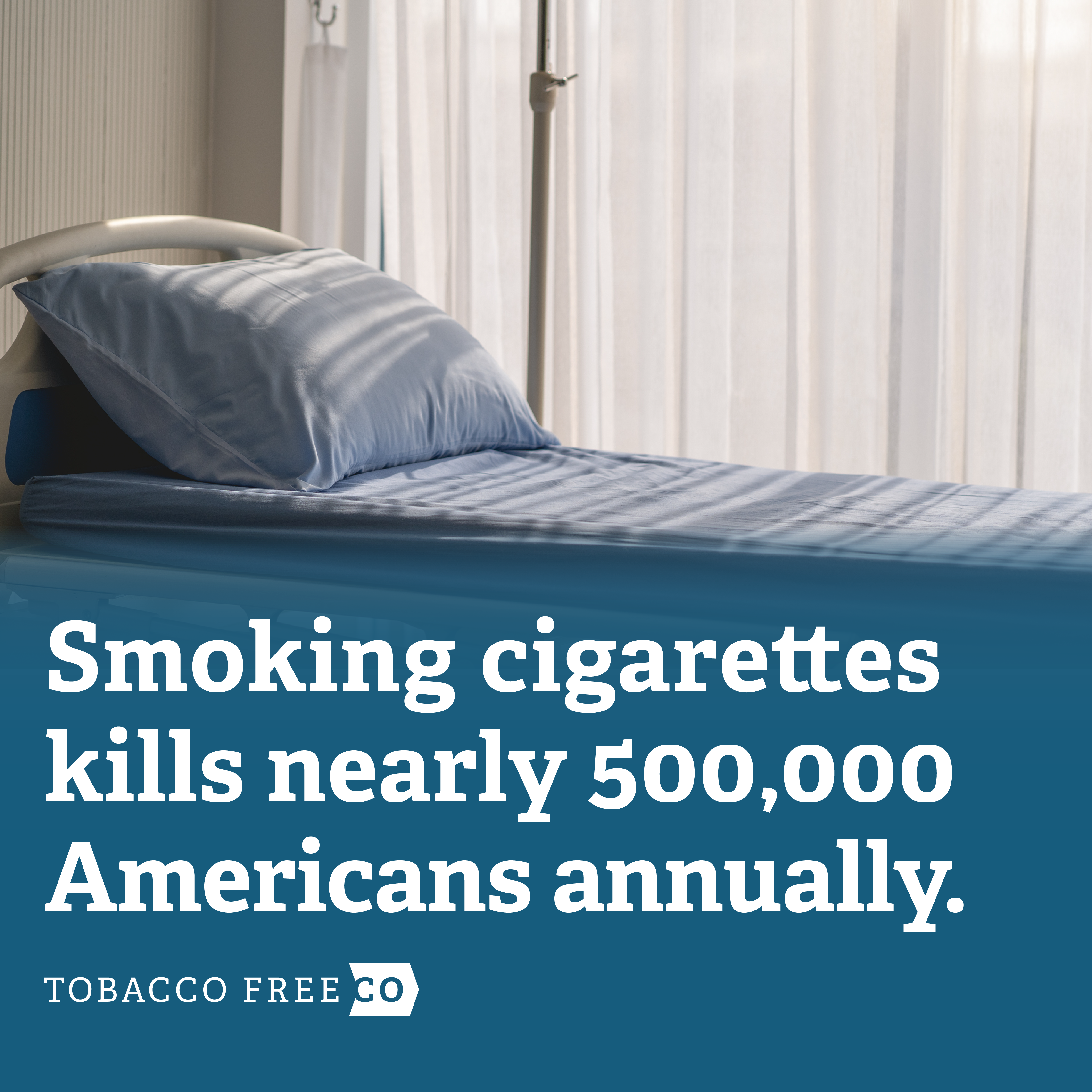

That’s why the industry lured kids to pick up smoking. They were, as one industry memo stated, “replacement smokers.” The marketing formula: Teen-focused ads, discounts for cost-sensitive teens, and fruity and menthol (i.e., minty) flavors that masked tobacco’s harshness for young smokers.
Technological advances allowed Big Tobacco to move beyond cigarettes to flavored vape and now oral nicotine products (ONPs) — and attempt to launder its dirty past.
If you aren’t familiar with ONPs, look at the signs and the displays at your local convenience store. They are discreet, cheap, and ultra-potent. A winning formula for addicting kids.
Some claim ONPs like Zyn from Philip Morris International U.S., which now has a factory in Adams County, Colorado, offer “harm reduction” for smokers, providing nicotine without the risks from burning tobacco. (It also was the pitch of Juul Labs, before that lie was exposed.)
 But this pitch ignores the harms of nicotine itself. Nicotine is a naturally occurring insecticide because it’s poison. The health risks to humans are well documented, beyond addiction.
Yet the latest tobacco industry trick is to reframe nicotine as “misunderstood,” even claiming alleged cognitive benefits.
After three decades of work in this sector, I am no longer surprised.
The Big Tobacco playbook is to lie and deny.
Deny that nicotine is addictive (until that lie ran its course).
Deny that the industry markets to kids (despite the mounting volume of evidence to the contrary, including its own internal documents).
To readers, it may seem that I’ve become one of the advocates who I once discounted as almost paranoid. I encourage you to venture out on your own fact-finding journey. You may be amazed and dismayed by what you find.
You may want to start with this short piece on ONPs and tobacco industry claims.

PowerMapping: Why We Must Double Down on Human Interaction in the AI Age
In recent years, the landscape of communication has undergone a seismic shift, driven by the rise of artificial intelligence (AI) and a notable decline in trust towards legacy news media. As AI technologies become increasingly capable of generating content, the implications for communications professionals are profound and multifaceted.
The Rise of AI in Content Creation
AI has transformed how we produce and consume information. Tools like natural language processing and machine learning enable AI to create articles, reports, and even creative writing with remarkable efficiency and accuracy. This democratization of content creation means that anyone with access to AI can generate high-quality material, blurring the lines between professional journalism and amateur content.
Benefits of AI in Communication
Speed and Efficiency: AI can analyze vast amounts of data and produce content in seconds, allowing for real-time reporting and updates.
Personalization: AI algorithms can tailor content to individual preferences, enhancing user engagement and satisfaction.
Cost-Effectiveness: Organizations can reduce costs associated with content production, reallocating resources to other critical areas.
However, this rapid advancement also raises concerns about quality, authenticity, and the potential for misinformation.
Declining Trust in Legacy Media
As AI-generated content becomes more prevalent, trust in traditional news outlets has waned. Factors contributing to this decline include:
Perceived Bias: Many consumers believe that legacy media outlets have inherent biases, leading to skepticism about their reporting.
Misinformation: The rise of fake news and sensationalism has eroded public confidence in the accuracy of information disseminated by established media.
Alternative Sources: Social media and independent platforms provide alternative narratives, often bypassing traditional gatekeepers and allowing for a wider range of voices.
The above distillation of the challenges facing communicators in today’s rapidly evolving landscape was written in seconds by the free-to-use Microsoft Copilot based on my one-paragraph prompt. I didn’t make a single edit. (It went on, but you get the idea.)
Besides hitting the mark, this AI-generated copy highlights that the talented people at our communications and marketing agency shouldn’t be spending our time creating things that AI can do nearly as well and much, much faster.
Our clients will soon have the keys to the car. They won’t need us to drive them anymore.
Sure, humans will still be needed to proof content, check for accuracy, ensure it’s on message, and refine it (at least the AI prompts, if not the output).
When it comes to creativity, AI is not ready for prime time – as this year’s cringey AI-produced Coke Christmas ad showed – and it’s been shown perpetuate racist stereotypes and bias.
But it’s going to get better and take over more and more roles that once required the human touch.
How can communications and marketing professionals avoid becoming this century’s version of the Luddites, the 19th century textile workers who smashed the mechanized looming frames they knew would make their skills obsolete?
This raises two questions:
- What valuable communications and marketing tasks can AI not do today – or ever?
- What strategies will cut through the fast-rising flood of unreliable, inaccurate content that’s drowning audiences in a sea of junk?
The answer to both questions is the same, and surprisingly simple. We must focus more on what humans have been doing since the dawn of time: communicate in person.
People crave connections and trust, especially in a world where digital interactions are increasingly mediated by algorithms and bots. The election highlighted that the “broadcast” model is dying as people increasingly rely on friends and families for trusted info on pressing issues.
AI can only fake empathy. AI can’t sit across from someone and react naturally and with genuine understanding and concern.
By focusing on human-centered strategies, we can cultivate meaningful relationships with audiences, understanding their unique needs, values, and aspirations by actually getting to know them.
Long before digital networks, societies were built with people networks. People naturally come together and organize to bring solutions to societies’ biggest challenges.
Established relationships and trust power human networks, with influential people or organizations serving as the connectors.
Our community engagement initiatives allow us to tap into the collective wisdom and spirit of the communities we serve, creating campaigns that resonate on a deeper, more personal level, and leverage these organic networks to authentically reach our key audiences where they are.
The trust and loyalty we build through genuine human interactions are irreplaceable and invaluable.
The phone call, the meeting over coffee, the community meeting. Inefficient? Yes. Irreplaceable? Absolutely.
Mapping out how communities are connected, identifying the trusted messengers, authentically energizing these networks, and co-creating solutions with them provides the playbook for creating sustainable behavior and systems change.
Communications 3.0 is really a return to communications 1.0, minus the fax machine.
Relationships are key and they’re developed the old-fashioned way: meaningful connections built on trust, reputation and expertise. In other words, there are no short cuts.
Pick up the phone. Get out of the office. Replace that video conference with an in-person discussion.
That’s the guiding philosophy of SE2 PowerMap™ . We activate community networks to tackle urgent public challenges. Our strength is our relationships with diverse community connectors. We build those, nurture them, and map them. We are partners, united in our belief of people-powered solutions are the future, not AI.
When these people share their insights, credibility and trust, we can achieve the extraordinary.

AI's Risks and Opportunities: How Creatives Should/Shouldn't Use it in Their Work
AI is a powerful tool that can help everyone work smarter, more creatively, and more efficiently. It also creates significant risk if we don’t handle it with care. Check out this short guide from SE2’s Eric Anderson and Creative Law Network‘s Dave Ratner on how creatives should and should not use it in their work.

A quarter century ago, Eric Sondermann helped plant the seeds of SE2 today
In the mid-1990s I was adrift.
A child and sibling of newspaper reporters, all I had ever wanted to do was become one too.
And then, after a half dozen years of journalism in Washington, Hong Kong and Denver, I hit a wall.
My gut, literally a knot in my stomach, told me I was done with newspapers.
But I had no idea what was next. I realized journalism wasn’t how I’d make my mark on the world, but I didn’t know what else I could do.
So, I called Eric Sondermann.
I met Sondermann when I was a political reporter. I came to appreciate his straightforward, spin-free commentary.
Sondermann was (and remains) a political iconoclast.
He grew up as a Democrat but increasingly felt uncomfortable with that party’s orthodoxy. He found common cause with free-market Republicans but had no use for right-wing social dogma.
I was a political and policy junkie, but I, too, didn’t feel completely comfortable in one camp or the other. As a political reporter, I had effortlessly moved back and forth across the aisle – finding thoughtful voices among both Democrats and Republicans – and I didn’t see why I should have to choose sides.
I also was impressed that, back in the day when most political consultants happily cashed checks from Big Tobacco, Sondermann worked only on the scrappy and underfunded side of anti-tobacco rebels. (We continue to fight the tobacco industry today.)
I was hungry and ready to learn, and Sondermann let me learn by his side, initially as a sort of apprentice and then quickly as a business partner, when we co-founded SE2 25 years ago.
Although Sondermann stepped away from the agency in 2014, we carry lessons I learned from him.
Here are three:
- The customer is not always right. Always tell clients the truth, even when they don’t want to hear it.
- Focus on the bold strokes. While it’s easy to become preoccupied with tasks and to-do lists, we must focus on the big strategies that will make a lasting impact.
- Stick to your values. It’s easy to chase the money or go with the flow, but all we have in the end is our reputation and credibility.
Sondermann remains engaged in the community and as insightful as always in his commentary, which includes a regular column in Colorado Politics and the Gazette newspapers and the Colorado Inside Out panel on PBS12.
He’s a voracious reader and deep thinker who loves ideas. I don’t always agree with him, but I appreciate the intellectual rigor in his takes on current events.
Thanks, Eric Sondermann, for helping to set me – and SE2 – on the journey that we continue today. You’ve helped us all make a positive impact on some of the most pressing issues of our time.

AI Will Help Us Elevate Our Work, but Don't Expect More Free Time
When I was in elementary school in the 1970s, my teachers told us that automation would mean we would only have to work a few hours a week. In this promised utopia, we’d get to spend the rest of our time exploring our passions outside of the office or factory.
They lied.
Fast Company noted in 2019, “Today the average American works 47 hours a week, nearly a full day longer than the 40-hour workweek for which their forebears fought. Worse, 18% of full-time workers work 60-plus hours a week.”
What gives?
The promised technological innovations took place. Instead of a secretary for every executive or two, everyone started typing their own memos and scheduling themselves.
Manufacturing didn’t become completely automated, but robotics eliminated many routine tasks.
What did we do with all that free time? We elevated to work at higher levels, freed from rote tasks.
We were more creative, strategic, and productive. (And, yes, we spent a lot of time responding to email and surfing the web.)
Today some are saying that #artificialintelligence (AI) will make more of us obsolete.
But as this New York Times essay notes, for most of us it will just free us from mundane tasks that aren’t the best and highest use of our talents.
The essay’s author, Louis Hyman, writes: “Boring, repetitive tasks that I knew a computer should be able to do, but that I didn’t know how to make it do, suddenly became as easy as typing in my request.”
For those who think of AI as a threat to their job, it may become what they fear.
But for those who see AI as a booster — one that opens new horizons in their mind for new pursuits — the possibilities are limitless.

The Hazards of Building a Presence on the Shifting Sands of Social Media Platforms
Imagine setting up your office in the lobby at Twitter, Meta or TikTok headquarters.
Even if they didn’t kick you out initially, they could at any moment. And you’d have no control over your environment.
That’s essentially what we’re doing when we invest our time and resources into developing a presence on their social media platforms. We’re living in borrowed space and the landlord has nearly complete control.
They can tell us what kinds of ads we can buy (as SE2’s Jack Cohen described in Advertising Week) or pursue strategies that undermine democracy and health (see Facebook and Instagram).
They can change the rules of engagement overnight, like when Elon Musk took over Twitter. Musk’s Twitter stepped back from any commitment to promoting constructive dialogue and putting facts and science above disinformation. Twitter became antithetical to our values.
Based on his series of erratic and ill-advised actions, I decided it wasn’t a place I wanted to plant by flag, and SE2 came to the same conclusion as an organization.
When we left, we had to write off the hundreds of hours we had spent building a network there.
We had been building our network on someone else’s platform, and the new owner made it uninhabitable for us. Yet others, including journalists, say they can’t afford to leave Twitter because it remains the place for key announcements from governments and other news sources.
Alternative platforms like Mastodon and Post haven’t filled the gap — at least not yet.
Now organizations are wondering if TikTok is a secure place to build their presence and grow audiences.
Because TikTok is owned by a Chinese company, the focus has been on whether it could spy on users or use its algorithm to manipulate what news and points of view users see. This has prompted states to ban it on government computers and at universities. A congressional bill would ban TikTok across the United States.
For organizations that want to build a significant presence on TikTok, those current and potential restrictionsat raise a lot of red flags.
Yet, they also know that TikTok is a great way to reach a key demographic. TikTok is on pace to surpass 100 million users in the United States. Those users skew younger, and it’s the go-to app for Gen Z.
So organizations must balance the benefits of reaching these users where they are with the uncertainty of TikTok’s future.
It’s an increasingly common conundrum as we rely on these private platforms for public engagement. While this is the stark reality we face, we can mitigate the risk with these three steps:
- Don’t become overreliant on a single platform. Just like you wouldn’t want all your savings invested in a single tech company, spread your efforts and engagement across the relevant social media platforms. It takes more work, but it’s worth it.
- Stay alert to the changing landscape. For example, what is the practical implication of the growing number of state bans on TikTok? Are federal policymakers or regulators likely to take action that would restrict its use in a substantive way acoss the nation?
- Keep comparing your values and your organizational values to the policies and actions of the platforms. Are they furthering the goals of your campaigns or are they undermining them? Increasingly, that presents a tough balancing act.

Why SE2 Won’t be Spending Our Money to Advertise on Twitter Anymore
I really, really liked Twitter.
Want to know how much?
Since signing up in 2008, I have tweeted 14,000 times.
I also have curated and regularly updated a list of more than 1,000 Colorado media accounts on Twitter.
Beyond the numbers, I have found it a great way to explore ideas, see issues through the eyes of others, debate policy (usually constructively), and monitor the news and reporting in real time.
I hesitate to try to calculate how many hours I’ve spent on Twitter.
SE2 also has spent a lot of money on Twitter — well over $100,000 — specifically to boost tweets for our own content and for our clients. This is the way to break through the algorithm and reach a wider audience.
Elon Musk’s takeover of Twitter has made us rethink all that.
As of this week, we won’t be paying Twitter anymore to boost SE2’s own tweets. This won’t impact our clients’ use of Twitter, or our availability and willingness to support them in getting their messages out through Twitter. That’s a decision they must make based on their own assessments.
Despite Musk’s promises to advertisers and users that he wouldn’t allow it to become a “hellscape”, he quickly and predictably opened the doors to new levels of toxicity.
Musk increasingly has demonstrated a disdain for any sort of accountability and he showed why his approach is so harmful when he amplified a corrosive lie over the weekend. His tweet served as a signal to many who were waiting for tacit permission to perpetuate more hate and lies.
The floodgates opened and a toxic stew poured in.
I don’t want to whitewash Twitter’s legacy; It was constantly teetering on the edge of anarchy well before Musk’s takeover. Now it seems to have fallen off the edge.
It’s ironic that SE2 furthers our positive communications and marketing initiatives by using social media platforms, yet those platforms often undermine our work’s goals.
We acknowledged this when we decided to stop spending money on Facebook a year ago.
We understand our spending amounts to just a drop in the ocean so we encourage others in the communications and marketing sector to consider how they spend their ad dollars and whether it undermines their values.
GM has already paused advertising on Twitter and some high-profile celebrities have walked away from the platform.
What are the alternatives?
LinkedIn has become a much more robust arena for ideas and, because it’s a professional networking site without anonymity, users generally behave themselves.
Feel free to follow SE2 and connect with me over there!
For now, I’ll still keep an eye on Twitter but I’ll consider The Washington Post’s suggestions for alternatives, including spending more time reading long-form news stories, subscribing to insightful newsletters and — gasp! — reading e-books.

How We Work with a Niche E-newsletter to Reach an Influential Colorado Audience
It would be a great understatement to say that journalist-run startups typically put a lot more energy into reporting than planning for financial sustainability.
While this limits their financial growth, or even long-term sustainability, many keep plugging along, producing great content along the way.
Few pull the curtain back on their finances — unless they’re nonprofits, they have no responsibility for financial transparency — and grateful readers like me are just happy to see them succeed, or at least survive.
SE2 is happy to support some of them through subscriptions. And sometimes through sponsorships. (If they’re nonprofits, donations provide us with the usual tax benefits, which helps us justify bigger investments.)
When assessing the value of a sponsorship for our public issue marketing and communications agency — or for a client — we want to know what any advertiser would ask: Will they help us reach a target audience in an impactful way?
A target audience doesn’t necessarily mean one that’s big or powerful, at least in the traditional sense, just an audience that is critical to reaching our objectives for a specific project. (A long, long time ago, we pioneered buying advertising on The Denver Post editorial page to reach that wonky audience. It worked well, but we had to convince the Post to let us do it.)
Successful media organizations usually know a lot about their audiences and are happy to tell potential advertisers.
Axios, whose ad revenue appears to be supported significantly by tech companies that want to reach its plugged-in audience, monetized this reach for a cool $525 million.
SE2 has sponsored Axios Denver emails. For those of us who focus a lot on regional issues, these influential local audiences are key.
One important group of influencers is journalists themselves. How they frame issues, who they quote and which facts they choose to share influence the broad audiences they reach.
I spend a lot of time on Twitter, and I’ve curated a free-to-follow list of more than 1,000 Colorado journalists there, so that’s one way I stay in touch with media people.
Another great way to reach Colorado journalists is through Inside the News in Colorado.
My biggest complaint about this weekly e-newsletter is that publisher/author Corey Hutchins crams too much meaty news into each edition. (Corey might want to buy a copy of the Smart Brevity handbook published by the Axios founders. Or maybe just ask an Axios scribe for one of their six copies.)
This month, our client One Chance to Grow Up, which works to limit harm to kids from marijuana, sponsored Corey’s newsletter to promote an educational campaign highlighting a State of Colorado warning on marijuana concentrates.
Too often media coverage depicts marijuana with a leaf and describes it as a harmless plant when young people, whose brains are still growing, are increasingly dabbing nearly pure THC resin. Our hope is that by exposing more journalists to the State of Colorado warning, more coverage will reflect the known risks.
It’s been great to work with Corey on this sponsorship. I’d encourage others who want to reach his uniquely influential audience to consider In the News in Colorado as a cost-effective way to connect.
Like a lot of journalists, Corey is better at reporting than promoting himself. But he’s built an audience of roughly 2,000 subscribers, and his metrics show that well over half of subscribers open his newsletter each week. In other words, he’s created something of great value.
Now he just needs to keep monetizing it so it can continue and grow — and hopefully become a model for other journalism organizations like his!

By Embracing Electric Vehicle Adoption, Car Dealerships Can Find What Best Fits Consumers

As the climate change conversation heats up, federal and state policymakers will increasingly incentivize consumers to switch to electric vehicles. President Joe Biden’s infrastructure bill, which passed the U.S. House in November with a bipartisan vote, devotes $7.5 billion to expediting EV adoption and creating a comprehensive charging station network. Additionally, the auto industry has pledged that EVs will account for 40% to 50% of sales by 2030.
Plenty of variables will determine whether this target is feasible. However, this pledge is a signal that the automotive industry is serious about accelerating the transition away from gasoline cars. Major automakers — including Ford, General Motors, and Stellantis (formerly Fiat Chrysler) — have already set internal sales goals.
Over 61% of consumers prefer to buy from dealerships, so dealerships have an important role to play when it comes to encouraging adoption. By embracing the inevitable transition to electric, dealerships can capitalize on this trend and guide consumers to the vehicles that fit them best. Here’s how:
1. Remind legacy brands of what’s at stake.
Biden’s recently passed infrastructure bill will influence the pace at which consumers adopt electric vehicles. Additionally, a growing number of states have also called for stronger incentives for EV adoption. While combating climate change is usually the focal point of policy discussions, it’s not the only factor in play.
Though EV sales represented just 3% of all domestic new vehicle sales in the first half of 2021, global demand for electric vehicles is skyrocketing, particularly in China and Europe. It’s imperative that automakers meet the rising demand by producing more electric models and partnering with dealerships to promote sales.
2. Showcase the EV customer experience.
For many consumers, the choice between electric- and gas-powered cars ultimately boils down to criteria unrelated to performance. Americans who have never owned an EV before often assume that making the switch will require them to make other major changes, such as managing expensive in-home charging equipment or modifying routes to avoid getting stranded. For some, it just sounds like a hassle.
Dealership showroom design — and the entire EV car buying experience — should focus on alleviating these concerns. By educating prospective buyers on charging equipment and processes in the showroom, dealers can demonstrate the convenience and simplicity of owning EVs and help prospective buyers overcome perceived hurdles.
3. Incentivize EV sales.
If dealerships want to sell more EVs, they should make buying and maintaining them easier and more financially viable for customers. A recent McKinsey & Co. report highlights potential new finance and insurance products — including emergency charging services, extended warranties, and maintenance subscriptions — that could extend EV ownership opportunities to a larger segment of customers.
Modified finance and insurance products aren’t the only incentives dealerships can use to draw in new customers. Dealerships can also implement new servicing capabilities that give them an advantage over competitors. For instance, they could train technicians and other staff members to manage high-voltage systems safely and invest in the right tools to service electric vehicles.
By making small changes to operations now, dealerships can be sure they’re prepared and ahead of the game when the electric future finally arrives in full force.

Drinking Increased During the Pandemic. What Happens Now?
Originally published in SWHelper.org.
During the pandemic, many people turned to alcohol as a release valve. Indeed, drinking — including day drinking and overdrinking — became somewhat of a punchline, not to mention a social norm. Think about how many times the media recommended Zoom cocktail hours as a way to connect.
In such an alcohol-friendly environment, it’s no surprise that 60% of adults in a recent research study admitted to an increase in alcohol consumption during COVID-19. What’s more, 23% of people attribute their heightened alcohol intake to stress, according to the American Psychological Association.
With numbers like this, the only real winners are beer, wine, and liquor makers and distributors. It’s time we begin to address the overconsumption of alcohol, on a societal and personal level.
Addressing Overconsumption of Alcohol
This ramped-up alcohol intake isn’t just a short-term concern. It’s worrisome for the long haul, too, if it becomes the new normal. Overdrinking has been shown to harm people’s mental, physical, and even social well-being. When it comes to physical health, you’re probably familiar with the risk alcohol poses to the liver, but did you know that alcohol is the third leading preventable cause of cancer (behind only tobacco and obesity)?
With overdrinking, it’s a time for empathy, not shaming. This past year and a half should highlight just how easy it is to slip into unhealthy habits and how difficult it can be to regain your footing afterward. After all, increased alcohol intake wasn’t the only concern during the pandemic. Many individuals struggled with weight gain, insomnia, and screen time, just to name a few areas of concern.
Whether it’s stress eating or doomscrolling, most people are struggling with moderation in one way or another. As more normal life returns, the nation faces a once-in-a-generation liminal moment that a recent Harvard Business Review article described as “an ‘in-between’ time, when perspectives shift, old certainties are challenged, and new ideas emerge.” This moment provides an opportunity to fundamentally change behavior and social norms.
The key to helping others overcome their unhealthy habits is to approach them with empathy and support, not judgment. Certainly, alcohol use disorder is a disease that may require treatment. But can you encourage anyone you know to take stock of their relationship with alcohol and consider whether they would benefit from leveling off their drinking?
Instead of demonizing all alcohol intake — an approach that is likely to be a conversation stopper — you can encourage those who drink to rethink their behavior and attitudes around alcohol. This approach requires more careful communication and messaging, but it can start a productive discussion.
In the same way, social norms have changed regarding smoking, attitudes about drinking can also change. Subtly shifting social norms could lead to more (or less) drinking over time with huge implications for Americans’ health. However, the key is providing a supportive environment with the resources necessary to help anyone who may be struggling with the overconsumption of alcohol.
How to Encourage Healthier Habits Around Drinking
Overconsumption of alcohol can be a life-threatening problem, but that doesn’t mean that anyone should get preachy about what’s best for other people. Instead, you can help others evaluate their relationship with drinking and whether they want to adjust their habits. Here are three ways to be supportive:
1. Ask more questions.
Why are people drinking more? Is it stress? Social expectations? Boredom? There are a lot of reasons people can overindulge, but you won’t know what they are until you start asking. Don’t worry: You don’t have to get confrontational. Instead, you can ask simple questions about habits. Where do they tend to drink? How much have they had in the past week? What other ways do they address boredom or stress besides drinking? These questions can serve as prompts to help people decide the implications for themselves.
2. Make people aware of the support that’s available.
One silver lining of the pandemic has been the number of telehealth services and virtual support groups that have sprung up. Although the original goal was to help people stay healthy while adhering to quarantine and social distancing restrictions, these convenient resources are here to stay. Anyone who needs a little extra help sticking with a new habit just needs a phone or computer.
Moderation Management, for example, is an online community that offers peer accountability and support through virtual meetings and forums. There’s also Cutback Coach, an app that helps users track their drinking habits and set regular goals for themselves. Both of these options are easy to access and use, which can make a big difference for people who need help doing something hard.
3. Encourage people to consider what the experts have to say.
Federal public health experts recommend no more than one drink a day for women and two drinks a day for men. However, many scientists are now saying that one drink per day is enough.
Attempts at humor about portion size aren’t helpful. A full bottle of wine is not considered a single drink, even if you can fit it into a novelty glass. The Centers for Disease Control and Prevention provides guidelines regarding what constitutes one drink. This can be a useful guide or reminder for people who might not realize that they’re drinking more than they should. That generous pour of wine or liquor or the high-alcohol IPA is not considered only one drink.
As the world moves into the post-pandemic era, it will be important to have candid, compassionate conversations about the ways people can live healthier, happier lives. When it comes to drinking, this means changing social norms to encourage moderation instead of normalizing the problem with memes about drinking too much. By working together, we can usher in a future without alcohol reliance or addiction.
Note: SAMHSA’s National Helpline 1-800-662-HELP (4357) is a free, confidential, 24/7, 365-day-a-year treatment referral and information service (in English and Spanish) for individuals and families facing mental and/or substance use disorders.

Is Cannabis Doomed to Repeat E-Cigarette Brands’ Mistakes?

In early September, the Food and Drug Administration faced a deadline. It was due to respond to applications from e-cigarette brands on whether they could remain in the U.S. market. Though the FDA had already denied applications for tens of thousands of vape products, regulators said they needed more time to decide the fate of big, tobacco industry-backed e-cigarette brands like Vuse and Juul. To stay on the market, they needed to demonstrate that their products helped adults quit smoking and didn’t appeal to underage teens who could become new nicotine addicts.
A little over a month later, the FDA recognized the first e-cigarette product to do just that: the Vuse Solo Power e-cigarette and its tobacco-flavored nicotine cartridges. The FDA’s authorization marks an important first for the industry, although the decision was sharply criticized by public health advocates. The fate of Juul, which has been condemned for driving the youth vaping epidemic, remains undecided.
Juul and other vape brands invited this scrutiny because they flouted ethical practices in marketing, causing teen e-cigarette usage to skyrocket. Even those outside of the market should follow e-cigarette regulation news. History has a funny way of repeating itself, after all. If they’re not careful, marijuana businesses could find themselves in the hot seat next.
What’s Next for Cannabis?
The legal marijuana market is having a moment. Much like e-cigarettes were on an upward trajectory five years ago, the marijuana business is booming. Increased legalization means it might be worth more than $70 billion globally in just seven years.
The question is: When will the other shoe drop? If the marijuana industry prioritizes ethical practices in marketing over short-term profits, marijuana businesses won’t have to face the same fall from grace as Juul.
Juul’s early ads were packed with young models having fun while vaping. Though executives tried to argue that their products were for adult use only, the advertising spoke for itself. On top of clearly appealing to youth in advertisements, Juul and other e-cigarette brands sold numerous sweet-flavored products, which naturally appealed to minors and nonsmokers.
It’s important to note that the FDA’s recent Vuse authorization applies only to tobacco-flavored e-cigarette cartridges. In fact, it rejected other requests for flavored products from Vuse. By allowing tobacco-flavored products only, the FDA is sending a message: These products aren’t candy; they’re tools for smoking cessation.
Practicing Ethical Marijuana Advertising
The cannabis industry’s products can be responsibly used by adults. However, the lines become blurred in the case of cannabis-infused chocolates and other candies. We’ve seen increased reports of children accidentally ingesting THC-laced products.
Marijuana businesses need to address this problem and clarify what their products are and are not used for — and stop selling products that are too easy to mistake as kid-safe. If sweet or fruity flavors are wrong for nicotine, they’re also wrong for THC vape products. If marketing that reaches and influences youth is wrong for Juul, it’s wrong for marijuana companies, too.
Visionary leaders must step up to set a high bar for this market and avoid the lessons that e-cigarette brands had to learn the hard way.

Journalism’s Financial Realities Can’t Snuff Out Sparks of Hope
The author’s dad, Jim Anderson.
As a teen, I watched the contractions of the once-legendary United Press International wire service, where my dad stuck it out as a reporter with the dedication of the Titanic band.
UPI’s decline was precipitated by the death of afternoon newspapers, which were killed by the evening network news. Towns with only a morning paper needed just one wire service and AP dominated.
The monopoly morning newspapers and network evening news had a long successful run before the Internet changed everything and they faced their own reckoning.
UPI’s downward spiral was a story of both media trends and mismanagement by executives far above my dad’s pay grade.
Wage concessions meant my dad’s top union salary of $35,000 was cut by a third. In 1984, the year I graduated high school with journalism dreams, UPI entered its first bankruptcy.
Failing to heed the warning signs, I threw myself into my college newspaper and, after unpaid journalism internships, got a job making $300 a week (before taxes) at a little underfunded D.C. operation called States News Service. Before its demise, it provided virtual Washington bureaus for local newspapers.
I made my way out West in 1990 to the then-struggling Denver Post. Its management had botched a transition from afternoon to morning paper so it was getting its ass kicked by the Rocky Mountain News in one of the nation’s last newspaper wars.
At my job interview, the city editor noted, “We may not be around in six months.” He also pointed out that one of my strengths as a job candidate was that I was starting on the bottom of the union wage scale.
Even in the shadows of these financial challenges, reporters kept delivering quality journalism day after day.
But my father offered me this sage early-career advice: “Journalism has been a wonderful career for me but it is not a growth industry.”
I pivoted to a career in marketing and communications around public issues.
In that role, I helped manage communications around the closing of the Rocky Mountain News in 2009.
I watched the printing presses produce the last edition. The talented Rocky Mountain News staff kept producing important journalism till the bitter end. A photographer took photos of the first of the final copies coming off the presses, sending the images back to the newsroom for its last late edition.
With its path to profitability seemingly clear, The Denver Post brass spoke of big investments to expand news operations.
We all have seen how that has turned out. A new private equity owner took over and focused relentlessly on margins, not journalism. Dedicated reporters were furloughed. The sleek Denver Post downtown edifice was emptied of journalists.
But my belief in the enduring value of journalism remains undaunted by the often brutal economic realities.
Over the past couple of weeks, I had the opportunity to work on a promising project, helping to tell the story of how a team of local and national visionaries — including experts in journalism, philanthropy, and finance — collaborated to keep two dozen Denver-area weeklies and monthlies in local hands.
They developed a model that will leverage foundation dollars to help finance the deal while balancing profitability with quality journalism.
Instead of recklessly cutting costs while alienating readers, creating a death spiral, this mission-driven company will embrace a long-term, sustainable model to grow a loyal audience. (More details are available at ColoradoNewsConservancy.com.)
It’s an inspiration and, I hope, a harbinger of things to come.
As it turns out, my family still has skin in the game.
This fall my daughter starts college as a freshman journalism major.