
Angel Quit Nicotine and Took Back Control: Six Years, Zero Regrets
The Challenge
Six years ago, we met Angel Ramirez, a Denver mom determined to quit smoking. At the time, she was deep in the struggle, juggling life, stress, and the weight of an addiction she wanted to break. She let us into her world, sharing the highs and lows of quitting, the shame she felt as a closet smoker, and the moment she decided she had enough.
For Tobacco Free Colorado, we’ve told countless stories about quitting. But Angel’s stands apart. Hers is the only one we have followed for six years, watching her journey unfold from the first call to the Colorado QuitLine to six years smoke-free. Today, Angel is thriving, and we are honored to share her next chapter. Elevating Diverse Voices in the Fight Against Nicotine Addiction
The Approach
Six years ago, we met Angel Ramirez, a Denver mom determined to quit smoking. At the time, she was deep in the struggle, juggling life, stress, and the weight of an addiction she wanted to break. She let us into her world, sharing the highs and lows of quitting, the shame she felt as a closet smoker, and the moment she decided she had enough.
For Tobacco Free Colorado, we’ve told countless stories about quitting. But Angel’s stands apart. Hers is the only one we have followed for six years, watching her journey unfold from the first call to the Colorado QuitLine to six years smoke-free. Today, Angel is thriving, and we are honored to share her next chapter. Elevating Diverse Voices in the Fight Against Nicotine Addiction
We believe that elevating diverse voices is crucial in tackling addiction and promoting healthier communities. That’s why we invited Angel to chronicle her quit journey through weekly vlogs, sharing both her challenges and triumphs. Her authentic story has been a source of inspiration and valuable insight for others who may feel isolated in their struggles. Angel’s perspective, as a mother and a woman navigating the complexities of addiction, adds depth to the conversation around quitting smoking, proving that all stories matter and deserve to be heard.
Angel started smoking at 15, surrounded by family members who made it seem normal—even cool. At first, it was just one cigarette here and there. Then it became one a day. Then three. Then five. By the time we met her in 2019, she was hiding it from co-workers, slouching in her car at red lights, avoiding eye contact with strangers.
Her kids saw through it. One day at the doctor’s office, her daughter pointed to a poster of diseased lungs. “Look, Mommy,” she said. “It’s like your lungs.” Angel knew she had to stop.
The Impact
Quitting wasn’t easy. She tried before, especially during pregnancy, but always went back. This time, she reached out for help. She called the Colorado QuitLine and got a coach who had been through it. No judgment. No shame. Just support.
“After my first call, I got off the phone and thought, ‘That’s it? That was easy.’”
Then the nicotine replacement therapy (NRT) products arrived. Everything she needed—patches, gum, lozenges—showed up at her door, free of charge. Her kids became her biggest supporters, always checking in, making sure she stuck with it. Step by step, she pushed through.
Today, Angel stands on the other side. No more sneaking cigarettes. No more shame. She breathes easier, feels stronger, and knows she made the right choice—for herself and her kids.
Looking back, she knows quitting wasn’t just about breaking a habit. It was about reclaiming control, proving to herself that she could do it. And now, she wants others to know they can, too.
“If you’re ready to quit, just start. Make the call. Get a coach. Trust me, it gets easier. One day, you’ll be sitting where I am, feeling free.”
Angel’s journey isn’t just hers. It’s inspiration for every person thinking about quitting but feeling stuck. It’s proof that change is possible. That support makes a difference. That life on the other side is worth it.
Six years ago, Angel said, “I’m just ready.” Today, she’s proof of what happens when you take that first step.


DEI and the Bottom Line: How Inclusion Drives Marketing ROI
Diversity, Equity, and Inclusion (DEI) isn’t just a trendy buzzword—it’s a critical driver of business success. Yet, many companies today are backtracking on their commitments because of the current political climate.
This regression doesn’t just harm marginalized communities; it undercuts the very foundation of modern marketing strategies.
Let’s break this down: DEI delivers results. It builds trust, fosters loyalty, and creates genuine connections. Ignoring it means leaving money—and humanity—on the table.
Define DEI with Clarity
Diversity means representing a mix of identities, backgrounds, and experiences. Equity ensures everyone receives fair treatment, access, and opportunities. Inclusion means creating spaces where all people feel valued and welcomed.
Together, these principles form a powerful framework that fuels innovation and growth.
However, DEI is more than policies and training sessions. It demands integration into every facet of a company, especially marketing.
When brands prioritize representation and equity, they connect with audiences who see themselves reflected in campaigns.
Use DEI to Build Emotional Connections
People crave connection. They want brands to understand their stories, struggles, and victories. Representation creates that bond.
For a young transgender individual, seeing someone like them in an ad isn’t just a marketing move—it’s a lifeline.
For a Black professional, spotting their identity celebrated in a campaign validates their experience.
When brands embrace DEI authentically, they build emotional connections that foster loyalty. This commitment translates directly to the bottom line. Inclusive marketing doesn’t just feel good—it works.
Back It Up with Results
DEI efforts boost revenue. McKinsey’s study on diversity in leadership found companies in the top quartile for racial and ethnic diversity outperform competitors by 36% in profitability. Firms with diverse teams generate more innovative ideas, appeal to broader markets, and maintain stronger reputations.
Take Procter & Gamble’s “The Talk,” a campaign addressing conversations Black parents have with their children about racism. It won accolades for its honest storytelling and drove consumer trust.
Representation creates relatability, which translates into consumer action.
Respond to Today’s Needs
In today’s fractured world, connection matters more than ever. Consumers demand authenticity and accountability.
Performative gestures—like slapping a rainbow logo on a product in June—no longer suffice. People want meaningful action. Brands must move beyond surface-level commitments and demonstrate real investment in DEI values. Regression in DEI initiatives threatens to erode the progress made. Brands that retreat risk alienating vast segments of their audience.
Conversely, companies doubling down on DEI efforts stand out as leaders. They demonstrate courage, empathy, and a commitment to equity—traits that build unshakable loyalty.
Make DEI Your Marketing Advantage
Brands must integrate DEI into their core strategies. Start by listening to marginalized communities and amplifying their voices. Build campaigns rooted in authentic stories. Take actions that reflect your values. Measure your impact, refine your approach, and prioritize transparency.
The cost of ignoring DEI is far greater than the investment needed to embrace it. Companies that lean into inclusion reap the rewards of loyalty, innovation, and long-term growth. More importantly, they contribute to a world where everyone feels seen, valued, and respected.
So, let’s ask ourselves: What kind of impact do we want our marketing to make? Let’s ensure our brands are more than businesses. Let’s make them forces for equity and connection—because when DEI wins, everyone wins.
Amplifying Voices: SE2's Immersion in Feedback Labs
SE2 had the privilege of diving deep into the power of receiving feedback and closing the feedback loop with Feedback Labs, a dynamic nonprofit based in DC. The engaging course was led by Alexis Banks, Associate Director of Learning and Operations, Feedback Labs.
Feedback Labs’ Crash Course experience was enlightening and transformative, leaving a lasting impression on our team members. As people deeply invested in SE2’s mission, Mikhail (Mikey) Talley, Graciella (Gracie) Saucedo-Rivera, and I participated in the crash course alongside a diverse array of professionals from nonprofits and companies like housing authorities, grantee organizations, and advocacy groups.
Feedback, as I discovered, is the lifeblood of progress. It encompasses the thoughts, feelings, and perceptions of those directly impacted by an organization’s work. More than just a tool for evaluation, feedback has the power to shape future endeavors and foster equity. This fundamental concept lies at the core of Feedback Labs’ methodology, which centers around creating a feedback loop comprising five essential steps.
Before embarking on the feedback journey, establishing buy-in is crucial. Building trust and interest among stakeholders is the foundation for the entire process. Identifying these stakeholders – be they constituents, decision-makers, or frontline staff – ensures that the feedback gathered is comprehensive and representative.
- Design
- The journey through the feedback loop begins with design, where goals are set, and contextual factors are considered.
- Collect
- Next comes collection, a diverse array of methods ranging from surveys to focus groups, tailored to suit the unique needs of our audience.
- Analyze
- An analysis follows suit, employing methodologies best suited to the data at hand.
- Dialogue
- Dialogue then ensues, bridging the gap between data and action and refining feedback through open communication.
- Course correct
- Finally, course correction allows us to enact meaningful change informed by the feedback received, fostering transparency and accountability.
During the crash course, I considered two ways to apply this concept in my life.
The first was for professional reasons: to reach rural audiences to get their feedback and tell their stories. The second was for a personal passion project, a monthly drag show I produce and host once a month called StageFluid: an Open Stage Drag show. I considered how to continually improve the experience through feedback.
Gracie delved into the intricacies of equitable collaboration with community-based organizations, seeking to amplify their voices in a meaningful way. Meanwhile, Mikey explored the integration of community feedback into the early stages of campaign development, aiming for more authentic and impactful engagement.
Leaving the crash course, armed with newfound knowledge and actionable insights, I am eager to apply these methodologies in our work at SE2 and in my personal projects and passions. Feedback isn’t just a checkbox on our to-do list; it’s ingrained in our DNA and essential to the authenticity and efficacy of our marketing efforts.
We pave the way for a more equitable and impactful future by amplifying voices, fostering dialogue, and embracing change.
As I reflect on our experience with Feedback Labs, I invite you to consider the role of feedback in your own endeavors. How can you harness the power of feedback to drive meaningful change? And how will you ensure that your feedback loop remains open, inclusive, and responsive to the needs of those you serve? If you’re interested in taking part in a Feedback Labs event or workshop, you can learn more at feedbacklabs.org.

Embracing Pronouns Builds Inclusive Workplaces and Improves Marketing
In recent years, pronouns have become a focal point in discussions surrounding diversity, equity, and inclusion in the workplace. While the topic may spark controversy or confusion for some, the importance of respecting and acknowledging individuals’ pronouns cannot be overstated. I am a nonbinary individual who uses they/them pronouns. I’ve experienced highly supportive workplaces and environments and other professional environments where I was met with scorn when trying to advocate for myself and others.
You probably already know what pronouns are, but let’s explore why inclusive workplaces where people share and respect pronouns are essential for fostering a culture of respect, understanding, and belonging. If you’re new to pronouns, check out this great resource to learn more.
Pronouns: More Than Just Words
Pronouns are a fundamental aspect of identity, reflecting how individuals wish to be addressed and referenced. While traditional pronouns such as he/him and she/her are widely recognized, it’s essential to acknowledge that pronoun preferences can vary widely among individuals.
Some may identify with they/them pronouns, while others may use neo pronouns (newly created pronouns that vary by the person). The English language requires pronouns when speaking about someone or to someone. Everyone has them, and you probably use them more than you think.
The Power of Pronoun Sharing
Sharing one’s pronouns – whether in meetings, email signatures, introductions, or virtual meeting names – is a simple yet powerful gesture that promotes inclusivity and respect.
By normalizing pronoun sharing, individuals create a safer and more supportive environment for their trans, nonbinary, and gender-nonconforming colleagues to do the same. It also helps prevent assumptions and misgendering, fostering a culture of awareness and understanding.
It’s a simple step that can be normalized through practice. If you haven’t already, update your email signature, LinkedIn profile, Instagram account, etc. Doing something this small can make a big difference. For a colleague, client, or someone in your personal life, it’s a big indicator that you’re on their side.
Embracing Diversity in Pronouns
Recognizing that pronoun preferences can be fluid and may change from day to day or situation to situation is essential. Some individuals may use multiple sets of pronouns or experiment with different pronouns as they explore their gender identity. Some folks even use any and all pronouns – meaning you can use any pronoun for them or perhaps they like if when you switch it up. Asking for and respecting someone’s pronouns demonstrates a commitment to creating an inclusive and supportive environment where all identities are valued and respected. If you don’t know – ask.
Mistakes Happen: It’s about Effort
Navigating pronouns may seem daunting at first. It’s okay to make mistakes as long as there’s a genuine effort to learn and improve. If unsure about someone’s pronouns, asking for clarification politely is perfectly acceptable. Checking in with colleagues and using the correct pronouns shows respect and consideration for their identity, fostering trust and rapport within the workplace.
If you make a mistake, just quickly correct yourself – don’t make a show of apologizing and saying how hard it is. Try to shift your perception of the person instead of just memorizing words to use. I promise it’ll help.
Beyond Pronouns: Gender-Inclusive Language
In addition to pronouns, it’s crucial to use gender-inclusive language that avoids assumptions about gender identity. Phrases like “ladies and gentlemen” or “men and women” can inadvertently exclude individuals who don’t identify as binary. Instead, opt for inclusive alternatives like “everyone,” “folks,” or “colleagues” to create a welcoming and affirming environment for all.
Creating Safe, Inclusive Environments
Ultimately, embracing pronouns and fostering gender inclusivity in language are integral to creating safe, inclusive workplaces where all employees feel valued, respected, and empowered to bring their authentic selves to work. By prioritizing pronoun sharing, respecting individual identities, and cultivating a culture of openness and understanding, organizations can drive positive change and lead by example in the journey toward greater diversity and inclusion.
The Power of Gender-Neutral Language in Marketing
In marketing efforts, the importance of gender-neutral language and inclusive pronouns cannot be overstated. By embracing they/them pronouns and other gender-inclusive terms, organizations demonstrate their commitment to diversity, equity, and inclusion. Inclusive language resonates with a broader audience and fosters a sense of belonging and acceptance among audiences. As organizations strive to connect with diverse demographics, integrating gender-neutral language into marketing materials sends a powerful message of inclusivity and respect, ultimately strengthening loyalty and trust.

Navigating Pride Month Marketing: Dos and Don'ts for Authentic Engagement
Pride Month is a time of celebration, reflection, and advocacy for the LGBTQIA+ community, and for businesses, it presents an opportunity to show support and solidarity. However, creating effective and authentic pride-themed marketing campaigns requires sensitivity, awareness, and a commitment to inclusivity.
The time is over of simply slapping a rainbow on materials and attending a pride parade; LGBTQIA+ audiences want to see more from companies and marketing. Here are some dos and don’ts to ensure that your marketing efforts resonate with LGBTQIA+ audiences and uphold the values of pride, not just during Pride Month but year-round.
Do:
- Use real, authentic voices and stories:
-
- Center your marketing campaigns around real experiences and narratives from the LGBTQIA+ community. Authenticity breeds connection and fosters trust.
- Spotlight the actions your company is taking to support inclusive values:
- Showcase the tangible steps your company is taking to support LGBTQIA+ inclusion, whether through policies, initiatives, or partnerships.
- Make your messages about the community, not your product or service:
- Focus on celebrating and uplifting the LGBTQIA+ community rather than using pride-themed marketing as a sales pitch. Show genuine support and solidarity without commodifying the LGBTQIA+ experience.
- Do your research:
- Educate yourself and your team about LGBTQIA+ history, terminology, and current issues. Understanding the nuances of the community will help you create more informed and respectful marketing campaigns.
- Represent diverse voices and don’t just focus on one part:
- Ensure that your marketing materials reflect the diversity within the LGBTQIA+ community, including people of different genders, sexual orientations, races, ages, abilities, and backgrounds.
- Stand your ground and keep your values:
- Stay true to your company’s inclusivity, equality, and diversity values, even in the face of potential backlash or criticism. Authenticity and integrity should guide your marketing efforts.
- Support your LGBTQIA+ employees year-round:
- Create a workplace culture that supports and uplifts LGBTQIA+ employees beyond Pride Month. Offer resources, training, and support networks to foster inclusivity and belonging.
- Participate in “rainbow capitalism” thoughtfully:
- If your company sponsors pride events or markets pride-themed products, ensure that it’s done with genuine support and contribution to the LGBTQIA+ community rather than just profiting from it.
- Know the history of pride:
- Understand the origins of Pride Month and its significance as a commemoration of LGBTQIA+ rights and activism. Respect the legacy of those who fought for equality and continue to advocate for progress.
- Donate and amplify:
- Support LGBTQIA+ organizations and causes through charitable donations. Use your platform and resources to uplift and amplify the voices of marginalized communities.
Don’t:
- Only support this demographic during Pride month:
- Authentic support for the LGBTQIA+ community extends beyond Pride Month. Make a commitment to ongoing advocacy and allyship throughout the year.
- Just update your logo for a month:
- Superficial gestures like changing your logo to a rainbow version without substantive action will come across as performative and insincere.
- Prioritize profits over people:
- Avoid exploiting Pride Month for profit or using LGBTQIA+ imagery as a marketing tactic without genuine support for the community’s rights and well-being.
- Stereotype or tokenize:
- Resist the urge to rely on stereotypes or token representations of LGBTQIA+ individuals in your marketing materials. Respect the complexity and diversity of LGBTQIA+ experiences.
- Virtue signal with flat-lined statements:
- Empty statements of support without meaningful action behind them can ring hollow and alienate LGBTQIA+ audiences.
- Be performative:
- Authenticity is key. Ensure that your support for the LGBTQIA+ community is genuine and rooted in a commitment to equality and inclusion.
- Stay silent:
- Silence in the face of LGBTQIA+ rights issues or discrimination sends a message of indifference or complicity. Use your platform to speak out against injustice and advocate for positive change.
By adhering to these dos and don’ts, businesses can create meaningful and impactful Pride Month marketing campaigns that resonate with LGBTQIA+ audiences and contribute to a more inclusive and equitable society. Let’s celebrate Pride Month with authenticity, respect, and a commitment to positive change.

The Power of Collaboration: A Journey from Grassroots Advocacy to Strategic Partnerships
As I reflect on my journey from founding my public relations firm to joining forces with SE2, a Denver-based agency focused on creating positive change, I am struck by the transformative power of collaboration. What started as a dream to build a successful business has evolved into a commitment to make a meaningful impact on communities, particularly for Latina entrepreneurs like myself.
The landscape for Latina-owned businesses is both promising and challenging. On one hand, we see incredible growth and resilience, with millions of businesses generating substantial revenue across the United States. Yet, accessing capital and navigating the complexities of scaling a business remain significant hurdles. It’s a journey filled with highs and lows, victories and setbacks, but through it all, one thing remains clear: the importance of advocating for change, winning strategic battles, implementing policies, and advocating once again.
My own experience mirrors this cycle. Selling my business was not something I had envisioned, but it opened doors to new opportunities and possibilities. It taught me the importance of thinking big, staying open to new opportunities, investing in my network, and prioritizing education and research. These lessons have guided me as I navigate the ever-changing landscape of entrepreneurship.
But the journey doesn’t end with individual success. It extends to the broader community, where issues like access to resources, representation, and systemic barriers continue to ignite my passion. I believe in making a genuine impact on people’s lives by challenging existing systems and bridging gaps in support and resources. It’s about creating real alternatives that meet the needs of individuals and families, particularly those who have been marginalized or overlooked.
Joining forces with SE2 has been a natural evolution of this commitment. Together, we share a vision of creating Perpetual Movements: Change for Good®. We recognize the power of collaboration in driving positive change on pressing public issues, from health and education to economic empowerment and environmental sustainability. By integrating our talents, expertise, and networks, we can amplify our impact and reach new heights of success.
 Central to this collaboration is a deep commitment to community engagement. Effective movements require pushing power out to diverse community leaders and organizations, leveraging their credibility and trust to drive meaningful change. As someone with deep roots in Colorado and extensive experience in community engagement and political strategy, I am excited to expand our network and elevate our commitment to serving diverse communities.
Looking ahead, I am energized by the possibilities that lie ahead. Whether it’s through my work with SE2, hosting my podcast, or serving on organizational boards, I am dedicated to making a difference in the lives of others. The journey from grassroots advocacy to strategic partnerships is a cycle of growth, learning, and transformation. And together, we can create a brighter, more equitable future for all.
As SE2 celebrates its 25th anniversary, I am proud to be part of this journey and excited to see where it takes us next. Together, we can build on our legacy of positive change and continue to make a lasting impact on communities across Colorado and beyond.


What We've Learned About Youth Interests and Issues
We believe that young people have an important outlook on the world and that they experience unique issues. As we target young folks in our messaging campaigns, it’s important that we understand those issues so we can move forward and create authentic and relevant messaging.
As part of our work, we talk with young folks aged 12 to 19 to capture their opinions on the issues most affecting them and their peers. In the video below, we discuss what we’ve learned: Young folks have told us that mental health, social media, and substance use are a few of the most important issues facing them today.
Mental health
Mental health has become an increasingly important issue. Young people, Just like many of us, are concerned. They’re concerned about their peers, their communities, and their personal well-being.
Gen Z has been known to be fiery regarding advocacy. It’s no surprise that they’re working to destigmatize mental health by creating places and taking up space to talk openly about it. And they’re not just scratching the surface. They’re getting deep into it by talking about the factors that impact mental well-being, such as access and environment.
A Colorado Health Access survey reported that Coloradans with insurance are more likely to report having better mental well-being. Yet in 2019, 360,000 Coloradans went uninsured. How might that inequity affect Colorado youth?
Not only that, but young folks are feeling pressure as they navigate digital learning environments, public safety concerns and adolescence.
Social media
Young folks also told us about how the time they spend on social media impacts their lives. On average, Young folks under 18 are using it six hours per day.
Although this time could be a cause for concern for some, young folks, say no. The time they spend online helps them explore their identities, create connections, and privately explore the world. However, some young folks say they don’t know how to use social media productively. With a lack of guidelines on safety and productivity, some young folks say that they feel sucked into using social media just to use it.
While not all young people could agree on how much time is appropriate, most could agree on one thing: Spending too much time online can be risky. Seeing influencers and peers at their best and their worst all the time can spark harmful comparisons and erode one’s self-image.
Substance use
Substance use also has a unique and powerful impact on youth. We know from research, from youth experiences, and even our own upbringings that peer pressure is a normal thing for young folks to experience. But with today’s high-risk substances such as high-potency marijuana and fentanyl, experimentation can be risky or even fatal.
We know that substance use in a young person’s environment can lead to them using substances later on. According to a 2022 Rise Above Colorado survey, two out of five youth have lived in a home where an adult was using substances.
Young folks are familiar with the issue of substance use, and some of them are familiar with the issue of overdose. Young folks in Colorado are likely to know someone or know of someone who has overdosed on substances.
From these insights, we’re able to better understand and serve youth across the state of Colorado. Our understanding helps us to empower healthier and more informed young folks.


Who Do We Trust To Deliver Credible Information?
Who do you listen to for information about social issues? Your doctor? Your favorite celebrities? Your pastor? Your mom?
According to a recent Ad Council study, most people trust close family and friends, doctors and scientists, and academic and religious leaders to find reliable information about social and societal issues. These trusted messengers are the ones who are most likely to ignite action and behavior change on social issues.
It’s important to remember that the messenger is just as important as the message we’re trying to share with the public. As a Black woman, I look for messengers who are highly knowledgeable on the issue being addressed and understand how specific issues affect the Black community.
People actively seeking out the opinion of trusted messengers are more likely to be inspired to learn more or act on a specific issue. Many people change their stance on an issue when presented with information from the people they trust.
This research also shows that social media influencers, celebrities and politicians are not highly trusted as messengers. Yet, they have a broad reach and can amplify messages from experts. These amplifiers are an integral part of a larger ecosystem consisting of layers of messengers who work together to expand reach, validate, and create trust. It’s useful for communicators to understand the roles someone might play in sharing a message:
- Amplifiers — content creators, influencers, celebrities, well-known advocates — can efficiently distribute messages from experts to target audiences and support greater awareness around an issue.
- Validators — the subject matter experts — can add credibility to the shared content.
- Persuaders — friends, family and others in close circles — are the messengers who are critical in sharing messages within their communities on a personal level. This group of messengers has a unique ability to connect with loved ones on a level that amplifiers and validators cannot reach. This group can ignite behavior change through conversations with their loved ones.
As communicators, how can we work with trusted messengers to build knowledge, shift attitudes and encourage behavior change? Here are five key things to remember:
- Find messengers who are deemed trustworthy.
- Think about audience demographics and preferences when identifying trusted messengers.
- Provide tools for trusted messengers to help them become educated on the issue.
- Equip trusted messengers with tools to understand the audiences they are trying to reach.
- Broad reach (think celebrities, social media influencers) does not equal trustworthiness.
Read the full report here.
For me, a Black millennial woman living in Colorado, I understand the importance of working with trusted messengers, especially when organizations are trying to reach specific populations. A trusted messenger that would work for the Black community may not be effective for other communities (e.g., LGBTQ+, rural, Indigenous). This also rings true across generations, so it’s important for us to remember that the person delivering a message is just as important as the message itself.


3 Steps Toward Real Progress on Climate Change Communications
I couldn’t take my eyes off the refrigerator on the roof. I was standing in front of a storm-battered home in the Lower Ninth Ward in New Orleans just seven months after Hurricane Katrina.
The once-vibrant neighborhood was practically washed away by the storm. All around me were scattered debris and empty foundations where homes used to stand. News coverage of Hurricane Katrina and its immediate aftermath — the harrowing scenes from the Superdome, pictures of people on roofs holding help signs, and other distressing imagery — motivated me to take an alternative spring break relief trip in 2007.
Rising sea levels and warming temperatures made Katrina’s storm system more powerful and catastrophic. And now, 16 years later, hurricane season starts earlier, lasts longer, and yields more extreme storms.
The same can be said for all types of natural disasters, including wildfires, droughts, heat waves, and floods. The National Centers for Environmental Information report shows that in 2021, 20 separate weather and climate disasters cost the U.S. at least $1 billion each.
Even as the number of billion-dollar disasters we experience in a year is increasing, the time between them is decreasing. The average time between these events has dropped from 82 days in the 1980s to just 18 days on average over the past five years. A community in need of national attention and support only has 18 days of the public’s attention until a new event grabs the headlines.
Climate change is a threat multiplier. It touches and intensifies every issue we face as a society. Yet coverage of climate-caused problems like natural disasters often fails to connect the dots.
Meaningful response to climate change will require focused collective action. We all have a role to play whether it’s participating in disaster relief efforts, lobbying legislators and corporations, or joining an advocacy organization like Mothers Out Front or 350.org.
How Climate Change Communication Can Get People Involved
How can communication and messaging motivate communities to get involved?
First, we need to understand our audiences so we can meet people where they are. Atmospheric scientist Dr. Katharine Hayhoe argues that there are three primary reasons we don’t treat the climate change crisis with the urgency it deserves:
- Psychological distance. We believe that climate impacts are distant in time and space and won’t affect us personally.
- Solution aversion. We feel powerless and don’t believe there’s anything we can do.
- Competing priorities. We have plenty going on in our day-to-day lives.
Using these reasons as a roadmap, we can identify ways to address the fatigue.
1. To overcome the psychological distance, tell stories.
Storytelling is the sharpest tool in a communicator’s toolbox. Stories have the power to educate, persuade, and motivate in ways that facts and statistics do not.
Climate change will affect us all. That’s a simple fact, but it doesn’t paint a complete picture. To reach audiences, we need to tailor messages that connect to their shared values and local concerns.
Telling stories about how climate change is already impacting communities can fire up areas of the brain that control emotional response, complex information processing, and long-term memory. Stories about solutions and actions can motivate people to get involved.
Furthermore, stories spread. Powerful narratives are sticky, and someone still thinking about one is likely to share it with others, reinforcing memory and contributing to changes in behavior and attitudes.
2. To solve solution aversion, leverage a hopeful tone.
Climate anxiety is both real and paralyzing. The situation feels too big and too dire, so we need to flip this narrative on its head. We have available plenty of solutions ranging from individual actions to system-wide approaches, but so many of us don’t know where to start.
There are many tangible steps we can take, and the tone in which we present them matters. If we offer hope instead of alarm and communicate that these specific actions matter and can make a difference, we can empower individuals and communities to get involved. This is the key to successful climate change communication.
3. To rise above competing priorities, join the clutter.
How can we cut through the clutter of day-to-day concerns and priorities? By becoming part of the clutter.
Messages about climate impacts and actions should be woven into all forms of media. It should be part of the movies we see, the TV we watch, the influencer content we follow, the news we consume, and, most importantly, the conversations we have. When it’s everywhere, it will start to rise above the clutter, allowing audiences to connect the dots.
We all need to step up to the plate in some shape or form and find ways to address climate change. By telling stories, leveraging a hopeful tone with specific calls to action, and making the issue omnipresent, we can motivate more people to get in the game.


Unlocking Paws-abilities Through Influencer Outreach
The Challenge
Membership and trade association professionals are struggling to manage members’ escalating expectations.
Members increasingly demand additional benefits beyond training, certification and discounts. And, they want their association to support them in raising their profile in the communities they serve.
So, what is an association to do?
This was the challenge that the American Animal Hospital Association (AAHA), the only organization that accredits veterinary practices in the United States and Canada, faced in early 2019.
Recognizing that this trend in member expectations created a future liability, AAHA proactively sought out ways to deliver added value to members while raising its members’ profiles – all on a shoestring budget.
The Approach
To satisfy its membership and its Board of Directors (which wanted to see the organization try new and innovate ways to reach out to the broader pet owner community), AAHA approached SE2 for ideas on how it could efficiently and effectively create additional member benefits while getting the word out about the value of AAHA-accredited practices and they high-quality care its veterinary practices provide.
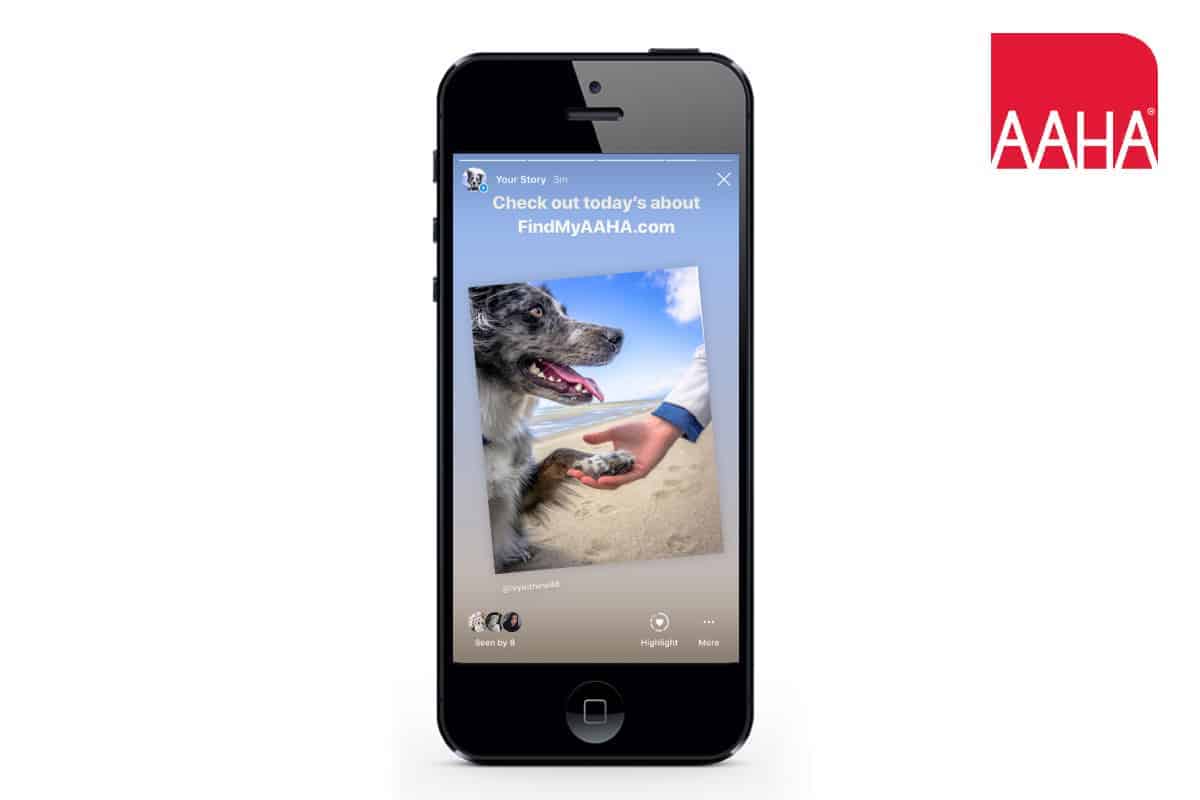
Recognizing the popularity of pet content on social media, and the power of word-of-mouth has at driving referrals to service providers, SE2 recommended a national influencer outreach strategy – a first for AAHA’s marketing and communications team.
As one of the only agencies in the country that exclusively employs influencer outreach for causes and issues, we tapped our national network of influencers to participate in a campaign we titled Paws-abilities.
This concept reinforced AAHA’s key messages and provided influencers with a new and novel way to create content featuring their pet and the AAHA brand. Additionally, while close to 80 percent of veterinary practices aren’t accredited by AAHA, the organization’s own research showed that pet owners assume that their favorite/preferred practice is accredited. Because of this, the Paws-abilities concept also challenged pet owners to find out if their current care provider has AAHA accreditation.


The Results
The campaign engaged close to three dozen high-profile pet influencers across North America. These influencers produced photos, blogs and even videos featuring AAHA key messaging. Some even took up our offer to visit their local AAHA-accredited clinic for a tour, which they then talked about in their posts. Many of the influencer posts received additional paid promotion to extend the reach of the campaign.
The influencers produced over 60 pieces of original AAHA-themed content. Each piece of content generated an average of 28,000 impressions and a significant number of likes, comments and shares per post.
In total, the campaign generated nearly 70,000 engagements from pet owners – many of whom expressed surprise and shock that they had never considered whether their preferred practice is accredited – achieving our campaign objective of highlighting the importance of quality pet care provided by AAHA-accredited practices.
Over 1,000 pet owners went a step further and visited the campaign landing page to find an accredited practice in their community. While there, they also spent nearly one and a half minutes on the landing page learning more about pet care and AAHA’s benefits to pets and their owners.
Lastly, the influencer campaign generated dozens of new pieces of content that the organization is repurposing for other marketing activities – such as including these influencer stories in annual reports, resharing this content on its owned social media channels, and including these stories in its newsletter. All of which help AAHA eek additional value of this campaign.
And, AAHA’s board and members raved about the campaign – fulfilling the objective of delivering added member benefits and promoting local practices. Because of the campaign’s success, AAHA is exploring the paws-ability of investing in additional influencer outreach campaigns in the future and making influencer marketing a dedicated component of its marketing mix.