
Normalizing Early Intervention Through Clear, Supportive Resources
The Challenge
Families and even some providers often miss early signs of developmental delays or are unsure where to seek help. Stigma and fear can also delay action. The challenge was to increase early identification and referrals by raising awareness, reducing stigma, and equipping partners with tools to guide families toward services.
The Colorado Department of Early Childhood’s Early Intervention (EI) services support infants and toddlers with developmental delays or disabilities, helping them build critical skills during a key developmental window.
Our Approach
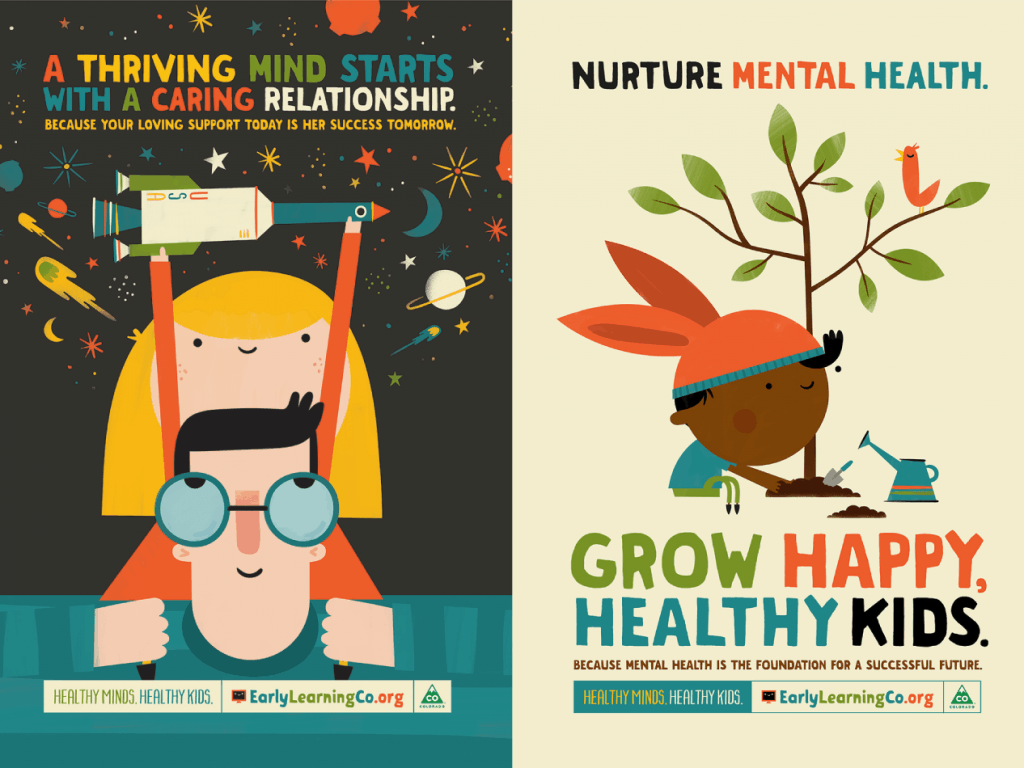
SE2 approached this work by developing a comprehensive toolkit of materials designed to support both providers and caregivers in understanding and engaging with Early Intervention services.
The toolkit included clear, accessible resources that helped identify developmental concerns, explained the benefits of early support, and guided families on how to take the next step. Materials for providers focused on equipping them with practical tools to start conversations with families, make referrals, and reinforce the importance of early action.
A central focus of the approach was destigmatizing Early Intervention. Messaging was intentionally framed to normalize developmental support as a positive and proactive step—emphasizing that seeking help early can lead to stronger outcomes for children and families. Rather than focusing on deficits, content highlighted growth, potential, and the value of getting support at the right time.
Together, these materials created a shared language and approach across providers and caregivers—making Early Intervention more approachable, understood, and utilized.


The Impact
SE2’s work contributed to increased awareness and understanding of Early Intervention, helping more families and providers recognize the importance of identifying and addressing developmental delays early. As part of broader system efforts, Colorado saw growth in participation and engagement, including an increase in the number of children served—from 11,702 to 17,162 annually—and a 17% rise in average monthly caseloads.
These trends reflect a greater connection between families and services, alongside strong outcomes for those engaged: 94% of children showed developmental improvement and 99% of families reported that services helped them support their child’s learning and growth.
While multiple factors contributed to these outcomes, SE2’s communications and tools played a role in making Early Intervention more visible, understandable, and approachable—supporting earlier engagement and more informed participation across Colorado communities.


Guiding Families to Higher-Quality Child Care Choices
The Challenge
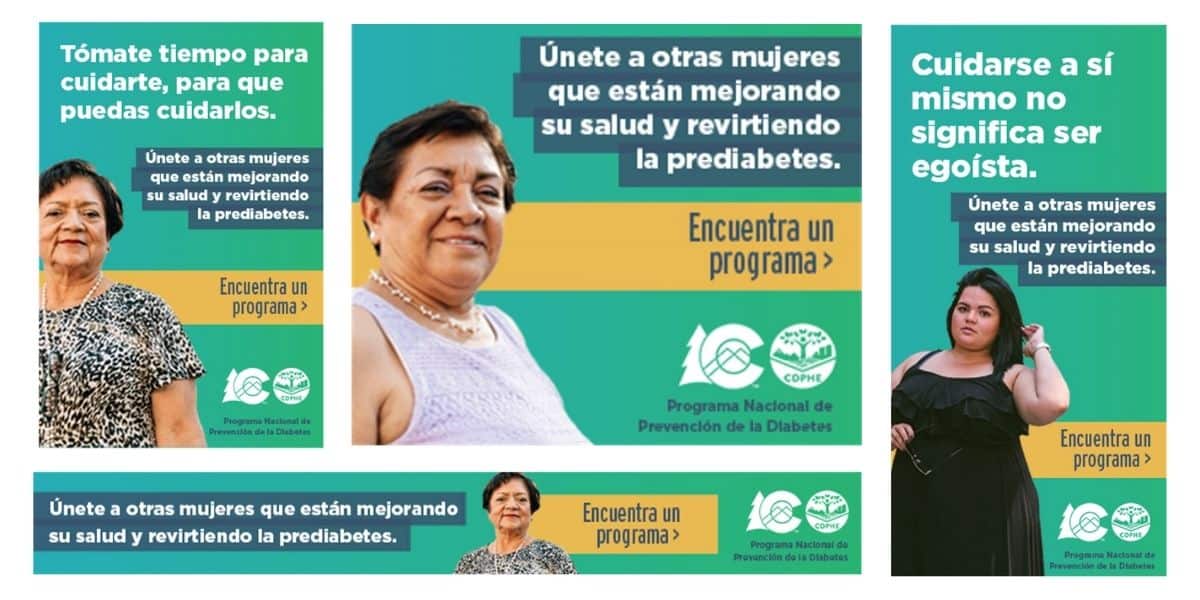
Colorado Shines is the state’s quality rating and improvement system, designed to help families identify high-quality child care and support providers in improving care. While the system offers a standardized way to evaluate quality, it requires both family awareness and provider participation to be effective.
Many families were either unaware of Colorado Shines or did not understand how to use quality ratings when choosing care. At the same time, providers faced barriers to participation, including perceived complexity and limited time. The core challenge was building trust in the system, increasing awareness, and motivating both parents and providers to actively engage with it.
Our Approach
SE2 approached this work through a multi-year, integrated strategy designed to make child care quality easier for families to understand and act on. At the foundation was the development of clear, plain-language messaging that demystified what “quality” means in early childhood care and why it matters for children’s development.
To ensure this understanding translated into action, SE2 optimized the Colorado Shines website experience—improving how families search for, compare, and identify quality-rated providers. This included refining user pathways and prioritizing content that supports decision-making at key moments.
SE2 also developed English and Spanish toolkits that break down the core components of early childhood quality into accessible, real-world guidance for families and providers. These resources helped extend understanding beyond awareness into deeper engagement.
All efforts were reinforced through sustained, targeted paid media campaigns over several years, designed to build awareness, drive traffic to the platform, and ultimately connect families across Colorado to quality child care options.


The Impact
Efforts to promote Colorado Shines contributed to measurable progress in both quality and access across the state. The percentage of high-quality providers increased from 30.9% in 2023–2024 to 33.4% in 2024–2025, alongside a 2.1% increase in licensed infant and toddler capacity, growing from 38,416 to 39,218 available spots.
Paid media campaigns played a key role in driving awareness and engagement. Facebook generated the highest overall reach with 1.8 million impressions, including 928,000 from the English-language campaign alone. Google Search delivered strong intent-driven performance, achieving a 4.99% overall click-through rate (CTR), with the English campaign reaching 6.84% CTR.
Additional channels reinforced engagement: Entravision e-blasts achieved a 1.92% CTR with a 17.7% view rate, Bright by Text outperformed benchmarks with a 2.69% CTR (exceeding the 1.25% benchmark), and dynamic display banners in both English and Spanish drove stronger performance and more clicks than static formats.
While multiple factors contributed to these outcomes, SE2’s integrated communications and media efforts helped increase visibility, engagement, and connection to quality child care—supporting continued growth in both provider quality and family access.

Making Tobacco Cessation Human, Possible, and Stigma-Free
The Challenge
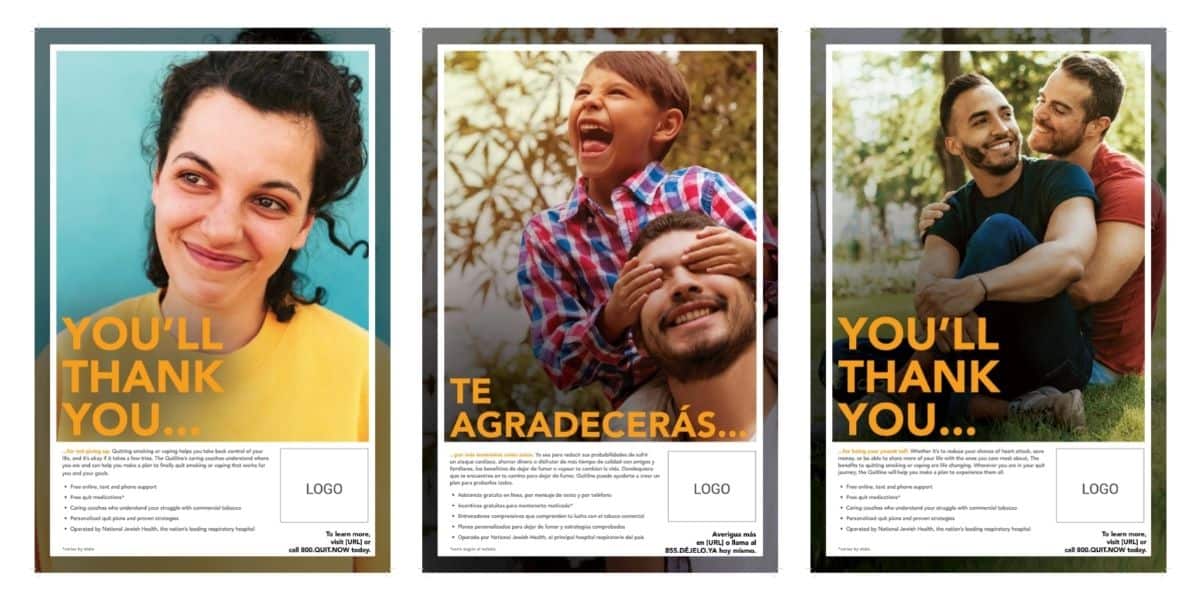
For many Coloradans, nicotine use is intertwined with stress, mental health, identity, and long-standing routines. Quitting is rarely linear, yet public health messaging often treats it that way. Traditional cessation campaigns can unintentionally reinforce shame by focusing on advice, directives, or end results rather than lived experience.
At the same time, awareness of the Colorado QuitLine was high, but perceptions lagged. Dozens of focus groups and surveys conducted by our team told us that many people viewed it as a last resort. It was often seen as impersonal, clinical, or only for those who had already failed at quitting on their own. CDPHE needed a way to humanize the QuitLine, reduce stigma around nicotine use, and reflect the real complexity of quitting, especially for communities facing compounded stressors.
The challenge was not just to encourage quitting. It was to help people feel seen.
Our Approach
SE2 created the Colorado QuitLine Stories series to tell a different kind of story, one grounded in dignity, honesty, and collaboration.
Shot in a documentary style, the series centers participants as co-creators rather than subjects. Individuals were not scripted, coached, or shaped to fit a single narrative arc. Instead, they were invited to speak openly about their lives, their relationship with nicotine, and what quitting means to them on their own terms. Filmmaking choices prioritized presence over performance, allowing silence, reflection, and vulnerability to remain part of the story.
Visual storytelling played a critical role. Each film was grounded in places that mattered to the participant, including homes, neighborhoods, workplaces, and outdoor spaces. Environment became a quiet narrative device that reflected routine, stress, resilience, and change. These moments added emotional depth without instruction, voiceover, or persuasion.
Across nine short films, produced in English and Spanish, the series features diverse Coloradans. Participants ranged from lifelong tobacco users to younger people just beginning to recognize nicotine’s impact. Together, the films represent different products, different paths to quitting, and communities across the state. As a whole, the series challenges stigma and reframes the QuitLine as a human source of support rather than a last resort.
Distribution was intentional and respectful. Films were placed through targeted digital channels and timed dayparts, such as lunch breaks, to reach viewers in moments of pause and routine when reflection and connection are most likely.
The Impact
The Colorado QuitLine Stories series shifted the tone of cessation communications from directive to human. It invited viewers to see themselves reflected in the work.
Key outcomes included a reframed perception of the QuitLine as supportive, relatable, and non-judgmental, rooted in real people and real experiences rather than instructions or outcomes. The series drove strong emotional resonance and engagement through documentary storytelling that allowed complexity, vulnerability, and unfinished journeys to remain visible.
The work also strengthened relevance across diverse audiences through bilingual content and representation spanning age, geography, nicotine products, and readiness to quit.
In addition, the series became a durable storytelling asset that could be deployed across paid media, digital platforms, and partner channels, extending its impact beyond a single media flight.
Most importantly, the series helped normalize quitting as a lived experience. It showed that quitting can be complex, personal, and possible, especially when people feel seen, respected, and supported.


When Life Gets Harder, Messaging Must Get More Human
The latest Colorado Health Foundation Pulse Poll tells a stark story.
People are worried. They are uncertain about the future. And they are not convinced that the systems meant to support them are keeping up with the realities of daily life.
While the data are Colorado specific, the patterns are not.
National polling and research, from sources like Ipsos and Pew, show the same underlying dynamics playing out across the United States. Cost pressures are dominating attention. Housing feels increasingly out of reach. At the same time, rapidly changing immigration policies and enforcement actions are introducing new layers of fear and uncertainty, contributing to stress and mental strain across many communities.
Taken together, the data suggest that this is not just a moment of political disagreement or shifting priorities. It is a moment of widespread strain rooted in lived experience. And that has big implications for how organizations frame issues, communicate solutions, and engage the people they serve.
The Economy Is Personal
In the Pulse survey, cost-of-living and affordability concerns quickly rise to the surface. National data reinforce this pattern.
Pew Research has found that economic concerns today are less about macro indicators and more about whether people feel financially secure in their daily lives.
This distinction matters.
When institutions talk about the economy using technical language – inflation rates, labor participation, market trends – they often miss what people are actually experiencing. For most people, the economy is not a set of indicators. It is the stress of rent increases. The anxiety of grocery bills. The feeling that working harder does not necessarily lead to progress or even stability.
Communications that focus on economics can feel disconnected or even dismissive when they do not reflect that emotional reality. People are not looking to be told that conditions are improving on paper. They want acknowledgment of how hard it feels to get by right now, and they want to understand how systems, policies, or programs might ease that pressure in real and tangible ways.
For organizations, this means framing matters as much as facts. Effective communication starts by acknowledging lived experience, then connecting solutions to relief, stability, and a greater sense of control over everyday life.
Everything Starts with Housing
Housing affordability and housing insecurity show up repeatedly in both Colorado and national data. But their significance goes beyond housing alone.
Housing is one of the clearest signals of whether systems are working for people. When housing is unstable, everything else becomes harder. Health suffers when people must move frequently or live in overcrowded conditions. Mental strain increases when people do not know if they will be able to stay in their homes. Education is disrupted when children move from school to school. Productivity declines when workers commute long distances or constantly manage financial stress.
Research from Harvard’s Joint Center for Housing Studies and national homelessness data from the National Alliance to End Homelessness show that housing instability is rising and affordability is a growing concern for households across income levels.
For organizations working in health, behavioral health, education, workforce development, immigration, or environmental issues, housing insecurity offers an important reminder. People experience challenges as interconnected. When communications assume stability, time, trust, or bandwidth, they can miss the reality that many people are navigating.
When messages are organized around programs, they often assume people have time, trust, and capacity to navigate complexity. Framing issues around stability instead starts with what people are trying to protect in their daily lives, making communications feel more relevant and human. It also shifts the burden from asking individuals to navigate complexity to showing how systems can reduce pressure and support resilience.
Stress Is Widespread
Behavioral and mental health concerns appear throughout the Pulse data, sometimes directly and often indirectly. People may not always name mental health as their top issue, but stress, anxiety, and exhaustion are woven into how they talk about cost, housing, safety, and the future.
National data from the National Institute of Mental Health show that mental health conditions are common and that many people do not receive care for them. But just as important is how people understand their own distress. For many, it does not feel like a diagnosis. It feels like being overwhelmed, stretched too thin, or constantly bracing for what might come next.
When mental health is framed only through clinical language or crisis response, it can feel distant or irrelevant to people who are struggling but do not see themselves as needing treatment. At the same time, people are increasingly aware that stress is not just personal. It is shaped by external conditions like housing instability, job insecurity, discrimination, and environmental threats.
Communications that name stress as a reasonable response to relatable conditions are more likely to resonate. They reduce stigma and invite engagement by reflecting reality rather than labeling it.
Experiences Color Policy Views
One of the clearest signals across the data is this: While political language often dominates public conversation, the concerns people express are grounded in material conditions and daily life.
People feel pressure. They feel uncertain. They worry about maintaining stability for themselves and their families. These experiences cut across geography, ideology, and identity.
When communications fail to reflect this shared reality, people disengage, not because they do not care, but because they feel unseen. When messages acknowledge interconnected pressures and speak to universal needs like dignity, stability, and hope, they create space for trust.
What This Moment Requires
The Pulse survey and national data together point to the same recommendations:
- Start with what people are feeling before explaining what systems are doing.
- Connect issues that are too often treated separately.
- Recognize that building trust starts with empathy.
At their core, these are not communications tactics. They are responses to a deeper need people are expressing right now: the need for a sense of footing in a world that feels increasingly unstable.
As David Brooks recently wrote in The New York Times,
“…all of life is a series of daring explorations from a secure base. People need a secure base. Part of that base is emotional — unconditional attachments to family and friends. Part of that secure base is material — living in a safe community, with a measure of financial stability. Part of that secure base is spiritual — living within a shared moral order, possessing faith that hard work will be rewarded, faith in a brighter future.”
That idea helps make sense of what the data are showing. When housing feels out of reach, when costs keep rising, when policies shift quickly and unpredictably, that secure base starts to erode. And when it does, people experience issues not as isolated challenges, but as a constant state of pressure.
If we want our work to matter in this moment, our communications must reflect the reality people are navigating every day. Not the world as it looks on paper, but the world as it feels to live in.
That is where trust begins. And in a moment like this, trust is the foundation for everything else.


The Search for Community Takes Us to New and Different Places
Where do you find community these days?
Where do you connect with people who are different from you?
For many, social media isn’t that place anymore. Sure, we may still spend a lot of time on these platforms, but they’re no longer providing the sense of human connection we crave, and often they add to our stress.
We know that newborns respond to faces from birth, and human touch and closeness are key to their healthy development. Adults need human-to-human interaction too, beyond what any screen can provide.
“Electronic communication is here to stay, so we need to learn how to integrate it into our lives. But if it replaces live interactions, you’re going to be missing some important benefits and probably be less fulfilled,” says a professor whose newly released summary of research found that digital communications are better than nothing but fall short of in-person interactions.
I’ll always choose an in-person meeting over a video call if time and distance allow. A one-on-one meeting provides an opportunity to connect beyond the business at hand, ideally with frequent digressions.
In larger in-person groups, we can read facial expressions and head nodding across the room. I usually find the most important connections in the unstructured time before or after the formal agenda starts. It’s rooted in my experience in journalism, where the best quotes were delivered in the hallway, not the meeting room.
While the big coffee chains have embraced drive-through, it can be hard to find seats inside at my local independent coffee houses. Clearly, these local spots are meeting a need.
Blue Sparrow, the coffee shop in our building’s lobby near the Colorado Capitol, stays full most of the day, and most customers are talking with others while they’re there. I joke that lobbyists could camp out there and run into all the policymakers they’re trying to reach.
The holidays always offer an opportunity to unplug, and our family enjoyed a jigsaw puzzle from Boulder-based Liberty Puzzles, which just celebrated its 20th birthday. A puzzle provides a great opportunity to sit together for a long time and talk about completely unrelated topics.
Interestingly, Liberty Puzzles was co-founded by the son of former Colorado U.S. Sen. Tim Wirth, who got an early taste of the political toxicity that defines today’s D.C. dynamics. Maybe there’s an origin story there.
Of course, digital connections allow us to communicate with people who live far away, when in-person meetings are impractical. And it allows us to communicate at scale.
I had a great video conversation this month with community builder Kenny Andejeski in Chattanooga. We both value in-person conversations, yet he lives 1,200 miles from me. Now that we’ve connected through Teams, maybe we’ll find an opportunity to meet in person this year!
My social media time is now spent almost exclusively on LinkedIn, and I’m not the only person increasingly drawn there.
These days, LinkedIn is not just for job seekers – it’s a good platform for sharing and consuming compelling content, and includes a range of users from students to retirees. It’s got some key benefits I appreciate:
- People use their real names and professional profiles so they’re accountable for what they say. This reduces toxicity and trolling.
- It allows users to limit political content in their feed. Many still offer strong points of view on their areas of interest and expertise, including controversial topics that aren’t restricted by LinkedIn’s definition of political content. But rarely does blatantly partisan and unconstructive content slip through the filter.
- The algorithm doesn’t seem to reward bad behavior and, in fact, offers opportunities to report problematic content.
Yes, there’s also a lot of self-promotional BS on LinkedIn from those who are perpetually “humbled and honored” by awards for which they asked others to nominate them. However, LinkedIn provides tools to help curate our feeds so we can get less of that. And the unfollow button is your friend!
Whether it happens in person or virtually, coming together to listen to one another, increase understanding of our differences, and look for solutions together feels more urgent than ever. People feel they belong when they have a voice and opportunities to help shape the future of their community – neighborhoods, schools, and workplaces. And when people feel heard, connected, and supported, everyone benefits.
Feeling connected and having a sense of belonging is essential for physical and mental health.
In school, belonging improves academic achievement; at work, belonging boosts job satisfaction and engagement. Research shows that belonging also strengthens community well-being and resilience. Unfortunately, only about half of Coloradans say they feel a strong sense of belonging in their local community.
Our friends at Belonging Colorado are working to change that. Through locally based projects across the state made possible by a special fund at The Denver Foundation, communities are working to find new ways to bridge divides and increase belonging.
Learn more about Belonging Colorado here.
But back to you:
Where do you find community these days? Where do you connect with people who are different from you?
Email me at Eric@SE2ChangeForGood.com or find me on LinkedIn if you’d like to share or just connect.