AI Can Augment, Not Automate, People-centered Strategies
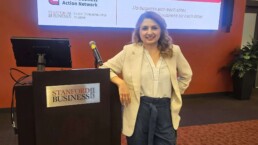
Last month, I began my journey at Stanford University through the Latino Business Action Network Scaling Program. Nearly 100 entrepreneurs from around the world came together to do what we do best—build bigger, better, and more profitable businesses that shape our economy.
The coursework covered many topics that are highly relevant to today’s business challenges. But what stayed with me most wasn’t just the content; it was a shift in perspective.
When I went to Stanford to study AI, I expected to come back talking about models, tools, and technology. And yes, I learned all of that.
But the most meaningful takeaway had little to do with the technology itself.
It came from Professor Michael Lepech, Professor and Senior Fellow at the Woods Institute for the Environment. He kept returning to a simple but powerful idea: AI is not a technology problem. It is a people problem.
That stuck with me.
As a Latina entrepreneur, I’ve always built with people in mind first – relationships, trust, and understanding how people actually experience a product or service. So hearing this in the context of AI didn’t feel abstract. It felt real.
A recent New York Times article explores how AI is reshaping jobs, not just eliminating them. That resonated, too. The work isn’t disappearing; it’s evolving. And the people who will thrive are those who learn to work with AI, not against it.
Stanford helped me understand why so many companies struggle with this shift.
There’s a statistic I keep coming back to: 85% of AI projects fail. Not because the technology doesn’t work, but because organizations don’t know how to apply it in ways that create real value.
That’s the gap.
AI is powerful, but it can’t repair a broken understanding of your community. It can’t heal lived experiences or past trauma, and it can’t spark the passion required to transform systems so they truly serve people.
It doesn’t fix processes that were never designed with ALL people in mind.
A reminder that the work we do at SE2 matters deeply. Slow down. Pause. Sit with people. Listen to their stories. Build real connection.
At its core, the SE2 PowerMap® framework is about people. We help individuals navigate important decisions. We build trust in moments that matter. We operate in complexity that is not just technical but also emotional.
That kind of work isn’t something AI replaces. It’s something AI should support.
One of the biggest mindset shifts for me was understanding the difference between automation and augmentation.
- Automation is about efficiency—handling simple, repeatable tasks.
- Augmentation is about empowering people to make better decisions, especially when the stakes are high.
SE2 operates in that latter space.
The decisions our clients, governments, elected leaders, and communities face require context, trust, and judgment. That’s where people matter most.
So when I think about AI in our world, I don’t think about replacing human interaction; I think about improving it.
Another framework we explored at Stanford was Product, Organization, and Process.
Most companies focus heavily on the product; they want to add AI features, build smarter tools, and move fast. But what I’ve seen, both in my own work and through this lens, is that organization and process matter just as much.
At SE2, relationships aren’t an afterthought; they’re the foundation. And that’s a strength, especially right now. Because the more AI becomes embedded in how we work, the more valuable human connection becomes.
That’s the biggest shift in how I think about all of this.
AI isn’t just artificial intelligence; it’s a way to scale collective intelligence. But that only works if people are at the center.
- People are still the ones making decisions.
- People are still the ones building trust.
- People are still the ones accountable for outcomes.


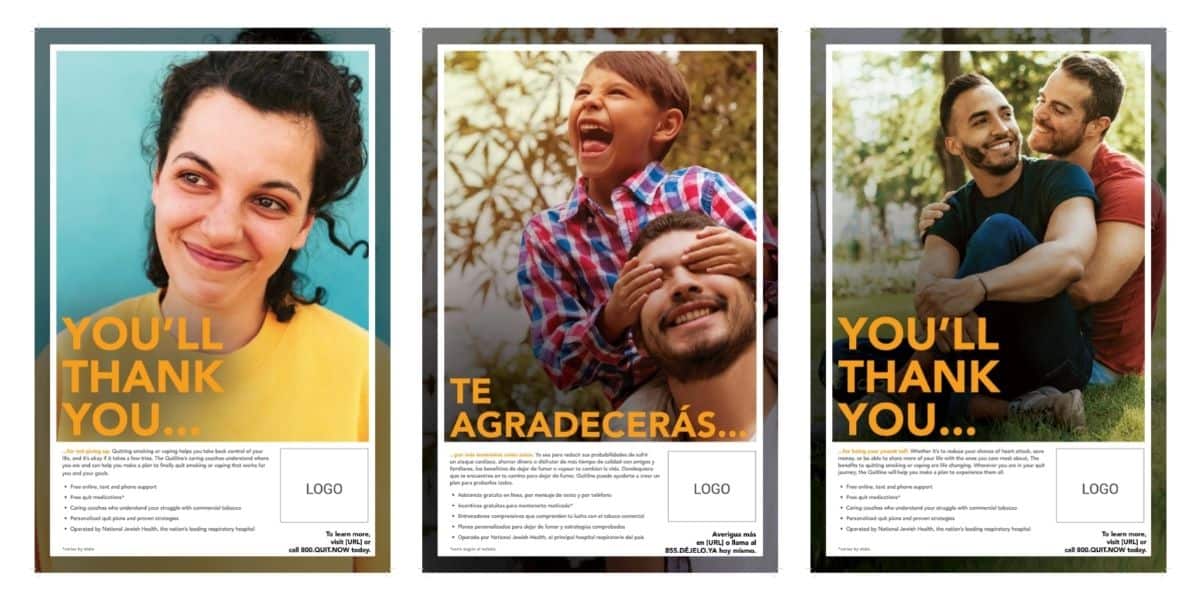
Videos Bring Quit Stories to Life, Earn National Recognition
Quitting tobacco isn’t a straight line. It’s personal. Sometimes messy. For many, it takes time, support, and more than one try.
We believe in telling stories that reflect the full experience—not just the outcome.
With the Colorado QuitLine Stories campaign, we focused on honesty over perfection. When people see themselves in someone else’s journey, it builds understanding, reduces stigma, and makes change feel possible.
We’re honored that this work earned Best of Show at the Web Marketing Association’s 2026 Internet Advertising Competition, but what matters most is the brave people behind the stories and the impact of their stories
The campaign videos, which won Best Government Online Video Campaign and Best in Show – Online Video Campaign, are available as a supercut on Vimeo, offering a taste of the stories and creative approach.


Turning Developmental Guidance into Daily Moments of Learning
The Challenge
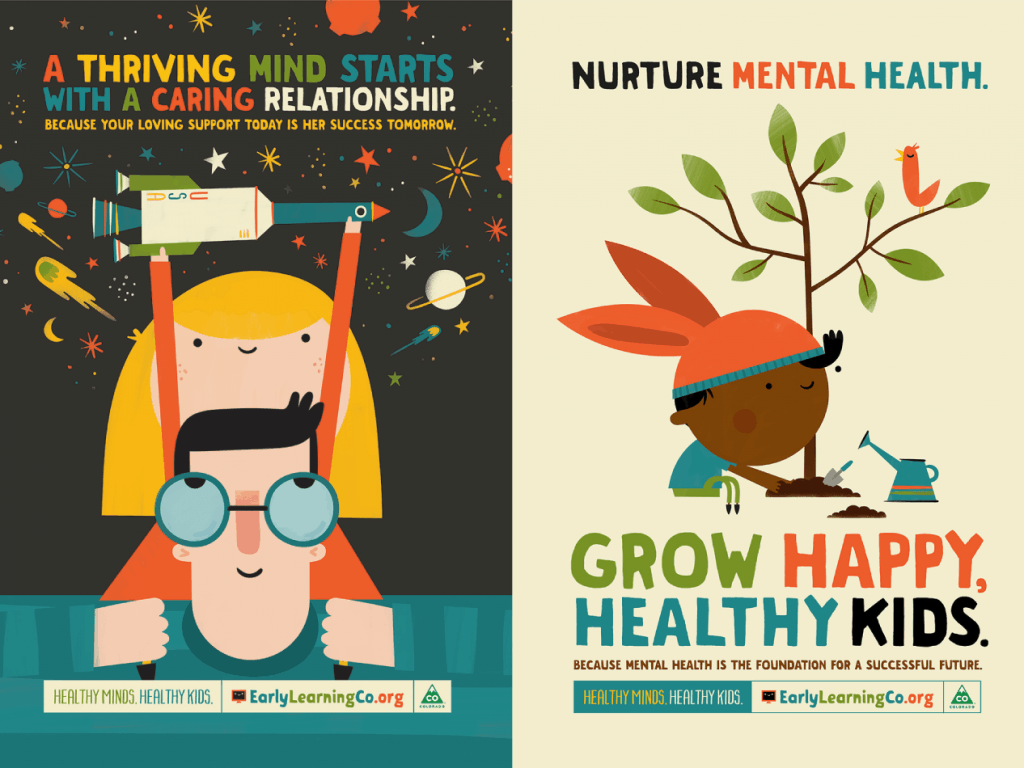
Colorado’s Early Learning and Development Guidelines provide a framework for understanding how children grow and learn from birth through age eight. These guidelines are intended for educators, caregivers, and families to support developmental milestones.
The guidelines are comprehensive but complex, making them difficult to translate into everyday practice. Many caregivers and providers were either unaware of the guidelines or unsure how to apply them. The challenge was simplifying and activating the content so it could be easily understood and used across diverse audiences.
Our Approach
SE2 approached this work through a sustained, multi-year strategy designed to translate Colorado’s Early Learning and Development Guidelines into practical, everyday use for both caregivers and providers.
At the core was an always-on paid media effort that built ongoing awareness and encouraged caregivers to engage with the guidelines over time. This was paired with a user-centered website experience that allowed families to easily explore content tailored to their child’s age, making developmental information feel relevant, timely, and actionable.
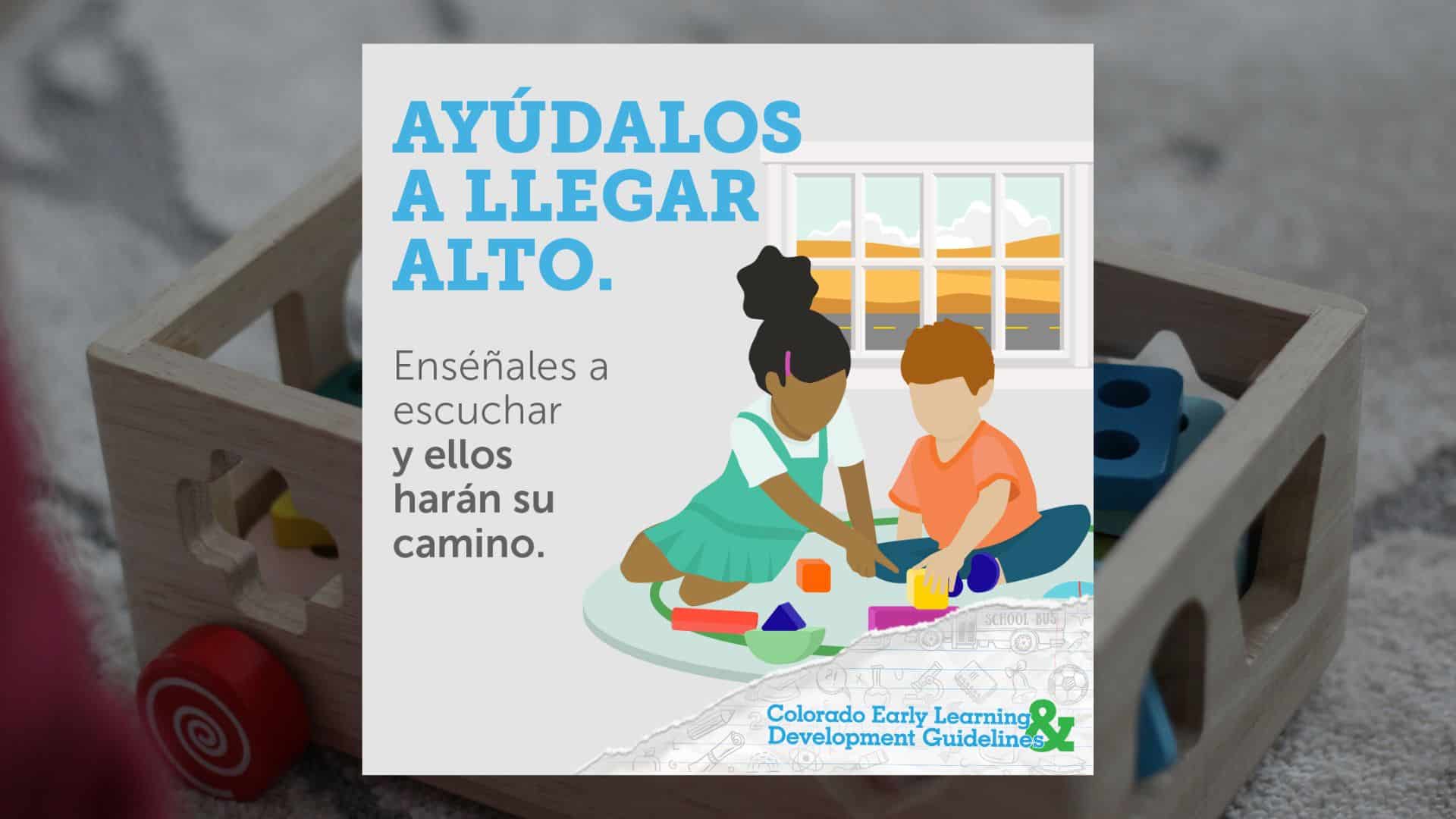
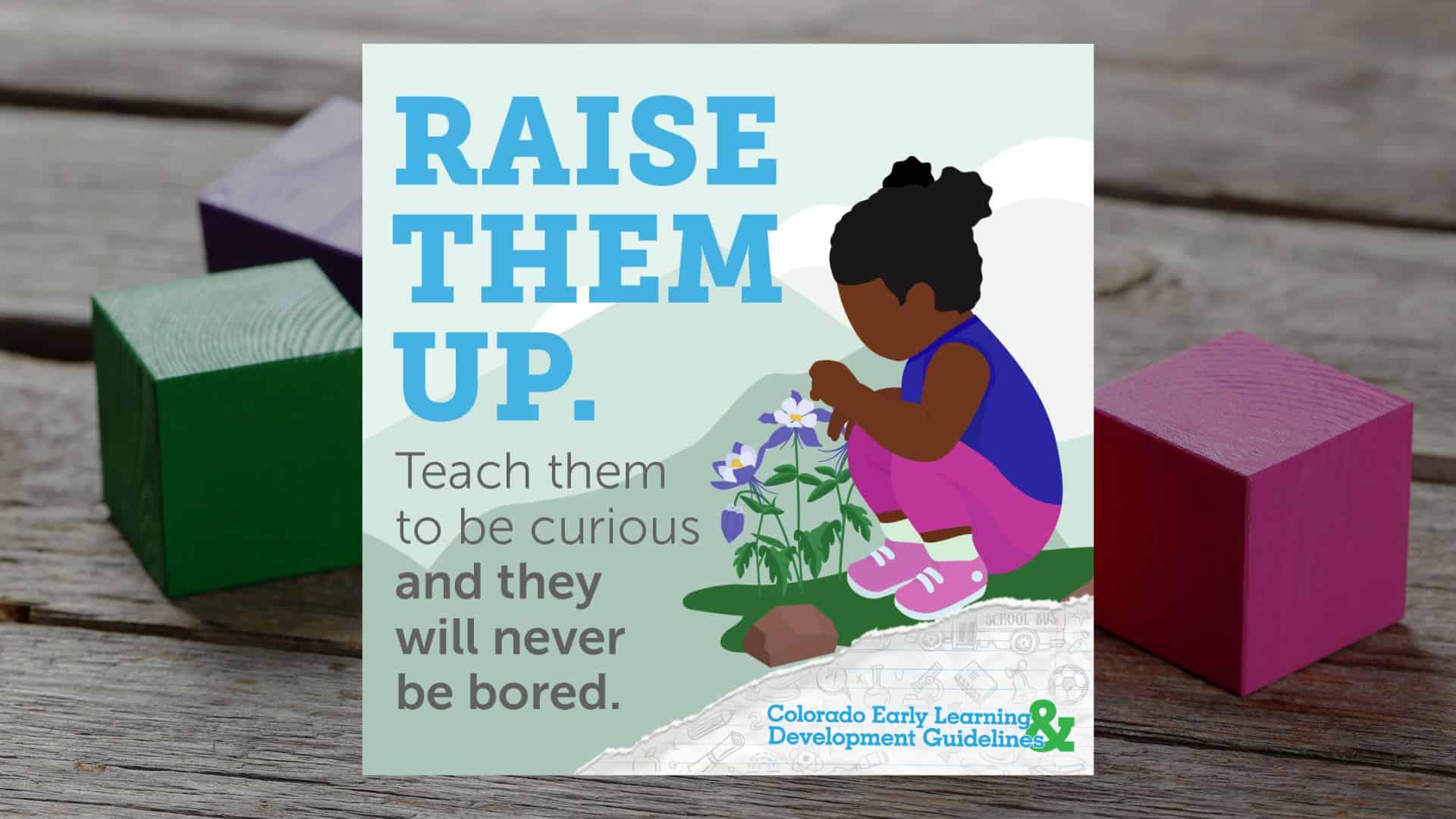
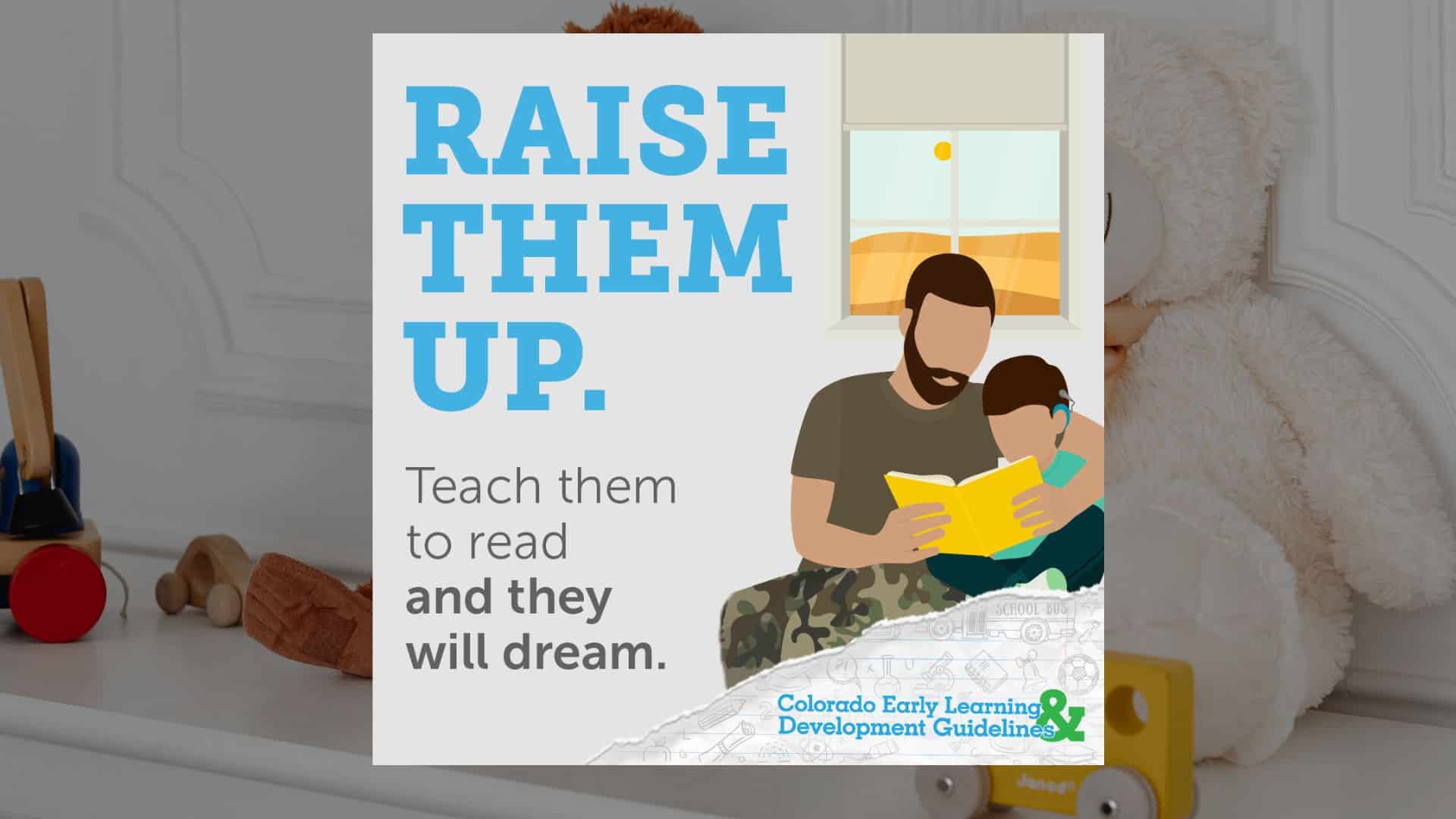
To extend impact beyond awareness, SE2 developed toolkits in English and Spanish that equipped providers with resources to better educate and engage parents in early childhood learning. These materials helped bridge the gap between what children need to thrive and how caregivers can support that development at home.
Statewide and niche earned media was used to reach parents and caregivers through parenting sites and news articles.
In parallel, additional resources were created specifically for providers to support the delivery of high-quality early childhood experiences, ensuring the guidelines were not only understood but consistently applied in care settings across Colorado.

The Impact
The Early Learning and Development Guidelines helped establish a shared understanding of child development across Colorado’s early childhood system—aligning providers, educators, and families around common milestones and best practices. By translating research into practical, age-based guidance, the Guidelines supported more consistent, developmentally appropriate care and learning experiences across settings.
Earned media and communications efforts significantly expanded awareness of the Guidelines statewide. Coverage included features on Univision Colorado and Educa Radio, reaching both English- and Spanish-speaking audiences. Social media amplification further extended reach, with key coverage generating over 59,000 impressions, SE2 content adding 15,700+ impressions, and partner shares contributing an additional 19,000+ impressions—driving broad visibility without additional media spend.

Reaching Rural Communities with Messages of Dignity, Recovery, and Hope
The Challenge
Rural communities across Region 15 (Colorado’s Chaffee, Custer, Fremont, and Park Counties) faced the opioid crisis under uniquely difficult conditions. Geographic isolation, limited treatment availability, workforce shortages, and transportation barriers made accessing care harder than in urban areas. At the same time, stigma surrounding substance use disorder ran deep in small communities where privacy is limited and fear of judgment can prevent people from seeking help.
Many residents did not see treatment as accessible or meant for them. Misconceptions about addiction, recovery, and medication-assisted treatment continued to reinforce silence and delay care. Region 15 needed a campaign that could reduce stigma, normalize recovery, and connect people to local treatment and support in ways that felt credible, respectful, and relevant to rural life.
The challenge was not only to raise awareness, but to create trust and open the door to treatment in communities where asking for help often feels risky.
Our Approach
SE2 partnered with the Region 15 Opioid Governance Committee to develop a stigma-reduction and treatment awareness campaign grounded in real stories, rural identity, and harm-reduction principles.
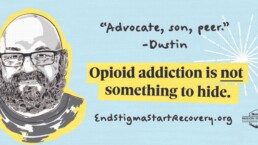
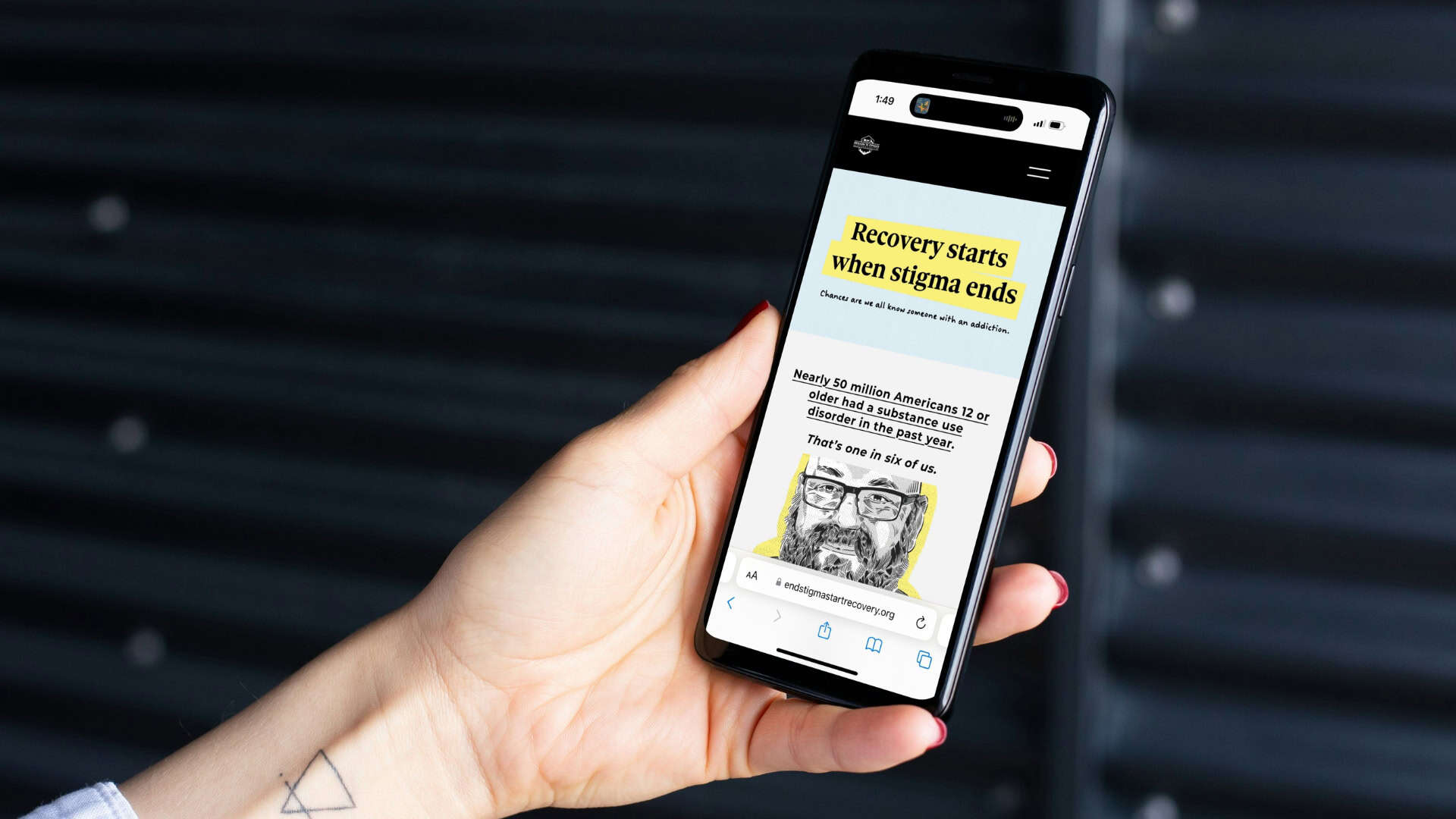
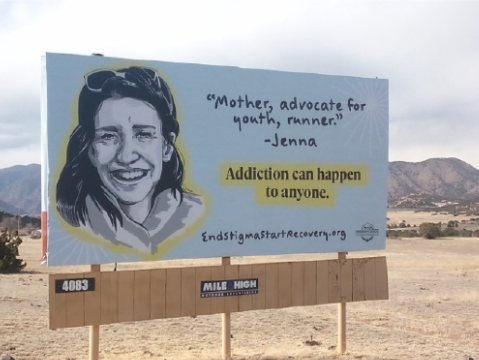
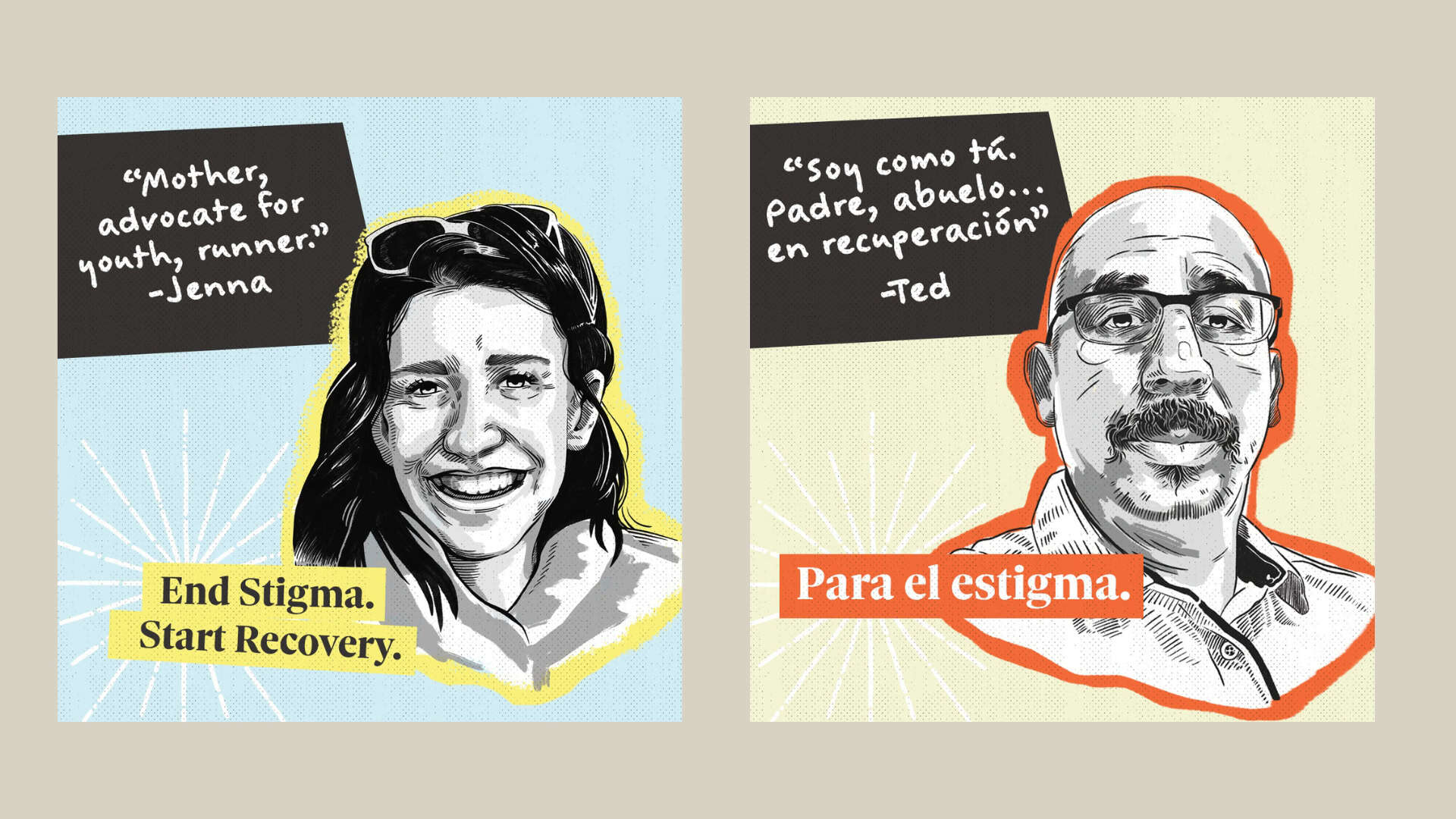
The campaign centered on storytelling that reflected the lived experiences of people in recovery, family members, and community members. Creative featured real voices and plainspoken language, reinforcing that recovery is possible and that people who use drugs are neighbors, parents, workers, and friends. Messaging emphasized dignity, connection, and hope rather than fear or shame.
To reach rural audiences effectively, SE2 deployed a multi-channel strategy that balanced scale with relevance. Paid media ran across Meta, Display, and YouTube, with creative optimized for mobile-first consumption. Display and social placements ensured repeated exposure in everyday digital environments, while video storytelling on YouTube allowed space for deeper engagement and emotional resonance.
Earned media amplified the campaign through trusted local outlets, helping normalize conversations about addiction and recovery within communities themselves. In parallel, SE2 supported the development and promotion of a campaign website that served as a central hub for treatment information and local resources. The site provided a clear, stigma-free pathway to help, designed to be accessible and easy to navigate for both English- and Spanish-speaking users.
Throughout the campaign, SE2 used performance data to guide optimization, ensuring resources were focused on the channels and creative approaches that resonated most with rural audiences.
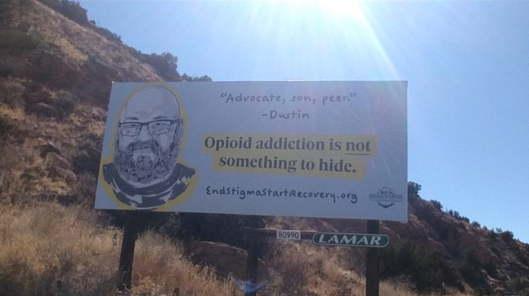
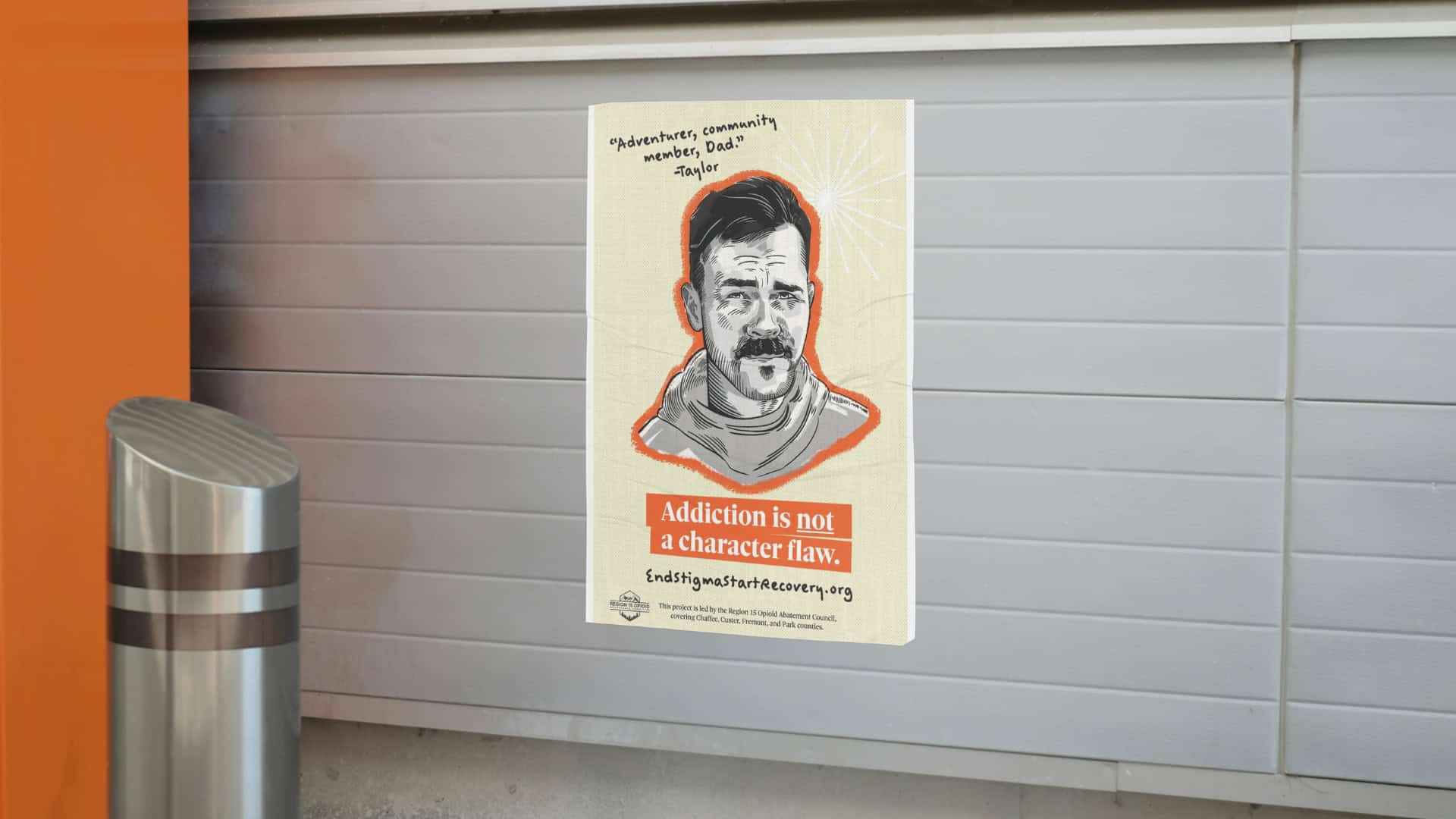
The Impact
The Region 15 campaign demonstrated strong reach, engagement, and early signs of stigma reduction across rural communities. Key outcomes included:
- More than 3.1 million impressions delivered across paid media channels in the first month, providing broad regional visibility.
- Over 10,000 total clicks, with an overall 0.32% click-through rate, indicating strong engagement for a public health stigma-reduction campaign.
- Earned media coverage across local outlets, generating 23,000 impressions and reinforcing campaign messages through trusted rural news sources.
- More than 6,000 website visits to the campaign resource hub in the first month, creating a direct pathway to treatment information and local support.
Together, these results show that stigma-reduction messaging rooted in storytelling and rural realities can break through silence and connect people to care. The Region 15 campaign helped shift the narrative around opioid use from shame to support, reinforcing that recovery is possible and treatment is available, even in the most rural parts of Colorado.


The Most Important Moment Is the One We Don’t See
In support line work, we spend a lot of time measuring what happens.
We track call volume. Clicks. Conversions. We look at what drove someone to reach out and what happened after they did. Our systems are designed to capture action because action is what we are trying to drive.
But there is a moment that sits just before all of that, and it is largely invisible to us: The moment when someone almost reaches out but stops short.
Someone sees a number or a button. They pause. They consider. Maybe they hover over a link. Maybe they open a page and read for a few seconds.
Then they stop. They close the tab. They put their phone down.
In data, that moment disappears. It registers as inaction. But from a behavior change perspective, it is one of the most important moments there is.
Every call, every text, every engagement is preceded by a decision. Not a large, deliberate decision, but a small internal negotiation: Should I do this? Is this for me? What happens if I do?
That negotiation happens quickly, often in a matter of seconds. And it is heavily influenced by how the experience feels in that moment.
What is happening in that space is not a lack of motivation. In many cases, motivation is already present. That is why the person got as far as they did.
What stops them is friction
Online marketing efforts have spent billions of dollars to eliminate friction. Amazon’s success is largely rooted in its frictionless experience. Ordering a product through Amazon is always easy – you don’t have to search the web, add a payment method, type your address, or calculate shipping costs. It’s reassuringly comfortable, and a click or two is all that’s required.
Support lines also benefit when friction is reduced.
Some of that friction is practical. The pathway may not be clear. The next step may feel like more effort than they are willing to give in that moment. But much of it is psychological.
Reaching out carries weight. It suggests something about who you are and what you are dealing with. Even if the service is positioned as low-pressure, the act itself can feel like a commitment.
If the experience reinforces that feeling, even subtly, hesitation increases. It happens in small ways:
- Language that implies a process instead of a moment. Phrases like “get started” or “begin your journey” suggest a long commitment.
- Forms that appear before any interaction.
- Unclear next steps that leave people guessing what they are committing to.
- Interfaces that resemble intake systems. Buttons that feel final. A lack of clear exits.
None of these is inherently problematic. But in the moment, especially for someone already stressed, they signal weight. They make the action feel larger than it needs to be.
If the experience reduces that sense of commitment, action becomes more likely.
- Clear, specific expectations about what happens next.
- Language that defines the interaction as contained or limited.
- Visible signals of control, like the ability to leave, pause, or not respond.
Even a simple preview can change the decision.
- “This is what the first message looks like.”
- “This is how most conversations start.”
- “You can stop at any time.”
- “You will not be contacted again unless you opt-in.”
- “We won’t ever share your personal information without your consent.”
These cues do not persuade people to act. These steps make the action they’re already considering feel safe enough to try.
Change does not happen in a straight line
People move forward, then pause. They get close, then pull back. They reconsider. They wait for a moment that feels slightly easier, slightly clearer, slightly safer.
That is not resistance. That is how people make what feel like significant decisions. So what does it mean to design for the moment before action?
It starts with reducing the perceived commitment of the first step. If reaching out feels like a major decision, people will treat it as one. If it feels like a small, easily reversible action, they are more likely to try it.
This is where modalities like text and chat play an important role. They signal flexibility. They allow people to engage without feeling locked into a conversation they cannot control. But the experience around it matters just as much.
People need to understand what will happen when they take that step. What the first message will look like. Who will they be talking to? What is expected of them, and what is not.
When those elements are clear, the moment feels more manageable.
Normalizing hesitation
Most messaging focuses on encouraging people to act. But it is normal to question, to pause, to not be fully ready.
When we design experiences that make space for that reality, we reduce the internal conflict people feel in that moment. We move from a binary decision to a more flexible approach. Not call or do not call, but explore, ask, try, step away, and perhaps return.
From a measurement standpoint, this is uncomfortable territory. The “almost” moment is difficult to quantify. It does not show up cleanly in dashboards. It requires us to infer behavior from incomplete signals. But just because it is hard to measure does not mean it is not real or important. In fact, it may be where the key decisions are made.
Expand the focus
We do not have a motivation problem. We have a hesitation problem. And hesitation does not respond to encouragement. It responds to clarity.
So instead of asking how to get more people to take action, ask:
- Where are we unintentionally making this feel bigger than it is?
- Where are we asking for commitment before trust is established?
- Where are we leaving people to fill in the blanks on their own?
Then start removing. Remove assumptions. Remove ambiguity. Remove signals that this is more than a single, contained step.
Our challenge is not just to drive action. It is to make action feel sufficiently safe.