Changing Adult Mindsets to Change Youth Outcomes
The Challenge
Social norming campaigns, particularly those aimed at youth, are increasingly recognized as evidence-based preventive interventions proven to positively influence behavior change. These campaigns leverage positive peer influence by highlighting healthy, common attitudes and behaviors within a community to shift perceptions and encourage healthier choices.
Despite their effectiveness, many health professionals and community leaders struggle to fully grasp the concept of social norming and how it can support youth behavior change. In a society that typically fixates on the bad news, it’s counterintuitive to focus on those who are making healthy choices. Yet many, and often the majority, of youth share positive and healthy attitudes and choose safe and health-promoting behaviors. A social norming approach uncovers the true positive that exists within a group of youth and celebrates the true positive norms of the group by sharing that information via multi-media campaigns.
Misunderstandings or confusion about the approach can create barriers to successful implementation, especially in schools and youth-focused programs, where clear communication and strategy are essential for driving impactful results.
ADAPT (A Division for Advancing Prevention and Treatment) is a national training and technical assistance division affiliated with the Office of National Drug Control Policy’s National HIDTA Program. Its focus is to promote healthy behaviors and prevent onset or escalation of substance use in youth. ADAPT supports communities across the nation to implement prevention strategies that will meet unique local needs and are grounded in the best available evidence.
The organization often collaborates with schools, community groups, law enforcement, and healthcare providers to guide them in selecting and implementing effective preventive interventions that promote healthy youth development and prevent substance use and other problems. Since 2023, ADAPT has engaged 10 middle schools across the nation interested in implementing a social norms media campaign on their campus.
ADAPT engaged SE2 to develop resources to help demystify social norming campaigns and encourage public health and school leaders to explore this strategy and apply it effectively to improve youth health outcomes.
Our Approach
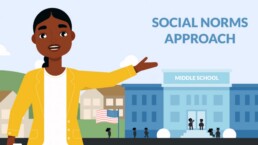
We developed an engaging explainer video as a key element to support ADAPT in its outreach efforts to schools and other community partners. This video clearly articulated the concept of social norming and how school staff, parents/caregivers, and others involved could support the campaign effort. When the campaign was complete, SE2 interviewed students and staff to share their experiences and report on the positive outcomes of the campaign.
Video is an effective medium for unpacking complex concepts, as it combines visual elements with concise messaging to create a clear and compelling narrative. This approach caters to the busy schedules of professionals who seek high-level education but have limited time to dedicate to in-depth training sessions or written materials.
The explainer video humanizes and distills the essence of social norming strategies. By using animations, scenarios, and expert insights, the video captures attention and simplifies otherwise hard-to-grasp ideas, making them accessible and understandable. This format not only fosters engagement but also allows professionals to grasp the critical aspects of social norming quickly and easily.
The Impact
The videos serve as a versatile resource that is being shared across various platforms, facilitating broader dissemination of knowledge and encouraging discussions within professional networks. By providing a succinct overview of social norming strategies, it empowers professionals to implement these evidence-based practices in their own programs and initiatives, ultimately contributing to healthier outcomes for youth in their communities. The ADAPT team reports that this is a highly effective resource to set the stage for the training and technical assistance they provide to communities across the country. It was also featured in ADAPT’s annual summit, which is attended by over 1,000 public health, law and drug enforcement, and other community leaders across the country.

Resetting Youth Perceptions to Prevent Substance Use
The Challenge
Many young people mistakenly believe that their peers engage in risky substance use behaviors more frequently than they actually do. This misperception creates pressure to conform to these imagined norms, which can influence their own choices and behaviors. Addressing these incorrect perceptions is essential for developing prevention strategies that resonate with youth. This strategy is called Positive Social Norming.
Positive Social Norming campaigns leverage positive peer influence by showcasing common, healthy attitudes and behaviors within a community. By shifting perceptions, these campaigns encourage healthier choices among youth.
ADAPT (A Division for Advancing Prevention and Treatment), a national division affiliated with the Office of National Drug Control Policy’s National HIDTA Program, is a national leader on Positive Social Norming. Focused on promoting healthy behaviors and preventing substance use escalation among youth, ADAPT supports communities across the nation in implementing evidence-based prevention strategies tailored to local needs.
ADAPT partnered with SE2 to create a social norming campaign aimed at educating middle school students in four states and 10 schools nationwide.
Our Approach
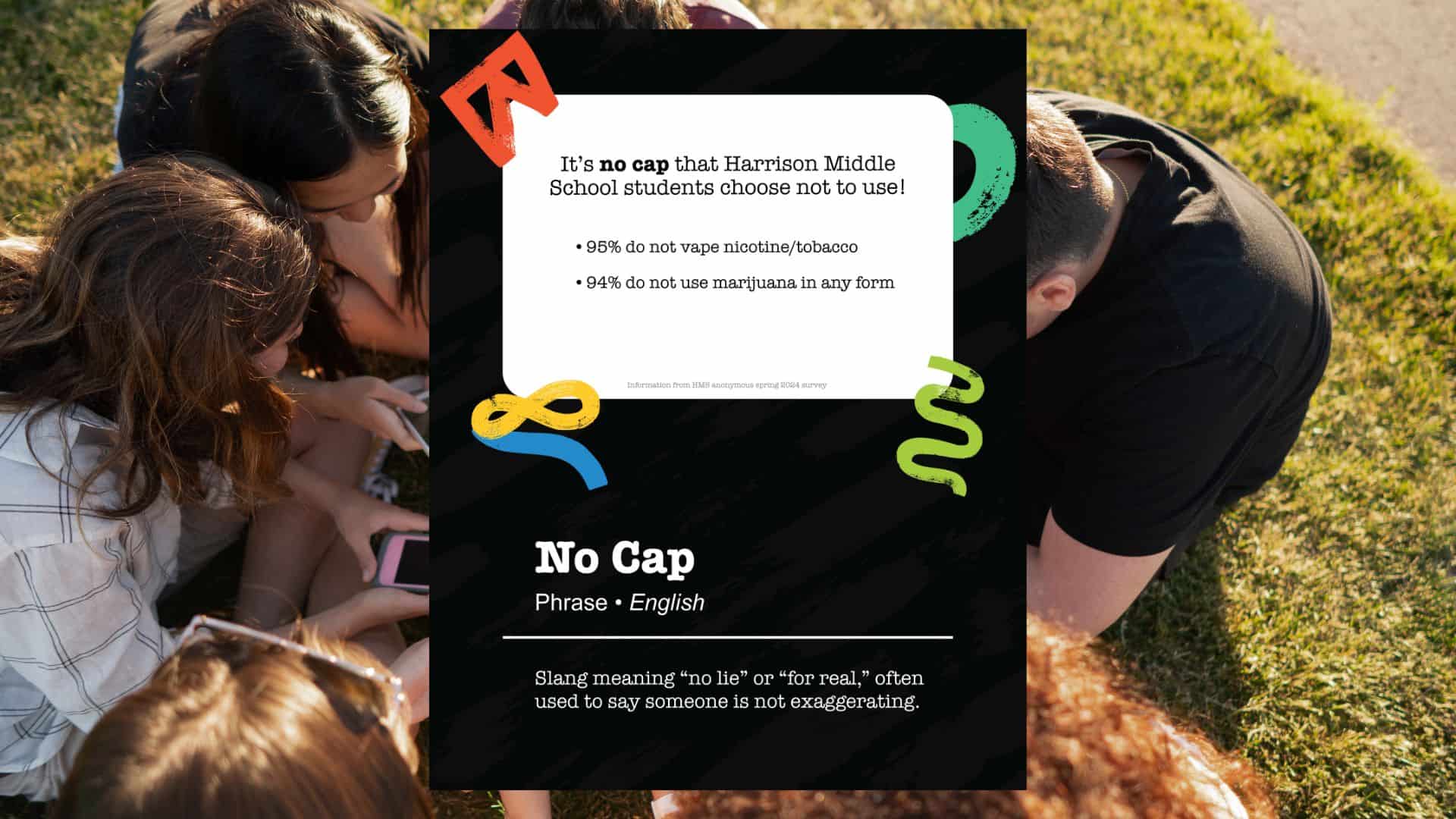
To engage youth and sustain their interest, we developed a series of micro-campaigns that highlighted each school’s unique social norms around healthy behaviors. These micro-campaigns rotated every few weeks to capture students’ attention, prevent message fatigue, and encourage students to think critically about health norms within their peer groups.
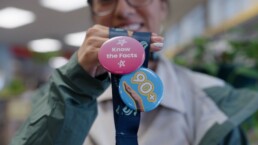
SE2 also created a toolkit for each micro-campaign, providing materials such as large posters and floor decals for school hallways, stickers and buttons for teachers and staff, and table tents for cafeterias and lunchrooms.
ADAPT provided technical assistance to each school to help them implement the campaigns.

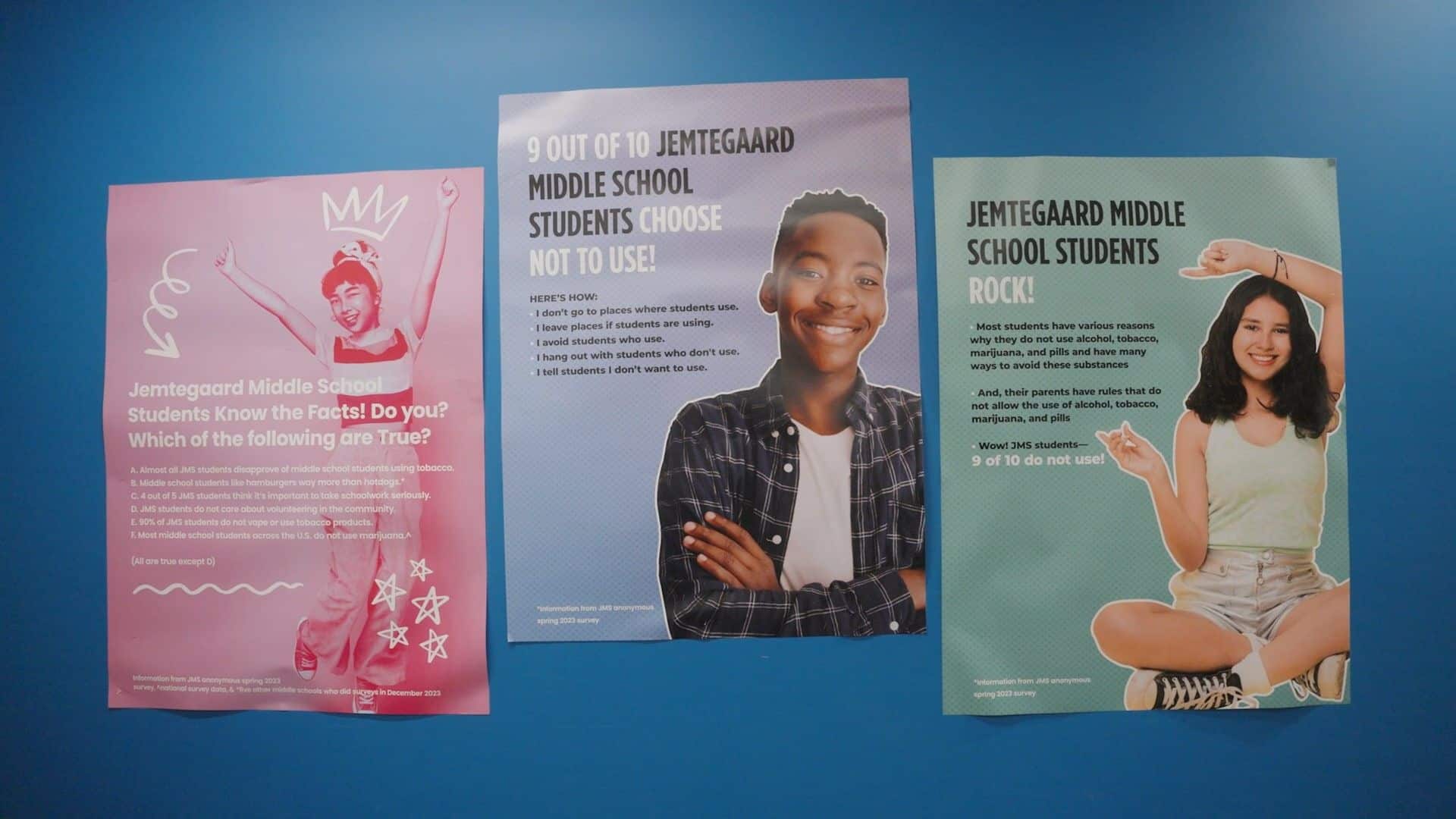

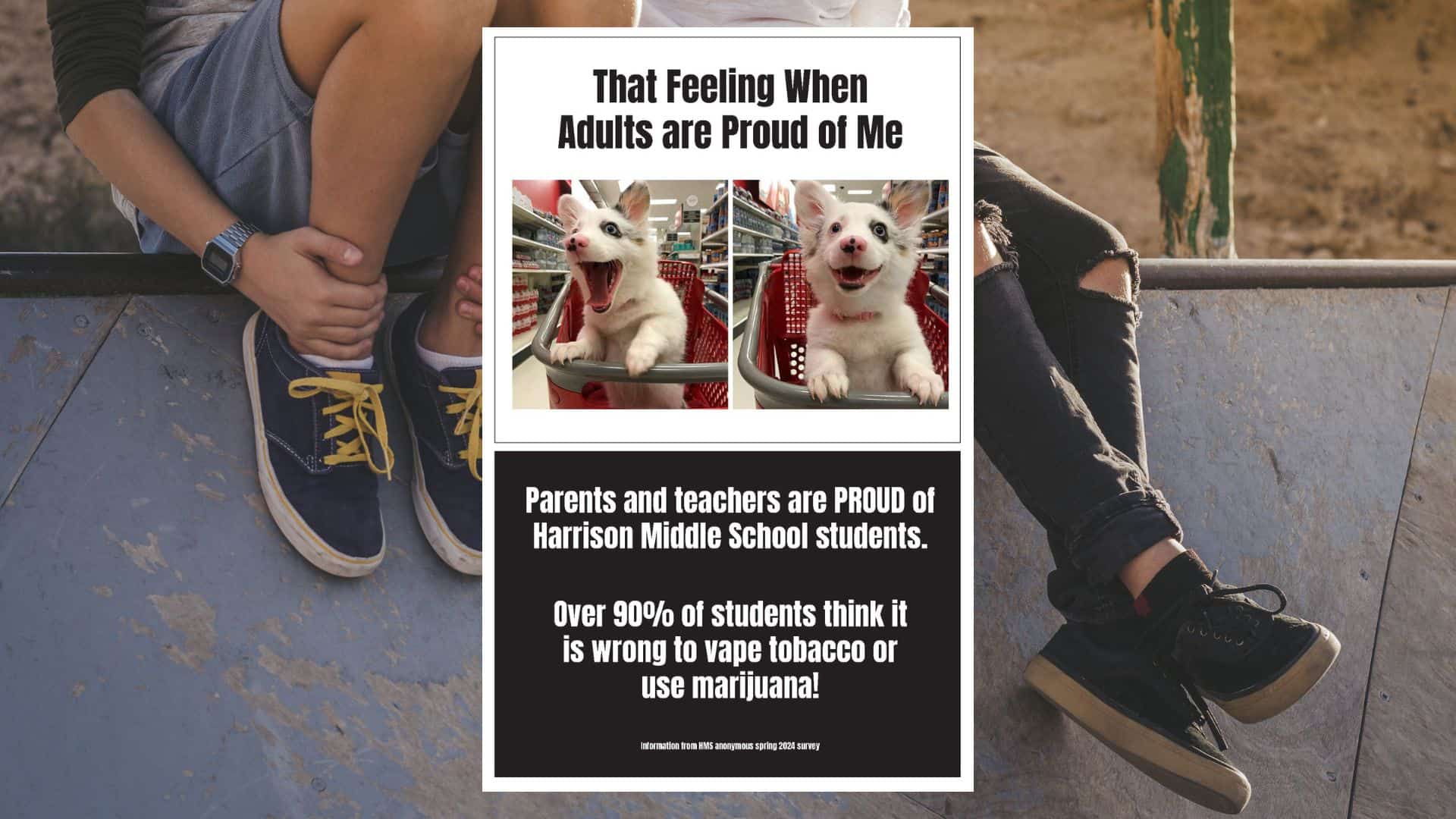


The Impact
Evaluation of the campaign shows that this approach works. 54 of the 60 measured metrics moved in the desired direction, with 70% of them being statistically significant, including:
- Misperceptions of peer substance use reduced by more than one-third.
- Rates of substance use dropped across all substances.
- Substance use was lowest among students with high exposure to campaign messages.

Meet Elizabet Garcia: A New Voice for Community-Centered Advocacy at SE2
SE2 is excited to introduce Elizabet Garcia (she/her), a dedicated advocate for community-centered change and a powerful new voice on our team. With a career rooted in amplifying underrepresented voices and fostering lasting impact, Elizabet brings a passion for equity and inclusivity that aligns seamlessly with SE2’s mission. Her experience spans leading strategic campaigns and building connections that empower communities, making her a perfect addition as SE2 continues driving meaningful change across Colorado and beyond. Get to know her through these three questions.

What made you want to focus your career on making change for good through causes and issues?
I’ve always been driven by the idea of creating meaningful, positive change, which has shaped my career focus on advocacy and public service. From leading comprehensive communications strategies with the American Federation of State, County, and Municipal Employees to founding Verbo LLC, where I advised on inclusive community outreach initiatives, my work centers on connecting people to causes that matter. I find fulfillment in amplifying the voices of historically marginalized groups and developing messages that engage diverse communities. Working on campaigns that promote equity and representation fuels my passion for making an impact that lasts and resonates.
Each project, whether addressing urgent political issues like affordable housing, creating community-centered messaging in places all around Colorado, or helping underrepresented voices be heard, has reinforced my understanding that genuine change comes from within communities. My goal has always been to not only address the immediate issues but also to inspire lasting engagement and build pathways for sustainable change.
What do you like to do when you’re not working?
When I’m not working, I stay actively involved in my community as a volunteer on the Colorado Consumer Health Initiative Board of Directors, where I contribute to supporting the work they do in the health equity and advocacy space. I also love spending my downtime traveling to new places, swimming, and getting lost in a good book. Above all, I genuinely value the time I spend with family and friends, whether we’re eating together, exploring new places, or simply catching up.
Where did you grow up and how did your early experiences help shape who you are today?
I grew up in Greeley, Colo., a community with diverse cultural backgrounds that deeply influenced my values and career direction. Growing up in a bilingual household, I was naturally immersed in the diversity of languages and stories that make up our community. This environment sparked my passion for communication and community outreach as I saw how effectively bridging cultural divides can empower people and amplify underrepresented voices.
From a young age, I became involved in civic activities, which taught me the power of collective action and the importance of advocacy. These early experiences, along with the mentorship I received in local organizations such as the Colorado Latino Leadership, Advocacy & Research Organization or CLLARO, shaped my commitment to supporting communities in need. Today, in my work, I draw on these experiences to create impactful messaging and foster relationships that advance positive change.


Move Beyond Demographics: Communicate with Core Beliefs in Mind
How can shifting our focus from demographics to understanding values and motivations foster more meaningful conversations, even when discussing challenging topics?
Perhaps never has this topic been timelier.
More in Common’s session on Speaking to Values and Identities at The Communications Network’s ComNet24 last month challenged me to rethink how I approach and communicate perspectives outside my own.
In our professional and personal lives, we often categorize people by race, sex/gender, age, or political affiliation. From these labels, we make snap assumptions and conclusions about how someone might think, act, or navigate the world, which in turn shapes how we communicate with them.
However, research from More in Common encourages us to look deeper — that real understanding goes beyond surface labels. Every person is different, why are we still only focusing on small parts of what makes someone human?
More in Common’s Hidden Tribes Study reveals that America’s divides stem from deeply held ideals rather than just race, politics, or socioeconomics. By focusing on values, motivations, and worldviews—referred to as “core beliefs”—we can connect more authentically.
Core beliefs influence how individuals perceive the world and respond to social and political issues, providing a more nuanced perspective. Traditional demographic labels play a role in a person’s core beliefs, but they don’t tell the whole story. We can create communication that resonates authentically with each person’s lived experience better when considering their upbringing, current reality, and aspirations for the future.
The study identifies five key dimensions that shape worldviews:
- Tribalism and group identification
- Fear and perception of threat
- Parenting style and authoritarian disposition
- Moral foundations
- Personal agency and responsibility
These dimensions helped group Americans into seven “hidden tribes,” ranging from Progressive Activists to Devoted Conservatives. In the middle lies the Exhausted Majority—a group of ideologically flexible individuals, frustrated with the current state of the world but not strictly aligned with either “side”. This majority in the middle may offer the most room to create change, if we can identify, understand and leverage their core values.
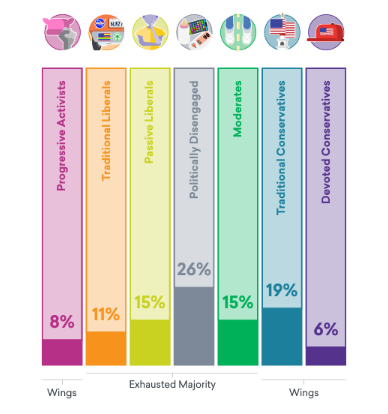 More In Common’s Hidden Tribes
>>> Discover more on the Hidden Tribe profiles <<
>>Take the quiz to find your “Hidden Tribe”<<
From ‘Who’ to ‘Why:’ Rethinking How We Understand and Engage Audiences
To communicate more effectively, we need to shift our mindset from focusing solely on “who” our audience is to understanding “why” they think the way they do.
For example, consider what values drive their beliefs about community and responsibility instead of assuming their stance on an initiative based on their race, age, or income. Are they motivated by a sense of fairness? Safety? Freedom? And how do these factors shape their views?
Asking questions like these can create authentic communication that resonates with a person’s deeper concerns and priorities.
Therefore, effective communication requires engaging with those who don’t share our views to better understand their core values, and bridge divides. If we only surround ourselves with like-minded individuals, we limit our understanding of others, making it challenging to connect with people who have different perspectives and experiences, people who could also potentially benefit from our work.
And when we misunderstand or overlook core values, we risk mischaracterizing entire groups, leading to shallow communication or reinforcing divides. This creates what More in Common calls a “perception gap,” where we assume there is more division than actually exists, perpetuating stereotypes and further emphasizing disconnections.
For instance, assuming that “traditional” values imply resistance to change can overlook potential motivations like stability or a desire for community.
While focusing on values can potentially help bridge differences, it’s important to recognize its limits. When people hold very rigid or extreme views, emphasizing shared values might not just fall flat—it can be a non-starter, especially if those values clash outright with the core message.
Values as a Bridge: Calling People In
Starting with values can transform how we communicate and invite people into conversations that matter. A values-based approach creates opportunities to call people in—building dialogues that lead to sustained connections and change.
People are complex, and so are their experiences. Whether crafting a campaign message or navigating a tough conversation, consider starting with values to foster understanding.
By acknowledging the motivations that drive people, we can communicate in more genuine and impactful ways. In a world where it’s easy to talk right past each other, this kind of intentional, values-driven approach may be exactly what’s needed to bridge divides, build real connections and drive change towards a collaborative vision for the future.


Cut the Fluff: Lessons in Smart Brevity from ComNet 24
Making complex stories scannable for busy readers? Easier said than done.
The training on Smart Brevity at The Communications Network’s ComNet 24 in Kansas City, led by Axios, reshaped my approach to content.
This piece? It’s me putting that training to work—trimming down, focusing on what’s relevant, and trying to keep you reading.
Key Lessons I’m Using Right Here:
- Shorter is stronger.
Axios laid out the facts: Only 5% of people finish an 800-word article. Aim for half that length. It’s not about cutting words; it’s about cutting fluff. This blog? Around 400 words max, so every sentence here earns its place.
- Hook them with what’s new.
You’ll notice we skipped a big intro here. That’s on purpose. Readers—especially busy communications pros—want to know what’s new right away.
- Be a “word surgeon.”
Words have weight. At ComNet, we practiced paring paragraphs down to a word or two. It’s about removing filler, and that’s why I’ve kept each lesson short here—you’re getting only what matters.
- Think story, not facts.
People remember stories, not fact after fact. Even in brevity, storytelling should guide us. This blog aims to share not just tips but tell the story, however brief, of how Smart Brevity changed how I think about my writing.
- Be human, not robotic.
Smart Brevity isn’t just stripping language down; it’s about clarity. Writing as if I’m speaking directly to you keeps it natural, conversational, and clear. Read it out loud—if it doesn’t sound right, refine it until it does.
Practical Tips Applied:
- Audience first. I’m writing with you in mind—one of SE2’s key audience members looking for actionable insights.
- Scannable structure. Notice the bold headers, bullet points, and the most important words first? This format lets you quickly decide whether to dive deeper or move on.
- Precise headline. Headlines should be 10 words or fewer. No clickbait. And yes, emojis boost engagement by 6%—which is why I added one here.
Why It Matters
Smart Brevity isn’t just a technique; it shows respect for your reader’s time. Making every word work double-duty requires us to put our audience first. As communicators, the challenge is clear: Write so they stay.


Change That Lasts: Lessons from SE2’s CEO
In a rapidly changing world, SE2’s Principal and CEO Susan Morrisey sees “change for good” as both a responsibility and a privilege. Reflecting on her team’s legacy, she shares insights on creating lasting impact, connecting authentically with audiences, and the progress and persistent challenges women face in executive roles. Her guidance emphasizes the power of amplifying real voices, embracing community-driven change, and advancing meaningful conversations in every project.
Q: What is the “change for good” SE2 has had a part in that you’re most proud of?
A: If I look for the throughline of our impact over the past 25 years, it’s been generating energy and enthusiasm around issues and stories that might have gone unnoticed. Whether we’re working to change policy, public opinion, or personal behavior, these are the issues that have real impact on people’s lives. Moving forward, our challenge is to support community conversations and priorities – not the other way around. That’s how we get to meaningful, sustainable change.
Q: What’s your biggest piece of advice for copywriting/storytelling?
A: Our role as storytellers is to simply amplify the real, authentic stories people want to tell. Often, we come into it with our idea of what makes a compelling story driving the narrative. If we listen, rather than direct, the results can be surprising and moving.
Q: As a woman in business, especially in an executive role, what challenges do you feel women still today face? What challenges have improved or gotten worse?
A: I think it depends on where women are “in business”. In many areas – including government, nonprofit, and corporate settings – women’s power and influence has continued to grow. But there continues to be a barrier for many top executive roles. I look forward to a time when women aren’t only appreciated for the “soft skills” we bring to the table but are judged fairly for and in positions of power.