Videos Bring Quit Stories to Life, Earn National Recognition
Quitting tobacco isn’t a straight line. It’s personal. Sometimes messy. For many, it takes time, support, and more than one try.
We believe in telling stories that reflect the full experience—not just the outcome.
With the Colorado QuitLine Stories campaign, we focused on honesty over perfection. When people see themselves in someone else’s journey, it builds understanding, reduces stigma, and makes change feel possible.
We’re honored that this work earned Best of Show at the Web Marketing Association’s 2026 Internet Advertising Competition, but what matters most is the brave people behind the stories and the impact of their stories
The campaign videos, which won Best Government Online Video Campaign and Best in Show – Online Video Campaign, are available as a supercut on Vimeo, offering a taste of the stories and creative approach.
The Human Side of AI: How SE2 Uses Technology Without Losing Touch
We’ve always believed in the power of people — their stories, their insights, and their ability to move communities to action. So when artificial intelligence entered the conversation, we saw it not as a replacement for human creativity, but as a tool to strengthen it.
Yes, we use AI. But we use it thoughtfully.
AI helps us work smarter — handling repetitive or time-consuming tasks so that our energy stays focused where it matters most: strategy, storytelling, and human connection. When the machines take care of the rote work, our team can spend more time in the community, listening, learning, and shaping campaigns that reflect real lives and experiences.
That’s how our clients benefit. Efficiency increases. Budgets go further. And the work — the deeply human work — gets even better.
Of course, we also take great care to use AI responsibly. Our team works within a private, secure workspace to ensure client materials never enter the public cloud. And no AI-generated content ever goes unchecked. Every fact, phrase, and footnote is reviewed by our strategists, writers, and designers to make sure it’s accurate, ethical, and aligned with your goals.
At its best, AI amplifies what people can do. But it can’t replace what makes SE2, SE2 — our empathy, our critical thinking, our purpose, and our commitment to community.
Technology may evolve, but our values remain the same: listen first, think deeply, and create change for good.
Anatomy of Ethical Storytelling: How We Tell Stories That Heal, Not Harm
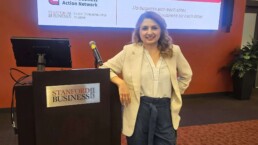
At SE2, we believe storytelling is one of the most powerful tools we have to shape opinions, influence policy, and connect with communities. That’s why we’re proud to share our “Anatomy of Ethical Storytelling” poster at ComNet25 in Denver this month—a visual guide that reflects our commitment to telling stories that heal, not harm.
We created this piece to challenge communicators to think critically about the impact of their narratives. Too often, stories are shaped by the agenda of the storyteller rather than the lived experiences of the people at the heart of them. When that happens, storytelling can unintentionally reinforce stereotypes, retraumatize communities, and miss opportunities for truth and transformation.
So what’s the alternative? Ethical storytelling. For us, that means listening deeply, respecting lived experiences, and elevating community voices. It’s not just about visibility—it’s about influence, resistance, and connection.
To bring this concept to life, we used the metaphor of the human body. Each part represents a principle we believe is essential to ethical storytelling:

- Head – Strategy, critical thinking, and self-awareness guide the narrative.
- Eyes – We consider audience perspectives, needs, and values.
- Ears – We listen deeply to community input.
- Nose – We apply the “sniff test”: Does the story feel authentic?
- Voice – We ensure storytellers maintain agency over their own narratives.
- Heart – We center dignity, humanity, and empathy.
- Stomach – We use the “gut check”: Does the story move us?
- Hands – We handle stories with care to inspire, not exploit.
- Spine – We support storytelling with transparency, truth, and accountability.
- Feet – We step into communities to find authentic stories.
This framework isn’t just theoretical—it’s how we work every day. Whether we’re crafting a campaign, producing a video, or writing a feature, we strive to honor the people whose stories we tell. Download a PDF version of the Ethical Storytelling Framework here.
If you’re at ComNet25, come see the poster in person and let’s talk about how we can all do better by the stories we share. And if you’re curious to learn more, check out our other blogs.
Let’s keep storytelling human.
Hispanic Heritage Month: Honoring Our Roots, Strengthening Our Future
We believe that stories shape the way people see themselves and each other. Every campaign, partnership, and conversation we’re part of is rooted in the belief that representation matters and that honoring where we come from is essential to moving forward together.
Each year, from September 15 to October 15, the United States celebrates Hispanic Heritage Month, a time dedicated to recognizing the histories, cultures, and contributions of Americans whose ancestors came from Mexico, the Caribbean, Central America, South America, and Spain. The dates are significant: They encompass the independence anniversaries of several Latin American countries, including Costa Rica, El Salvador, Guatemala, Honduras, Nicaragua, Mexico, and Chile.
But more than dates on a calendar, Hispanic Heritage Month is a celebration of identity, one that is both collective and deeply personal. It’s an opportunity to celebrate the communities whose stories, strength, and innovation continue to move our country forward.
This year, our team at SE2 took time to reflect on what this month means and how it connects to the work we do every day.
Elizabet Garcia Hernandez | Public Relations & Community Outreach Specialist

As I think about Hispanic Heritage Month this year, I find myself sitting with a mix of emotions. On one hand, it’s hard to ignore the ways in which our communities continue to face resistance, moments when our contributions aren’t fully seen or valued. But alongside that tension, I feel a deep sense of gratitude. Working at SE2 has given me the opportunity to stay connected to my roots and to uplift the very communities that raised me.
This past year, I’ve had the privilege of helping distribute mini-grants and building partnerships for SE2’s work with the Behavioral Health Administration’s 988 Colorado Mental Health Line marketing campaign. Through that work, I’ve collaborated with incredible community partners who are making a real difference in people’s lives, especially in moments when access to care and understanding truly matter.
I also had the chance to take part in community events across Colorado, including Fiestas Patrias and the Greeley Stampede, events that mean so much to me personally because I grew up in Greeley. Standing there, surrounded by the same kind of energy and pride that shaped my own story, I felt a renewed sense of purpose. It reminded me that representation is not just about visibility; it’s about belonging.
Another meaningful project this year was SE2’s alcohol moderation campaign in the Yampa Valley, where I worked directly with Spanish-speaking community members to gather their stories. Hearing them share their experiences and emotions in their native language was incredibly powerful. It reminded me how essential it is to create space for people to express themselves authentically, to give agency to their voices, not shape them for convenience.
This year has reinforced why I do this work. Despite the challenges, it’s moments like these, standing in community spaces, listening to people’s stories, and seeing them reflected in campaigns that honor their experiences that keep me going.
Willy Chamu | Graphic Designer

As a recent addition to the SE2 team, I feel so honored to be part of such a talented group of people whose values and commitment to positive change are at the forefront of all the work they do. As a recent graduate of MSU Denver, at the start of my career, being part of this team is a huge honor and privilege.
My new role as SE2’s graphic designer is invaluable for helping me stay connected to what’s going on with the diverse communities around me.
Having people within my family and community – whose stories and contributions have impacted not only me, but others whose stories are woven into the history of this country – serves to encourage reflection on how their stories can continue to be told through the work I produce in this role.
As a graphic designer, I am fully aware of the importance of written and visual language within design. With the perspective my diverse background brings, I am able to create visuals that convey narrative, inform and resonate with audiences in ways that go above and beyond simple, written language.
I am grateful for projects like Adelante Connect, where I can look to people within my own community who struggle with language and technology. I see first-hand how limited access to the technological knowledge, and common grasp of the English language, that we take so much for granted make life increasingly difficult for these people in a world that is becoming more and more digital.
Working on deliverables for the Safe Yakima Valley County schools in Washington brings to mind my personal experiences in my local public middle and high school. I consider how I can utilize my background to create items that will leave a lasting impact on these students to make better choices that will positively influence their future.
This position serves as a powerful reminder to appreciate my Latino heritage and unique life experiences, which serve as a wellspring of inspiration and an opportunity to connect with the audiences I intend to help serve.
Alvina Vasquez | Principal

My commitment to Community is rooted in generations of resistance and resilience. The challenges Latino families face today are not new—they are part of a long, ongoing struggle for equity and dignity. My ancestors fought colonialism and oppression; Colorado Civil Rights leaders like Rudy Gonzales, Nita Gonzales, and former State Senator Polly Baca paved the way; and my grandparents and parents stood up to everyday racism. I honor their legacy by dedicating my work to advancing children, women, Latine, and other under-resourced and at-risk communities.
At SE2, our mission is to move people to action through powerful, purpose-driven communication—and that begins with truly listening to the communities we serve and understanding their lived experiences. Through our work in behavioral health, substance use prevention, and public health, we’ve seen how culturally relevant storytelling can break down stigma and build genuine connection.
Language equity, cultural representation, and authentic partnership aren’t seasonal values for us—they’re the foundation of everything we do. Whether we’re collaborating with local nonprofits, uplifting bilingual voices, supporting grassroots organizations, or learning from the wisdom and leadership of community trailblazers like Polly, Nita, and many others, we are grateful to work alongside leaders who continue to shape and strengthen our communities. SE2 remains deeply committed to ensuring that every story we tell reflects the richness, resilience, and diversity of Colorado’s people.
The Celebration Doesn’t End Here
As Hispanic Heritage Month comes to a close, we’re reminded that this celebration doesn’t end here. The spirit of la comunidad—of resilience, pride, and solidarity—continues in every campaign, every partnership, and every story that moves someone to act.
At SE2, we carry that spirit forward. We celebrate the people who make this work possible, the partners who inspire us, and the stories that connect us.
Because honoring heritage isn’t just about looking back. It’s about shaping a future where every community sees itself represented, respected, and heard.
Meet Elizabet Garcia: A New Voice for Community-Centered Advocacy at SE2
SE2 is excited to introduce Elizabet Garcia (she/her), a dedicated advocate for community-centered change and a powerful new voice on our team. With a career rooted in amplifying underrepresented voices and fostering lasting impact, Elizabet brings a passion for equity and inclusivity that aligns seamlessly with SE2’s mission. Her experience spans leading strategic campaigns and building connections that empower communities, making her a perfect addition as SE2 continues driving meaningful change across Colorado and beyond. Get to know her through these three questions.
What made you want to focus your career on making change for good through causes and issues?
I’ve always been driven by the idea of creating meaningful, positive change, which has shaped my career focus on advocacy and public service. From leading comprehensive communications strategies with the American Federation of State, County, and Municipal Employees to founding Verbo LLC, where I advised on inclusive community outreach initiatives, my work centers on connecting people to causes that matter. I find fulfillment in amplifying the voices of historically marginalized groups and developing messages that engage diverse communities. Working on campaigns that promote equity and representation fuels my passion for making an impact that lasts and resonates.
Each project, whether addressing urgent political issues like affordable housing, creating community-centered messaging in places all around Colorado, or helping underrepresented voices be heard, has reinforced my understanding that genuine change comes from within communities. My goal has always been to not only address the immediate issues but also to inspire lasting engagement and build pathways for sustainable change.
What do you like to do when you’re not working?
When I’m not working, I stay actively involved in my community as a volunteer on the Colorado Consumer Health Initiative Board of Directors, where I contribute to supporting the work they do in the health equity and advocacy space. I also love spending my downtime traveling to new places, swimming, and getting lost in a good book. Above all, I genuinely value the time I spend with family and friends, whether we’re eating together, exploring new places, or simply catching up.
Where did you grow up and how did your early experiences help shape who you are today?
I grew up in Greeley, Colo., a community with diverse cultural backgrounds that deeply influenced my values and career direction. Growing up in a bilingual household, I was naturally immersed in the diversity of languages and stories that make up our community. This environment sparked my passion for communication and community outreach as I saw how effectively bridging cultural divides can empower people and amplify underrepresented voices.
From a young age, I became involved in civic activities, which taught me the power of collective action and the importance of advocacy. These early experiences, along with the mentorship I received in local organizations such as the Colorado Latino Leadership, Advocacy & Research Organization or CLLARO, shaped my commitment to supporting communities in need. Today, in my work, I draw on these experiences to create impactful messaging and foster relationships that advance positive change.
Alvina Talks Shift: Breaking Barriers: Women's Journeys in the Professional World
SE2’s newest principal, Alvina Vasquez, interviewed SE2 Principal Susan Morrisey in another episode of her podcast, Alvina Talks Shift. They reflected on the challenges they faced, such as harassment and being pigeonholed, both as women and as a Latina in business. Alvina shared her journey from the male-dominated broadcasting industry to working in a women-dominated environment. Susan talked about balancing work and parenting. The women also contemplated the significance of Women’s History Month and stressed the importance of reflecting on its implications in their own lives and experiences.
Begin Transcript:
Alvina Vasquez:
Let’s talk about creating a life and country we are proud of together. Welcome to Alvina Talks Shift. I am your host, Alvina Vasquez.
This is part two of an amazing interview we had last week with Susan Morrisey. We connected after the first episode, and I said that I didn’t think we got to discuss everything that we needed to. Susan has some questions for me too, so let’s kick it off.
Susan, welcome back.
Susan Morrisey:
Thank you. I’m so excited to be working with you every day and I do have some questions for you.
In our first episode together, we talked about what it was like for me coming up in the working world. Now I want to hear what’s it been like for you, coming up as a woman and a Latina in business. What kinds of barriers or obstacles did you encounter?
AV:
I started in broadcasting, which was very male dominated. That’s why the issue of workplace harassment and hostile work environments was so ingrained in me – because that’s what the broadcasting world was like. Very male dominated, very macho. People could say whatever they wanted to you. I mean, I had men telling me they were having dreams about me, very gross stuff that. I just had to deal with it and move on. There wasn’t an HR department where you could go because they were very small stations. There was no one you could complain to.
I feel like women now have so much more voice than they used to. We had to cover up because we didn’t want to be harassed at work. But then I moved into the advocacy world and worked with women almost exclusively. So, it was super interesting to make that switch.
Just like with any leader, you have good ones and bad ones, no matter which gender they are or how they identify. I think it’s given me resiliency and the opportunity to decide, what are the things that are worth fighting for? What are the things I’m going to pick at and what are the things that I just need to let go and move on? And just set those expectations for myself.
I’ve been thinking a lot about leadership. Of course, I was the owner of my company before I became an owner of SE2. But I was thinking about it this weekend because last week I was really sick and really tired, and I was like, okay, I think I need to take some time off. It was because I was wrestling a bit with what I think an owner of a company should be like and act like – and wondering whether I’m living up to that. I feel like that was kind of setting me back, so I needed the weekend to reset and get myself to a place where I am confident in what I’m doing. Stuff was just piling on and I thought, ugh, I just need a breath.
Every new environment gives us new challenges, and we have to know when it’s time to take a break and just reset, so that we can refocus on what needs to get done.
SM:
Absolutely. And, by the way, you are doing just fine, the way you’re acting as an owner of a business. You don’t need to worry about that. There’s no imposter in how you’re perceived, whatsoever.
So, that gives me some insight into some shared experiences that you and I had in terms of coming up as women in business. What’s different, however, is that I was a white woman coming up in business and you’re a Latina. Can you reflect on that experience and how it might have been different for you?
AV:
Yeah, I get pigeonholed a lot – like, I’m only good at Latino stuff, at Latino outreach. That’s why working with the governor’s campaign as the political director for all constituencies was so important to me. It got me out of a box and into other rooms and talking to different people.
Also, I’m a third-generation Latino, so may not know exactly the experiences of an immigrant family. Sometimes, I might not be the right person or have the right experiences. But I know how to engage with those audiences and those constituencies. I’ve learned, over time, how to relate to them and understand and be open to listening to their experiences. But just because I’m Latina doesn’t mean I know the immigrant experience.
I don’t know if we’re given the grace to have multiple life experiences and have multiple generations. We’re kind of like put in a box, like, oh, Latino, immigrant, Spanish speaker. And then there’s the issue of whether you speak Spanish well enough, whether you get enough credit for speaking Spanish. When I went through the Latino Leadership Institute, they talked about language justice in a different way. When my parents moved here, they were told never speak Spanish at home because my brother was stuttering. In fact, what he was doing was translating. So, it was a reverse racism. We lost our language and I had to relearn it. New immigrants come here and they’re like, oh, you don’t know how to speak Spanish, so you get judged on that. It kind of puts you in a weird place. I identify with white community and middle-class family – that stuff. But I also understand how the impacts of all this racism from the past has impacted me, my future and my kids as well.
SM:
Speaking of kids, how is Romero?
AV:
Oh my god, he’s so much fun. What’s interesting about a toddler is that you kind of see their brain expand every day. Every day there’s a new word or you see him make sense of something that didn’t make sense yesterday. It’s pretty amazing to see that experience.
SM:
You’re going through a period right now that’s also similar to what I went through. My kids are in their mid-20s now. Being a working mom, trying to work and, in your case, own a business and be out in the community and having a toddler – that’s a heavy load. How do you balance all that?
AV:
I mean, you don’t. You’re good at some things one day, then other days you’re good at something else. But I’m glad you brought that up because I wanted to talk about when I came to the office last year, when we were still talking and negotiating about the ownership and I had to bring the baby with me. I was on my way to the airport and so I didn’t have anywhere to take him. He just had to come with me. And you said something in that meeting; something like, how amazing is it that you’re a business owner selling your business and your toddler’s here with you.
SM:
Hey, I remember trying to coach my kids’ soccer – being in the field coaching little, little kids – while also getting calls about bills that clients were working on at the Capitol. And I just had to do both. I knew I had to have that moment where I was, you know, being a good mom by taking my turn at coaching soccer. But I also had to keep those other plates spinning.
So, he is welcome anytime that you need to combine those two roles of yours. Because I get it. Been there, done that!
AV:
It’s so exciting because that’s the legacy he’ll have now. Oh my God, I’m getting emotional. That’s the legacy he’s going to have because you all invested in me and I invested in that business. So, I think that’s really exciting. And, you know, he’s adopted, so who knows what the outcomes could’ve been in his life. It could have been anything. And so, thank you for your support.
SM:
Something tells me that his outcomes are going to be good, with you as a mom, as a working mom.
AV:
He’s a good networker. He is always shaking hands. He knows how to work a room.
SM:
Those experiences of combining parenting with working, I think they only add to who you are and how effective you are. It’s tough, I’m not going to lie. It’s tough to keep all the plates spinning, but ultimately it’s a good mix.
AV:
Changing subjects, now that I’m on the SE2 team, what do you think is the future of our work and what we’ve talked about in terms of developing community relationships?
SM:
Doing this kind of work has really changed. I think the way that agencies like ours used to work with communities is that we would come to them pretty late in the process and say, Hey, we’ve developed this campaign. Can you push this out in your community? You know, can you take our work and share it with your community? And that has really shifted. Now we’re making sure that we’re doing research directly with them. We’re testing messages and creative directly with them. We’re getting their input on a strategic level and on a creative level for the campaigns that we’re creating. We can’t just go to them with an ask. It has to be a mutually beneficial dynamic.
And that’s where you come in, to help us stay focused on continuing that evolution and making sure that we’re working with communities early, often, and in an authentic way. Not to check a box, but to really make sure that we’re really hearing their voices and incorporating their perspectives and stories into the work we’re doing.
AV:
So, we’re going to wrap up here in a minute, but this is Women’s History Month, and I made a comment on my Facebook that everybody loved, because I was like, I’m celebrating me. I have this whole support network of people, but I’m the one who made changes. I’m the one who took chances and I’m the one who got these things done. So, when people do these big celebrations, like women’s day, blah, blah, blah, what do you think about that? Is it good? Is it worth it?
SM:
I think the celebration month or day is only meaningful if you reflect on its application in your own life and in your own experience. I don’t know that those days really achieve anything if you don’t take a take a minute to think about it. You know that saying, Think globally, act locally. I think it’s the same thing. Recognize the global celebration going on but think about how to give meaning to it in our own experiences and circles of influence.
AV:
Well, thank you Susan, for another amazing episode of Alvina Talks Shift. We’re going to have lots of conversations. I love our chats. I know we’re the two women partners, but every time I walk away from a conversation with you, I’ve learned something. And I just feel safe, I feel like you’ve got my back. So, thank you for that, Susan. And thank you for joining me on this episode.
SM:
Absolutely. Thanks for having me.
AV:
Thank you for listening to Alvina Talks Shift. Please like, share, and subscribe and as always, engage, empower, evolve. If you like this episode, or if you want more content like this, go to alvinatalksshift.com or wherever you listen to podcasts.
Alvina Talks Shift: Women's Rights, Policy Battles, and Mentorship with Susan Morrisey
SE2’s newest principal, Alvina Vasquez, interviewed SE2 Principal Susan Morrisey in her latest podcast, Alvina Talks Shift. Susan shared her experiences working with the late Congresswoman Pat Schroeder, a champion for the rights of women and families, and reflected on the sometimes-lengthy battles for policy change. She also discussed the importance of commitment to long-term advocacy, challenges and misconceptions faced by women in political and business spaces, and the significant impact of mentorship in her own career.
Begin Transcript:
Alvina Vasquez:
Let’s talk about creating a life and country we’re proud of together. I’m your host, Alvina Vasquez. Welcome to Alvina Talks Shift.
Today I have a very special guest, Susan Morrisey. We’ve been working together for around three years, but now are partners since I sold my business to SE2.
I’m so excited to have you on, Susan, because I feel that you and I have similar backgrounds in the political and nonprofit space. So, I want to explore that a little with you today and where you think the future is for communications, marketing, and PR.
But first, I want to tap into your experience of working with the late Pat Schroeder, who was given credit for mentoring a lot of young people when she was in Congress. That was a time when very high-profile things were happening that really changed the trajectory of women in the workplace. Like the case involving Clarence Thomas: We learned about hostile work environments and all these new terms that changed how women were interacting and interfacing in professional settings.
Susan Morrisey:
Yes, it was an interesting time for women and in my own career. There were a lot of high-profile issues affecting women and families. Pat had been working on the Family and Medical Leave Act at that point for many years, and it finally passed – groundbreaking legislation that made sure that people didn’t have to choose between going to work and taking care of important family needs, like the serious illness or death of a loved one, or the birth or adoption of a child.
So, there were some pivotal as well as some negative things happening with respect to women. Sexual assaults in the military became a very high-profile issue. As you mentioned, Clarence Thomas and the treatment of Anita Hill when she testified before Congress, and the Violence Against Women Act. Pat was that champion who was unafraid to take on some of these issues, whether it was defending women or working to advance the rights of women, including taking care of their families. She never shied away from these issues and was a champion until the end.
AV:
And just to highlight how long these fights take, in Colorado paid family leave was only passed in 2020, just four years ago. That expands the rights for workers to take time off for, like you said, death, family illness, adoption in addition to having a child or even taking on family children. So that’s how long it takes to win some of these battles.
SM:
Yes, and I think advocates, including those who are working on behalf of women and family issues, have to be committed to the long haul. When I think about some of the women I was fortunate to work with on these issues when I was working with Schroeder, many of them are still doing that same work today. Childcare has taken on a whole new level of importance in the collective conversation now, especially since COVID happened, and there’s just much more attention being given to that issue. But I remember working with Anna Jo Haynes, who was a fierce and relentless advocate for quality childcare 40 years ago. So, these things do take a long time and you might be looking for incremental change at a policy level year after year. You just have to stay committed to the fight.
AV:
It’s interesting that you bring up Anna Jo, because she is a huge influential person in our community. I think she’s credited with so many big wins for children and education. So, I’m glad you brought that up because it makes me think about the impact of that generation of women leaders, and how we can take those stories to younger women so that they can carry on the torch.
SM:
Yes, I have a daughter who just turned 27, so I get to interact with the young feminists of today – and they do use the word “feminist”. For some time that term carried sort of a negative connotation. But young women today do care about important issues, whether they’re issues that affect women specifically or not. Issues like abortion rights are very important to young women and they may not have fully appreciated, 10 years ago in their lives, the magnitude of some policy decisions being made – in Congress, at the state capitol, or in the courts. As they come into adulthood, however, I think they really get it.
What I would tell young women today that are thinking about how they can become involved in community issues is that you have to stay committed to that long game. Their lives change so dramatically, from the time they go from being children to teens to young adults. The idea of working on an issue for years might seem daunting to young people, in a world where everything around them, in the media and their own lives, changes so quickly. But it can take years or even decades to really change an issue. So, staying committed over the long term – being unafraid to say what you mean and mean what you say, and not being afraid to be called a feminist or somebody who is loud and really using their voice – that’s what our voices are for.
AV:
Speaking of longevity, you’ve been with SE2 for 25 years, right? You all have been around changing lives for 25 years! What made you switch from working on policy issues to being more on the marketing/ communication side of things?
SM:
Well, you’re right: We have been doing this work for 25 years. I’ve been with SE2 for about 23 years, and it really was a seamless transition for me. Working for Pat Schroeder, I got to understand the power and influence that communications can have on important issues. So, I was just able to move pretty seamlessly into the work that we’re doing today because the common thread is talking about important issues. However you’re doing that, whether it’s through media, or through in the work that you do, Alvina, with community outreach – if you’re doing something that you really care about, that transition seems easy. It may not have seemed easy at the time, but when I look back, it really was easy because I was doing something that I loved.
AV:
What were some of the challenges or differences between working in the political space and the business space, especially as a woman?
SM:
There are many more women in policy work and politics today than when we were younger, so that has been interesting to watch. What is the same is that women who really use their voice and are unapologetic about saying and standing up for what they believe are still called “shrill” or even the B word. Women even today are still called those things if they’re very fierce. So, while there are more women in that space, some of the criticisms continue to be the same.
I do think there is a balance that you have to strike when you are a woman in business – between bringing those skills and attributes that are really a natural to women, like hearing a room and mediating differences, with digging in and really advocating for what you believe and being tough. Because in many respects, the business world continues to be a man’s world, and in my experience, men are not necessarily going to wait for you to advocate for what you believe. You have to get out there and do it yourself.
AV:
So, in our conversations, you’ve mentioned to me that you were part of a cohort that provided support to business leaders like yourself. Let’s talk about mentorship and how mentorship never ends. I’ve talked about this with other folks as well and think that at all levels of our career, we should always be looking around for those kinds of support. When have you done that during your career and what was most impactful about those experiences?
SM:
One of the most important mentors I ever had was my mother. Before she passed away five years ago, my mom had her own business. She was a consultant, and I did everything in her office growing up and as a teenager. I traveled with her and would see her just being a woman in business. So, being around other women in business, I think, is important. Whether you call it an official mentorship or not, I learned so much from watching. It was a mentorship that I didn’t really ask for, but inadvertently received and it had probably the most profound influence on my life as a woman in business. But I’ve had other important mentors that are men. I have learned a great deal from our partner, Eric Anderson, who I’ve worked with now for almost 25 years, and have gained so much from those relationships with male mentors as well.
AV:
It’s almost like when you’re in these spaces, you just have to absorb what’s happening around you and just be aware of decisions that people are making, listen to how they’re interacting with the client, and just pick up on those little things. Also, recognizing we’re not perfect and we’re all just trying to do our best, at the end of the day.
What do you do when you have a bad day or if something goes wrong? How do you recover from that?
SM:
Well, I want to come back to that in a second. But before I forget it, I want to follow up on something you said in terms of the little things that you pick up by just being with someone, observing them as they do their work. I think a real, very significant change occurred with COVID and everything that is still with us in the business world post-COVID. I believe young people in business today are at a disadvantage because they’re not working in an office with people who have been doing their work longer than them. Not being able to collaborate and work around people in person, I believe, is impacting people in business today. I don’t know if we’ve fully seen the effects of that.
And then back to your question about what I do when I am having a bad day. I am not going to lie: I have had many bad days in my career – days where I had to go get in my car and drive around because I thought I was going to cry at work. I’ve had those experiences. Sometimes just a change of location helps. And talking things through with others, whether it’s coworkers or other people, not even coworkers, can help me get through some tough experiences.
And lastly, the thing that I think is just the greatest gift to all of us is that we live in Colorado. So, just getting outside: It does wonders when you’re having a bad moment. Go for a walk. It’ll change your outlook on the day.
AV:
Yeah, I feel like we should all take our jobs and ourselves seriously, but never so seriously that the rest of the day is going wrong because we’re unable to recover. We’re obviously all trying our best. If we fail at something, in the big scheme of things it’s not going to have a huge impact. And we can make somebody else’s day better by just moving through it.
I had a speech coach that told me I cry a lot. I’m a crier. She said, “If you ever are crying in a speech, just keep talking. That’s the only way for the crying to go away.” I feel like that’s a good lesson for life: Just keep going, keep talking, and try to get through it until it goes to the back of your mind and you’re able to recover and get back to doing whatever you need it to get done that day.
SM:
Absolutely. Whatever terrible thing happened today, whether it was your responsibility or not, in the scheme of things, you’re right: It’s not going to be a big deal when you look back on it.
AV:
I feel like it’s like the rear-view mirror thing. Things in the rear might look closer than they appear, but those things are way back. Just move on.
Well, we’re running out of time, but I wanted to talk a little bit about what do you do for fun. I see you in the office a lot and we’ve done business meetings together, but I want to know more about you. What do you do when you’re just having a day off?
SM:
I have a horse, and it is the thing that just makes me so happy. I get outdoors a lot and try to be active, whether it’s walking or skiing or going up to the mountains. Whatever I can do to be outside is energizing for me.
AV:
Well, Susan, I really appreciate it this time. Thank you so much for taking a chance – for bringing me into the fold and making me a part of SE2. It’s a huge opportunity and I’m so excited about all the things that we can do together.
I remember the first time we talked on the phone: I hung up and said to a coworker of mine, “This is going to be a big deal.” I am so glad this came to fruition and now I’m part of the SE2 team.
SM:
Yes, absolutely. You are bringing a whole new perspective and vitality and network to the work that we do, and I’m so excited.
AV:
Thank you, Susan.
Now concludes another great episode of Alvina Talks Shift. Thank you for watching. Please like, share, and subscribe. And, as always, engage, empower, and evolve.
If you like this episode or if you want more content like this, go to alvinatalksshift.com or wherever you listen to podcasts.
Colorado Counties Collaborate on an Awareness Campaign to Dispel Stigma and Promote Recovery from Addiction
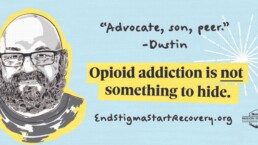
“Recovery starts when stigma ends.”
That’s the message of a new local public awareness campaign created to dispel stigma around addiction, including opioid use disorder, and to inspire the community to rise together to meet the challenge of this devastating epidemic.
The bilingual campaign, a collaborative effort of Chaffee, Custer, Fremont and Park counties, directs the community to information and resources available at EndStigmaStartRecovery.org and ParaElEstigma.org.
The campaign notes that one in six Americans has a substance use disorder. It states: “Whatever the substance, these are our neighbors, friends and family members. They deserve compassion, support, and evidence-based treatment to recover and thrive. We all can play an important role.”
The campaign features original portraits of four Coloradans who are in recovery from substance use disorder. Their nuanced portraits and the words they chose to describe themselves – dad, mother, grandfather, son, adventurer, advocate, runner, community member – illustrate their multifaceted identities.
The campaign uses digital ads, billboards, posters, drink coasters, and pocket cards to spread the word around the region.
The four counties are organized as the Region 15 Opioid Abatement Council, one of 19 regions established by the Colorado Department of Law to distribute opioid settlement funds for substance use disorder treatment, recovery, harm reduction, law enforcement, and prevention/education programs.
The Colorado Department of Law has sued pharmaceutical manufacturers and distributors and is on track to receive over $750 million in opioid settlement funds.
“Many people unintentionally became addicted to opioids, which were aggressively and misleadingly marketed by drug companies,” said Andrea Carlstrom, director of Chaffee County Public Health. “People with opioid use disorder or other types of substance use disorder need support and evidence-based treatment to recover and thrive. This campaign aims to inspire more people to start their recovery journey.”
“Our community can and must rise to meet the growing threat of fentanyl, which has caused a surge in overdoses,” said Patrick Fiore, substance abuse coordinator with the Custer County Public Health Agency.
“Effective treatment for opioid use disorder requires that we prevent overdoses. That entails making naloxone, known by the brand name Narcan, widely available, learning how to use it, and keeping it nearby.”
“Openly and candidly discussing these issues with friends and loved ones is an essential step toward recovery,” said Paula Buser, director of Fremont County Public Health and Environment. “This campaign is designed to spark those discussions across our community and among local families.”
“People recover from addiction, going on to live long, healthy, and rewarding lives,” said Lynn Ramey, director of the Park County Public Health Agency.
“Recovering from an opioid use disorder or dependence on another substance requires more than just willpower. Evidence-based treatment works.”
The campaign was created by SE2, a Colorado-based behavior change marketing agency. The portraits were drawn for SE2 by Javier Robles, a Colorado illustrator.
“We’re grateful for the vision of these health leaders at the four counties and for the courage of the local folks in recovery who agreed to be featured in the campaign,” said SE2 Co-Founder Eric Anderson. “Our team has been touched personally by this issue and we’re honored to be able to highlight how we all have a role to play in addressing it.”
National Youth Prevention Summit Highlights Colorado Campaign to Protect Teens from Fentanyl
A national youth prevention summit organized by the National High-Intensity Drug Trafficking Areas (HIDTA) Program in October highlighted Colorado’s new youth fentanyl prevention campaign, which uses the power of positive social norms to limit pill misuse by adolescents.
The National HIDTA Program, which was created by Congress with the Anti-Drug Abuse Act of 1988, works to disrupt and dismantle the market for illegal drugs in the United States. ADAPT serves the unique needs of the HIDTA region across the Nation in advancing substance use prevention by providing technical assistance for substance use prevention.

ADAPT organized the 2023 HIDTA Prevention Summit, which addressed complex prevention issues of today with a focus on integrating activities focused on current and emerging substances into a comprehensive strategy. Two important tools were released to support communities in developing a comprehensive community-based prevention plan and sharing substance-related information with youth while preventing unintended harm. More than 1,100 people from across the nation attended.
To inform the campaign, the Colorado Attorney General’s Office turned to ADAPT early on for guidance on the science around effective communication strategies for substance use prevention and that sparked further exploration of the social norms intervention.
Eric Anderson and Brandon Zelasko, principals at SE2, the behavior change marketing agency chosen to create and implement the campaign, described the research that led to the campaign. That included surveys of youth and parents, focus groups and engagement with youth organizations like Rise Above Colorado, which served as a partner in the campaign.
“It started to become clear that fear-based campaigns were not the right approach for our work here in Colorado. Social norming emerged as a promising approach to opioid prevention,” Zelasko said.
The science of social norms shows that humans are influenced by peer norms. While perceived norms are one of the strongest predictors of behavior, youth overestimate how many of their peers use substances, and underestimate how many would act to protect themselves or others.
Colorado surveys of youth supported that. Anderson said: “We found that youth overwhelmingly make healthy choices not just related to pills, but much more broadly in terms of the various choices they make to support their health. But at the same time, and our partner Rise Above Colorado talks about this, they overestimate the percentage of their peers who make unhealthy choices.”
At the same time, Anderson noted, it was clear that the campaign could not perpetuate stigma, which can result in risky behaviors like using substances alone while also creating barriers to treatment. “We do believe that you can reduce stigma and promote social norms by taking a carefully crafted approach and walking the line between those two strategies,” Anderson added.

The campaign also leveraged the proven value of connection – both peer-to-peer and youth-to-parent – as a powerful upstream protective factor.
The result is the Connect Effect campaign (ConnectEffectCO.org). It highlights, among other statistics, that 87% of Colorado teens would act to protect their friends from pills that could contain fentanyl. It also includes facts about fentanyl’s risks, interactive quizzes, tips to promote connection and conversation, and information about naloxone, which can reverse opioid overdoses.
The campaign includes videos promoted on TikTok and Instagram, digital display ads, and collaboration with community organizations to extend its reach through trusted nonprofits.
The Colorado Attorney General’s Office is eager to share the campaign with organizations that want to use the framework in their communities.
Recordings of the full summit, including the presentation on the Colorado campaign and related materials, can be accessed at ADAPT’s website.
How to Prevent Opioid Misuse and Protect Youth on Medication Takeback Day
In the ongoing efforts against opioid misuse, one event supports a comprehensive opioid prevention strategy: the Annual Medication Takeback Day on Oct. 28.
This initiative, which is supported locally through the Colorado Department of Public Health and Environment’s Medication Takeback Program, has emerged as a vital component of a comprehensive strategy to curb the opioid crisis and protect youth from the risks of drug experimentation. 
The Medication Takeback Program is just one of the many opioid prevention initiatives across Colorado that we support. They’re each important pieces of the state’s comprehensive strategy this life-and-death issue demands.
Understanding the Opioid Crisis
Opioids, recklessly marketed by unscrupulous pharmaceutical manufacturers and distributors, have caused a wave of addiction and overdose deaths.
Often, the path to opioid addiction begins with curiosity and experimentation, including among the youth. In fact, our recent research for the Colorado Attorney General’s youth opioid prevention campaign showed that most kids who experiment with pills started by trying pills they found at home in their family’s medicine cabinets. The consequences can be devastating and long-lasting, making it essential to prevent such experimentation from happening in the first place.
The Power of Medication Takeback Day
The Annual Medication Takeback Day is a nationwide effort that encourages everyone to return their unused or expired prescription medications to designated drop-off locations. The significance of this event lies in its multifaceted approach to tackling the opioid crisis and safeguarding youth.
Medication Takeback Day underscores the belief that every pill counts. A single unused prescription pill can save lives by preventing youth experimentation and furthering the fight against opioid misuse. Moreover, it highlights the power of community action in solving complex societal problems.
As we come together for the Annual Medication Takeback Day, we take a collective step towards protecting our youth, reducing the availability of opioids, and preventing the often tragic consequences of addiction.
Take Action
Many Colorado communities will host events for National Prescription Drug Take Back Day from 10 a.m. to 2 p.m. A list of drop-off locations is available at the National Prescription Drug Take Back Day website.
By safely disposing of unused medications, we contribute to the health and well-being of our communities, ensuring that curiosity doesn’t lead kids down a dangerous path. It’s an important initiative that holds the promise of a safer, healthier future for all.
SE2 Marks 25th Year of Challenging the Status Quo to Drive Positive Change

Think for a moment about tobacco.
For the companies that profit from it, it’s quite possibly the perfect product.
Tobacco quickly makes its customers physically dependent – literally addicted to the product.
There’s only one catch: Tobacco kills about half of these customers.
To Big Tobacco, this was not a moral dilemma but a solvable problem: It would create “replacement smokers” by hooking young people.
Putting aside the question of how tobacco executives can sleep at night, this insight suddenly explains why the tobacco industry creates flavored products and youth-oriented marketing campaigns that appeal to kids.
Immoral? Yes. But decades ago, it wasn’t yet a big scandal.
Big Tobacco hired armies of advertising agencies, PR firms, and lobbyists to prop up its profits and give it mainstream legitimacy.
Back then, tobacco companies would pay generous retainers just to “park” firms. It was easy money: You didn’t have to do much besides agree not to derail its gravy train.
This coincided with the genesis of SE2. While many of our competitors happily cashed Big Tobacco checks, we chose the other path — working to stop the deadly toll of tobacco.
In 1998, we launched SE2 as a marketing and communications agency focused exclusively on important public issues like tobacco.
As we mark our 25th anniversary, we still take on the evolving threat of tobacco.
Now, we’re also addressing emerging threats like fentanyl, which grew out of predatory marketing by opioid manufacturers that seemed very familiar to those of us who had analyzed the Big Tobacco playbook.
We’re also promoting mental health for teens, strong starts for toddlers, affordable housing, health care access, education, immunization, and an array of other vital causes.
Our team steadily grew and diversified, now encompassing 15 full-time employees. We’ve occupied five different offices plus a pandemic-caused virtual phase. We’ve expanded our reach across the country.
We increasingly balanced our focus on using communications to make systems change with the principles of individual behavior change and positive social norms. Together, these three pillars create a sustained virtuous cycle that we call Perpetual Movements: Change for Good®. In this model we’ve refined over decades, each step creates momentum for the next.
We’ve had the privilege of collaborating with national experts in public health, social psychology and medicine, building their science-based strategies into our work.
Our work is also informed by the lived experiences of our staff and advisors as we elevate their voices. Their diversity encompasses age, race, ethnicity, country of origin, gender identity, sexual orientation and education. When we view challenging issues from their varying perspectives, we all see a more complete picture and can craft more comprehensive solutions.
No matter what issues we embrace, we bring a mindset we learned while taking on Big Tobacco.
We know that change requires that we challenge conventional thinking and disrupt the status quo.
That philosophy became our tagline: Challengers Creating Change®.
Over our 25th year, we’ll amplify the voices of our staff who will share how they challenge conventions to create change.
Violent Media and Our Children’s Future: How Connection can Break the Cycle
By Evyn Batie
A girl stands on a platform with two boys on her sides. She faces a group of peers who stand in a straight line facing her and she begins to sing in a language I don’t recognize.
She finishes her song and then begins to yell out commands for a game of Red Light, Green Light. It takes me longer than it should to realize what’s happening. I watch, slightly confused and then alarmed, as the boys start yelling “PEW PEW” and the line of kids running at them begins falling down “dead.”
“Absolutely not!”
My shout ends the game, for now, and I gather my students, aged 6 to 11, for a conversation about appropriate games and how their re-enactment of “Squid Game,” the series about a deadly survival game, is not one.
After a year of working as a program lead for an after-school youth program, this conversation is one I’ve grown used to. The young children’s love for horror ranges from “Five Nights At Freddy’s,” a violent survival game where the player is attacked by murderous Chuck E. Cheese-style animatronics, to creepypasta, horror-focused internet urban legends. I often wonder what this exposure to horror and violence means for their future worldview.
There are three major factors at play as we as a society watch our children grow:
- Whether violent media leads to an increase in violence
- How COVID took away children’s ability to socialize
- How social media impacts how children interact with the world
Studies have explored for years whether violent media increases violence in children. While these studies have shown that media violence doesn’t necessarily promote violence, it has been proven to increase aggressiveness. These acts of aggression, coupled with children who, due to pandemic restrictions, have been undersocialized, will likely become an increasing problem in upcoming years.
A Forbes article reminds everyone to expect changes in children’s behavior because many lost formative education years. Children who lost preschool or early elementary education to online education and COVID precautions are not as equipped to socialize with their peers in healthy or functional ways.
So now we have a group of children more prone to aggression and more likely to lack empathy. Then we add in social media.
Social media gives all of us a platform to display our thoughts and feelings and online anonymity has proven a powerful contributor to problematic behavior — even for adults.
And for children, who mimic behavior to find themselves, this platform becomes a battleground for escalating dangerous behaviors and tendencies. YouTube is often left unmonitored by parents who trust their children to search for safe content. TikTok makes trends out of destruction; topics like defacing public property become hashtags.
So how do we as a society raise children as they are in the world as it is?
Do we take their devices and demand they make some friends?
Do we track all of their behaviors?
While no one really knows the answer, I am not an advocate for simply monitoring your children’s internet history. In my experience, it just makes them sneakier.
Rather, I am an advocate for open, honest, age-appropriate conversations. The best thing you can do to help your child is to talk with them. Discover their interests, watch videos with them, ask them about the movies and shows their friends like or that they hear about at school. This openness carries over to other hard conversations in the future. This connection is how to show your child you care.
“Hey Evyn, will you draw Huggy Wuggy for me?” A seven-year-old girl approaches me, shyly, during art time. I ask her to show me a picture and we do a quick internet search. I am expecting a cutesy cartoon character. I am greeted by a furry blue monster with red lips and a mouth full of razor-sharp teeth, dripping with blood.
I tell her no and ask if we can look for different drawing ideas instead. Together.
Evyn Batie is a college senior and youth advisor for SE2. Evyn is also employed with a non-profit after-school program.
New local PBS station leader champions “impact media for Colorado” while connecting with diverse audiences
Kristen Blessman in October became president and general manager of PBS12, Denver’s independent PBS station. Previously the CEO of the Colorado Women’s Chamber of Commerce, Blessman said at the time: “There is no more important time than now for public television to play a critical role in bringing our communities together.”
SE2 is proud to support PBS12, which has long served as fertile ground for vital and distinctive grassroots programing. We asked Blessman why she felt this role provided a chance to make a uniquely meaningful impact at this time.
What interested you in taking this role at PBS12 at this time?

I’ve watched in disbelief, like I know so many of you have, how we’ve become so opposed to one another in the past several years — more divided on many levels.
I grew up in a household where my mother was a Democrat and my father was a Republican. It was okay to share your feelings on both sides of an issue. But somehow as a country we’ve become so divided, not just on political beliefs but in ways I can’t even explain. I feel like so much of this is because of the types of information we have access to or choose to find. And this gap feels like it’s getting wider.
We won’t be successful as a nation, as a culture, if we’re not brought back together again. I learned in my time fighting to create diverse workforce cultures that the ones with the most diversity in thought, culture, race and gender are the ones that are most successful. Companies make more money and have more customer satisfaction when they are diverse. It makes sense if you think about it because you get to know different cultures and hear unique perspectives that you wouldn’t have thought of otherwise.
I believe that PBS12 has the opportunity to level the playing field for access to educational and impactful content, as well as to bring different and diverse voices to everyone in Colorado. Put simply, we’re impact media for Colorado. And I believe this will make us a stronger community, a stronger Colorado.
With renewed focus on the importance of local media and new outlets emerging, what is the unique role you see for PBS12?
From a macro perspective, during a time when trust in public institutions, news media and other sources of information are at an all-time low, PBS12 enjoys — and zealously guards — the trust that our local community puts in us. We’re a source for fact-based information and storytelling from:
- Around the world with PBS12.3 (DW International News) and PBS12.4 (NHK World).
- Around the nation on PBS12.1 and PBS12.2 (FNX -First Nation’s Experience).
- Around the corner with our local programming on music, public affairs, industry, well-being, arts and culture, and diverse voices.
For PBS12, we can take this information and make it hyper-local and impactful. PBS12 has a responsibility to our community as a nonprofit that receives member and community support. We provide and give access to diverse content and storytelling to all. But what’s vital is for us to be able to show how the storytelling and content make an impact in our community.
For example, one of our programming pillars at PBS12 is health and wellness. I believe PBS12 should show our members and supporters that our community is healthier as a result of that programming. We have some work to do to get there, but I believe we have the power to do so.
Finally, we know we can’t produce all the content that’s worth creating so we look to content partners, independent producers and new sources of content to curate impactful, meaningful, relevant and entertaining programs for our community.
How will you engage younger, more diverse audiences who may not be familiar with PBS and may not watch much broadcast TV?
We spend a lot of time creating original content for younger audiences and delivering that content on platforms where young people are. We recently created a 13-part series called Generation Grit that tackled hard-hitting issues impacting Gen Z, bringing together young people and subject matter experts to talk about how Gen Z looks at issues and how they approach solving them.
We’re well known for our children’s award-winning content and for many programs that are accessible to families for viewing together like Nova, American Experience, and Antiques Roadshow. We recently premiered a new children’s series, Farmer Dave & Friends, that brings the local talents of award-winning children’s musician “Farmer” Dave Ladon to Colorado for learning adventures.
We’re committed to partnerships and programs like our original program, Street level, From Moment to Movement with Tamara Banks, and future endeavors that ensure diverse content that appeals to audiences of all ages, genders, races and socioeconomic levels.
Over time we’ve built robust communities on various social media platforms and YouTube to extend our reach into nontraditional audiences. We absolutely understand the future is digital and we evaluate how we can best create content meant for distribution on those channels and how we can serve those platforms with the time and attention each deserves while representing the PBS12 brand promise.
Most important is listening to the needs of younger audiences when it comes to content. Tapping into the voices of younger generations is critical to our ongoing work. We invite everyone to have a seat at the table when it comes to sharing ideas.
While I believe PBS12 offers some of the most diverse programming representative of multiple cultures, many of this content comes from national acquisition. We are also developing a platform that enables us to partner with local talent, filmmakers and organizations that ensure our locally produced content is diverse and includes multi-cultural representation. Including local, diverse voices is a primary pillar for programming at PBS12 now and into the future.
Going Upstream: How a Preventative Campaign is Investing in Connections Now for Teens’ Futures

Unprecedented. Postponed. Rescheduled.
When talking with youth and parents across Colorado this year, I realized that prefixes have swelled in our vocabularies as we start to bisect life into the categories of pre- and post-pandemic.
Our communications agency — one that is focused on issues related to behavior change and social impact — conducted phone interviews in early 2021 to hear how the pandemic was affecting relationships for youth. We asked about both their friendships with their peers and their connections to parents and other trusted adults.
In these interviews, we heard the prefixes abound: youth and parents were overwhelmed, overburdened, under-resourced and — as a result — disconnected from others.
Thanks to a preventative campaign focused on teen relationships, we were poised to help.
The Forward Together campaign, an initiative launched by the Colorado Department of Public Health and Environment (CDPHE) and Colorado Department of Human Services (CDHS), launched in 2020 to help young people feel more connected – to peers, parents, and other trusted adults.
The campaign takes a preventative approach to a variety of health outcomes for young people. Research shows that youth who are connected to positive relationships are less likely to smoke, drink, vape, use marijuana, or have feelings of depression.
After hearing this year from teens and families about the relational challenges they experienced during the pandemic, we had a deepened sense of urgency and a strengthened conviction about the correlation between youth connectedness and youth health.
By investing in deeper, healthier relationships for youth today, this campaign aims to prevent negative health outcomes in the future.
Here are three things we learned in our research this year — and how we are trying to chip away at the challenges.
1 | Lean into the nuance
We heard that many young people lost contact with friends and peer acquaintances during the height of the pandemic in 2020. Most adults nationwide reported similar experiences.
But our conversations revealed that this narrowing wasn’t all negative. The friendships that youth did maintain grew deeper. In fact, youth said it often takes just one positive relationship to impact a young person for the better.
We heard from Abel, a teen who was preparing to join a gang until a mentor intervened. This mentor helped him get into boxing and, in the process, Abel found friendships that were far more genuine than what the gang offered.
We talked to Sahara, a teen who went through a gender transition during the height of the pandemic. She was relieved that the pandemic gave her a break from her old social circles and let her start anew. After connecting online with an LGBTQ+ youth organization, Sahara deepened a few friendships where she felt the most accepted.
Indeed, many youth of color and LGBTQ+ youth we talked to said that at-home learning was a welcomed reprieve from feeling unaccepted at school.
We are telling these youth stories through our campaign, and normalizing these nuanced experiences in the process.
As young people see that relationships come with their ups and downs, they are more likely to take a chance on connection — and a healthier future.
2 | Equip parents and mentors
During our interviews, we also learned that adults had to navigate unforeseen challenges during the pandemic — like becoming their child’s “teacher”, or fielding questions about social justice issues. For parents with fewer resources, issues like food and housing insecurity weighed heavily on them, and created stress in their families, too.
But overall, parents really stepped up to try to be there as best they could. They just needed the right support.
Rather than preaching a list of “shoulds” to add to parents’ already lengthy to-do lists, the Forward Together campaign is providing parents with easy, specific ideas on how to deepen their relationships with teens.
Youth who feel more connected to parents report lower levels of depressive symptoms, suicidal ideation, non-suicidal self-injury, and challenges with behavior. Youth who feel connected to parents or adults also report having higher self-esteem and more confidence maintaining a variety of hobbies and relationships in their free time.
Ultimately, we hope to equip parents and other adults who support teens with the tools they need to engage teens — and normalize that it’s a learning process for everyone.
We share tips in a variety of formats — from both experts and real parents. We share social media content that’s digestible for parents on the go. We host Facebook Live events for a deeper dive on important topics.
We’re tackling questions like, “How do I respond to my teen’s frustration and anger?” and “How do I help my teen navigate tough emotions?”
We’re also telling the stories of real parents through paid media. We heard from Estevan, the mentor who helped Abel turn his life away from gang violence. We heard from Christine, Sahara’s mom, who admitted that she didn’t always get it right when it came to supporting her child through her gender transition.
But in both cases, these adults kept trying — and that made all the difference.
3 | Progress over perfection
A theme has emerged as we have talked to and created media for both parents and youth: Growth and progress in relationships matters far more than always getting it right.
The Forward Together campaign uses a Positive Youth Development model — an approach that sees youth as full of potential rather than overwhelmed by problems that need to be solved. It also promotes the idea that adults can make significant and positive differences in young people’s lives by focusing on enhancing the positive qualities adolescents already possess.
There is growing evidence that adding these principles in youth-serving programs can be particularly effective when working with vulnerable and underserved adolescents, including those who are part of racial/ethnic minority groups.
Through the Forward Together campaign, we champion progress over perfection for all audiences, letting parents know that their effort and presence can go a long way, and encouraging teens to keep giving friendships a chance, even through discouragement.
The relational challenges we all experienced during the pandemic were felt in deeper and more acute ways by teens and the adults that support them — especially in rural and marginalized communities.
By hearing their real, nuanced stories, and normalizing the learning process for everyone, we’re helping parents and teens take small steps toward connection. And those small steps might just lead to big shifts in the future.
Facebook is the New Big Tobacco

The recent coverage of Facebook’s manipulative practices is hardly an anomaly. Through its 17-year history, the company has built its fortunes through exploitation, manipulation, and deceit.
Its own internal research showed that its algorithm radicalizes and polarizes many of its users. It helped foment the deadly Jan. 6 insurrection at the U.S. Capitol. It amplifies misinformation that has increased vaccine hesitancy and harmful conspiracy theories. And it has helped radical leaders to come to power by turning a blind eye to disinformation networks.
There is a precedent for this type of corporate behavior.
For decades, Big Tobacco has preyed on people through its deceitful and manipulative practices. The tobacco industry knew perfectly well, as evidenced through a trove of research exposed in the 1990s, that it was addicting kids and killing its customers. Big Tobacco put profits over people.
And just as businesses and communities had to make a choice in the 1990s – to either ignore the clear evidence that tobacco was killing people to make a profit or to take a stand against Big Tobacco – we need to make a choice today.
Back then, most of our competitors in the public affairs sector happily cashed tobacco industry checks. It was easy money but we never took it.
In fact, our roots are in the anti-tobacco movement. More than 20 years ago, CEO Susan Morrisey led the state’s tobacco prevention coalition and hired SE2 to support the nonprofit’s work. She chose SE2 based on our already strong record in the tobacco prevention movement at that time.
SE2 helps clients create meaningful, positive change. We collaborate with clients to improve teens’ mental health and wellness, and bring people together to solve today’s toughest issues.
Facebook and its Instagram platform contribute to teens’ anxiety and depression and amplify content that further divides society.
To put it bluntly: Facebook’s actions stand in direct conflict with our values and our clients’ goals. And so, we can no longer idly sit by and ignore the intentional harm that Facebook commits.
Until Facebook institutes meaningful changes that contribute to our collective good, we will no longer recommend to our clients that they spend money on its products, including paid promotion of their content on Facebook or Instagram. Furthermore, SE2 will no longer spend its own money on Facebook’s platforms. (In just the past two years, our own spending on Facebook platforms totaled over $15,000.)
Just as we turned down Big Tobacco dollars in the late-90s – joining public health’s fight to protect people against deadly products – we now choose to stop supporting Facebook.
We recognize that we’re a small fish and that the revenue Facebook loses from our decision to pull advertising dollars off its platform won’t put the tiniest dent in its earnings.
But when is it enough? For us, it’s now.
We’re asking our clients, other agencies, and advertisers to join us (and the dozens of other human rights, public health, nonprofit and private businesses) in demanding change.
Not giving Facebook our money is one small thing we can do to live our values, but, perhaps more importantly, it also brings greater public awareness and public pressure on Facebook to change and will protect us from other digital media networks that attempt the same harmful tactics.
Together we can solve our world’s biggest challenges – and Facebook is one of the main problems right now.
We welcome the opportunity to discuss and debate this decision with our clients, partners and colleagues across the industry. Do you have questions, comments or concerns? Let’s talk.
Eric Anderson | Eric [at] SE2ChangeForGood [dot] com
Susan Morrisey | Susan [at] SE2ChangeForGood [dot] com
Brandon Zelasko | Brandon [at] SE2ChangeForGood [dot] com
Why Local Governments Should Engage Youth Around Digital Campfires
By Raya Patel
In 2020, as concerns about the COVID-19 pandemic rippled worldwide, youth audiences turned to the digital campfire platform TikTok. Small communities with like-minded individuals cropped up around distinct subcultures (such as #cottagecore, #darkacademia, and #witchtok) and provided young people with an avenue for interaction even when they had to social distance and quarantine.
What are digital campfires? According to Sara Wilson’s article in the Harvard Business Review, they’re “closed, and often more private and interactive online spaces.” In other words, it’s a social media micro-community that offers a space of safety and belonging to the youth community, typically those between 12 and 24. Platforms such as TikTok, Roblox and Snapchat offer less interference from “authorities” and allow for a more private online experience where youth can bond over mutual interests.
It might seem like these examples fall under the definition of a mainstream site, but the key difference is who uses them and where they congregate. TikTok has over 1 billion monthly users, for example, but about 47% are under 30. And unlike Facebook, which acts more like a broadcasting medium for individuals, digital campfires cater to niche audiences and give youth a private space to use their voices and experiment with their identities.
It’s clear that the usefulness of digital campfires extends far beyond shared experiences and entertainment. But what state and local governments might not realize, however, is that these platforms offer an extraordinary avenue to reach and mobilize young constituents.
Using Digital Campfires to Spur Youth Engagement
If the past year has taught the government anything, it’s that current and future officials need young people on their side — and not just to win elections. Think about the COVID-19 vaccine rollout. There’s currently vaccine hesitancy among young populations because they feel invincible, are worried about side effects, or got spooked by confusing and contradictory online information. It’s clear the government hasn’t done enough to engage young audiences.
Traditionally, government communication has operated under a one-way or broadcast model. But research shows that when public servants have a conversation with young audiences, rather than talk at them, messages stick better. So, after failing to meet its July Fourth vaccination goal, the federal government changed tactics. Recently, Dr. Anthony Fauci appeared on TikTok with multiple influencers to promote vaccination among young populations.
That said, government officials need to proceed with caution. Young audiences want to feel as if their elected leaders understand their perspectives, but the last thing they want is to be “marketed to.” The lack of authorities on digital campfire platforms helps young audiences feel safe enough to be authentic. If officials invade their spaces, they might not listen (at best) or may abandon their digital campfires (at worst). Many youth perceive the government as overarching, which is why officials should tap young people to do outreach on their behalf. After all, youth want to hear from other youth.
Putting Youth in the Driver’s Seat
By all accounts, Dr. Fauci was able to reach millions of people on TikTok, but the White House made an even smarter move when it began building a community corps of young people to build vaccine confidence among their peers. Seeing an official talk about COVID-19 vaccines might not influence a hesitant teen, but being able to ask friends or community members about their experiences getting inoculated could personally encourage them to follow suit.
State or local agencies that want to promote their government initiatives need to put younger officials to good use. When it comes to government, many young people are more apt to listen to individuals who fall into their age groups and understand where they’re coming from.
U.S. Rep. Alexandria Ocasio-Cortez is a perfect example of this. She’s been able to connect with young voters because she’s willing to get on their level. In November 2020, for example, she live-streamed herself playing “Among Us” on Twitch to an audience of 400,000 viewers. Ocasio-Cortez is a federal official, but that doesn’t mean state and local representatives can’t do something similar on a smaller scale with digital campfires to achieve their own goals. And who knows: Getting on the same campfire can appeal to their own inner youth, providing a win-win for both parties.
A Final Note
The youth audience is not a monolith, and treating them as such will put government officials in hot water. So before exploring the inner aspects of digital campfires, officials need to understand who they’re trying to reach and the specific messaging that will resonate with them. A target audience between 12 and 16 years of age is very different from an audience within the 18- to 24-year-old range. Adjust messaging accordingly.
No one knows how successful these vaccine campaigns will be, but one lesson is clear: The government needs to meet teens in the online spaces they spend most of their time. More young Americans are politically engaged than ever, and state and local governments can capitalize on this trend by using digital campfires to create safe spaces online.
Raya Patel is a youth advisor at Denver-based SE2, a collective of creatives, challengers, and change-makers on a mission to make an impact at the heart of today’s most important issues.
Building Trust in the Covid-19 Vaccine Among People of Color
This article was originally published on Route Fifty, a national publication that connects state and local government leaders
The darkest days of the pandemic are hopefully behind us now that coronavirus vaccines are being distributed to millions of Americans. The long-awaited promise of protection provides much-needed hope to an exhausted public.
But we’re not yet at the finish line. While state and local governments are working to combat distrust in vaccines through education campaigns, not all concerns can be easily addressed, particularly among communities of color.
Unfortunately, decades of skepticism—largely the result of a long history of racist policies—have made people of color less likely to obtain the Covid-19 vaccine. For example, the Pew Research Center found that while 61% of white survey respondents would “definitely or probably” get vaccinated, only 42% of African Americans would.
That apprehension is understandable given the many examples of past medical abuses perpetrated against people of color. The most well-known example is the Tuskegee experiment, where for 40 years Black men were lied to about receiving medical care for syphilis while in fact, they were being observed to document the effects of the disease when left untreated. Less well-known is the story of medical abuses against Native Americans, including the sterilizations of Native women without their consent. More recently, Latina immigrants have reported medical abuse while in custody of the U.S. Immigration and Customs Enforcement.
After violations like these, rebuilding trust takes a lot of work. And accepting any vaccine requires trust from the recipient. That’s why state and local governments need to focus a large share of their efforts on communicating with people of color.
Three Golden Rules
When it comes to public health campaigns, it’s important to identify best practices and replicate them. Creativity is always important to making marketing campaigns stand out, but creativity has to build on a foundation of proven strategies. Being creative just for the sake of being different isn’t a formula for success. The primary focus should be on connecting with audiences in a relevant and impactful way that acknowledges language and cultural differences and respects the lived experiences of the people we’re trying to reach.
While campaigns must reflect the unique traits of the communities they serve, they also can tap into these best practices that hold true across communities:
1. Pass the mic. Give the platform to people of color to speak and connect directly to their communities. Health care providers of color can be especially trustworthy and influential, but the more people, the better. Public health and health care organizations have also highlighted people of color who are stepping up to say they’re getting the vaccine and recommending that others do as well. This sends a powerful message.
The Colorado Department of Public Health and Environment is conducting a Covid-19 vaccine campaign that highlights health care providers of color discussing why they got the vaccine and how it can help the state move closer to recovery. Similar initiatives around the country are leveraging similar strategies.
Dr. Anthony Fauci, director of the National Institute of Allergy and Infectious Diseases and chief medical advisor to President Joe Biden, has highlighted the key role that Dr. Kizzmekia Corbett, a Black scientist, played in the development of one of the Covid-19 vaccines. Showcasing her valuable work in the National Institutes of Health’s efforts with pharmaceutical company Moderna can help alleviate the trepidation and hesitancy that many African Americans feel around getting vaccinated.
2. Acknowledge the elephant in the room. There’s no way to run from the uncomfortable truths of the past, so it’s better for state and local governments to recognize the roots of distrust among people of color and address their concerns directly. This is something the first American vaccine recipient, Sandra Lindsay, a Black nurse and the director of critical care nursing at the Long Island Jewish Medical Center, did when she explained she volunteered to “inspire people who look like me, who are skeptical in general about taking vaccines.”
3. Educate and collaborate. It’s critical to provide updated information and to make it accessible to your audience. That includes monitoring media coverage and social media for misinformation and addressing frequently mentioned issues head-on.
Accessibility also requires you to consider the mediums for outreach—for example, text messaging to reach adults in low socioeconomic conditions and call lines for seniors who may prefer talking to a live person about their questions and concerns.
Grassroots efforts to ensure vaccine access to people of color have sprung up in communities across the nation. Because many minority populations are at an elevated risk of contracting and dying from the coronavirus, partnering with the diverse nonprofits in disproportionately affected neighborhoods can help state and local governments learn the complexities around vaccination distrust and help heal old wounds. Organizations representing people of color should lead these efforts.
There is still a lot of work to be done regarding the Covid-19 vaccination, its distribution and its public perception—particularly in communities of color. Like all effective communications, success starts and ends with trust.
When Things Pile Up, We Will Shovel Out Together
When Things Pile Up,
We Will Shovel Out Together
Reflecting on 2020
Although 2020 piled on many challenges, the SE2 team remains grateful.
For work that challenged us to tackle important and impactful issues.
For positive changes made in our communities and our world.
For the fun we had along the way, as we followed every tangent and explored every fox hole in pursuit of the best creative solutions.
For our values of working with purpose, curiosity and resourcefulness, results and performance, and innovation and growth — guiding us through it all.
Most of all, we are grateful for our amazing community of staff, clients, and partners. Thank you for making this a year when grit and tenacity gave way to resilience and growth.
Here’s to a bright 2021. And shoveling out together.
Out of our gratitude, SE2 has committed year-end financial gifts to Colorado Public Radio and Food Bank of the Rockies to support local news and fight hunger. Join us in giving to their work in our communities:
The Role of Higher Education in the Future of Work
Economists are predicting that the employment rate may not go back to pre-COVID levels until the end of this decade, and that as many as 40 percent of the jobs lost during COVID will never come back.
Which has us thinking a lot about the role that higher education can play in getting people back to work and preparing them today for the jobs of the future.
Does this historic crisis present an opportunity to retool our workforce for tomorrow?
SE2 CEO Susan Morrisey sat down with leaders in the higher education field to gain insights on what getting students back to learning looks like – and what higher education can do now to help prepare people for the future of work post-COVID. Hear from:
- Dave Jarrat, senior vice president of strategic engagement, InsideTrack
- Joe Garcia, chancellor, Colorado Community College System
Watch the video below:
Additional insights from Joe Garcia, chancellor, Colorado Community College System (CCCS):
- “Students are really concerned with costs and crushing student loan debt. That concern has been exacerbated by the individual economic pressures caused by the fallout of COVID-19. The good news is that community colleges, like those that are part of the Colorado Community College System, are a more affordable way to get workers and learners engaged in education, and we have created specialized programs that get workers the skills they need without taking on significant student loan debt.”
- “On the topic of getting people back to work, business and community colleges are great partners to the private sector. Together, we can get people back to work, all while making our workers and workforce stronger than we were before COVID-19. For example, through our Colorado First and Existing Industry Customized Job Training Programs, we grant $4M per year to employers to train and reskill their workers and grow their Colorado-based workforce. Programs like these are a win for employers who can subsidize some of the costs of retraining workers for the future of work. And they are a win for workers who gain skills that will keep them competitive in the workforce.”
- “In terms of the future of work, American workers are staying in the workforce longer than ever. Additionally, any business owner knows that the rate of change in their industry is accelerating. Combined, these trends underscore the need for employers and policymakers to prepare for the future of work now. Community colleges can be great partners in helping you figure out where to start. Continued investment in, and incentives for developing our workforce are critical to meeting the future workforce demands, because the reality that most jobs of the future will require a post-secondary credential. And now is the time to work together to lay the foundation upon which our future economic success depends.”
Insights from Dave Jarrat, senior vice president of strategic engagement, InsideTrack:
- “In terms of getting students back into the classroom, there is a tremendous amount of uncertainty that requires constant backup planning. Additionally, many higher-ed administrators are worried about the existential thread that this poses particularly for those institutions whose value proposition depends on robust residential experience.”
- “We’re also seeing a lot of concern about the mental and emotional impact on students and faculty. Institutions are investing in coaching and capacity building – on topics like trauma-informed care – to better support staff and students. This support is essential to getting students back to learning.”
- “According to the Bureau of Labor Statistics, the American worker will have an average of 12 jobs over their adult lifetime. This means that workers need to constantly learn new skills to stay competitive. The future of work will require adaptability and resilience – not only for workers, but for employers as well. The future of work is constant reskilling and upskilling.”
- “We believe that by empowering students through coaching we can help them achieve the education that they need to be successful in their career. Through this coaching, we’re supporting colleges, employers and others in building a culture of student and employee success where education and work are continuously intertwined, which is so critically important as we look forward to the future of work.”