
Changing What’s ‘Normal’: A Presentation on Youth Prevention at the Washington State Public Health Association Conference
When young people lead the message, their peers listen. Social norming campaigns that highlight healthy teen choices don’t just correct misperceptions — they help build connection, confidence, and stronger communities.
At this year’s Washington State Public Health Association Annual Conference, SE2 Principal Brandon Zelasko joined Safe Yakima Valley and youth advisor Ryder to explore how youth-led social norming campaigns are helping reshape perceptions around substance use and inspire lasting behavior change.
Through authentic youth voices and positive storytelling, these campaigns make the real norm visible — showing that most young people are already making healthy choices. When that truth is shared by peers, it becomes powerful motivation for others to do the same.
Check out the presentation and reach out if you’d like to learn more about using social norming for health promotion and prevention:
FEAR DOESN’T WORK – FACTS DO: by Brandon Zelasko


The Human Side of AI: How SE2 Uses Technology Without Losing Touch
We’ve always believed in the power of people — their stories, their insights, and their ability to move communities to action. So when artificial intelligence entered the conversation, we saw it not as a replacement for human creativity, but as a tool to strengthen it.
Yes, we use AI. But we use it thoughtfully.
AI helps us work smarter — handling repetitive or time-consuming tasks so that our energy stays focused where it matters most: strategy, storytelling, and human connection. When the machines take care of the rote work, our team can spend more time in the community, listening, learning, and shaping campaigns that reflect real lives and experiences.
That’s how our clients benefit. Efficiency increases. Budgets go further. And the work — the deeply human work — gets even better.
Of course, we also take great care to use AI responsibly. Our team works within a private, secure workspace to ensure client materials never enter the public cloud. And no AI-generated content ever goes unchecked. Every fact, phrase, and footnote is reviewed by our strategists, writers, and designers to make sure it’s accurate, ethical, and aligned with your goals.
At its best, AI amplifies what people can do. But it can’t replace what makes SE2, SE2 — our empathy, our critical thinking, our purpose, and our commitment to community.
Technology may evolve, but our values remain the same: listen first, think deeply, and create change for good.


The Search for Community Takes Us to New and Different Places
Where do you find community these days?
Where do you connect with people who are different from you?
For many, social media isn’t that place anymore. Sure, we may still spend a lot of time on these platforms, but they’re no longer providing the sense of human connection we crave, and often they add to our stress.
We know that newborns respond to faces from birth, and human touch and closeness are key to their healthy development. Adults need human-to-human interaction too, beyond what any screen can provide.
“Electronic communication is here to stay, so we need to learn how to integrate it into our lives. But if it replaces live interactions, you’re going to be missing some important benefits and probably be less fulfilled,” says a professor whose newly released summary of research found that digital communications are better than nothing but fall short of in-person interactions.
I’ll always choose an in-person meeting over a video call if time and distance allow. A one-on-one meeting provides an opportunity to connect beyond the business at hand, ideally with frequent digressions.
In larger in-person groups, we can read facial expressions and head nodding across the room. I usually find the most important connections in the unstructured time before or after the formal agenda starts. It’s rooted in my experience in journalism, where the best quotes were delivered in the hallway, not the meeting room.
While the big coffee chains have embraced drive-through, it can be hard to find seats inside at my local independent coffee houses. Clearly, these local spots are meeting a need.
Blue Sparrow, the coffee shop in our building’s lobby near the Colorado Capitol, stays full most of the day, and most customers are talking with others while they’re there. I joke that lobbyists could camp out there and run into all the policymakers they’re trying to reach.
The holidays always offer an opportunity to unplug, and our family enjoyed a jigsaw puzzle from Boulder-based Liberty Puzzles, which just celebrated its 20th birthday. A puzzle provides a great opportunity to sit together for a long time and talk about completely unrelated topics.
Interestingly, Liberty Puzzles was co-founded by the son of former Colorado U.S. Sen. Tim Wirth, who got an early taste of the political toxicity that defines today’s D.C. dynamics. Maybe there’s an origin story there.
Of course, digital connections allow us to communicate with people who live far away, when in-person meetings are impractical. And it allows us to communicate at scale.
I had a great video conversation this month with community builder Kenny Andejeski in Chattanooga. We both value in-person conversations, yet he lives 1,200 miles from me. Now that we’ve connected through Teams, maybe we’ll find an opportunity to meet in person this year!
My social media time is now spent almost exclusively on LinkedIn, and I’m not the only person increasingly drawn there.
These days, LinkedIn is not just for job seekers – it’s a good platform for sharing and consuming compelling content, and includes a range of users from students to retirees. It’s got some key benefits I appreciate:
- People use their real names and professional profiles so they’re accountable for what they say. This reduces toxicity and trolling.
- It allows users to limit political content in their feed. Many still offer strong points of view on their areas of interest and expertise, including controversial topics that aren’t restricted by LinkedIn’s definition of political content. But rarely does blatantly partisan and unconstructive content slip through the filter.
- The algorithm doesn’t seem to reward bad behavior and, in fact, offers opportunities to report problematic content.
Yes, there’s also a lot of self-promotional BS on LinkedIn from those who are perpetually “humbled and honored” by awards for which they asked others to nominate them. However, LinkedIn provides tools to help curate our feeds so we can get less of that. And the unfollow button is your friend!
Whether it happens in person or virtually, coming together to listen to one another, increase understanding of our differences, and look for solutions together feels more urgent than ever. People feel they belong when they have a voice and opportunities to help shape the future of their community – neighborhoods, schools, and workplaces. And when people feel heard, connected, and supported, everyone benefits.
Feeling connected and having a sense of belonging is essential for physical and mental health.
In school, belonging improves academic achievement; at work, belonging boosts job satisfaction and engagement. Research shows that belonging also strengthens community well-being and resilience. Unfortunately, only about half of Coloradans say they feel a strong sense of belonging in their local community.
Our friends at Belonging Colorado are working to change that. Through locally based projects across the state made possible by a special fund at The Denver Foundation, communities are working to find new ways to bridge divides and increase belonging.
Learn more about Belonging Colorado here.
But back to you:
Where do you find community these days? Where do you connect with people who are different from you?
Email me at Eric@SE2ChangeForGood.com or find me on LinkedIn if you’d like to share or just connect.


Anatomy of Ethical Storytelling: How We Tell Stories That Heal, Not Harm
At SE2, we believe storytelling is one of the most powerful tools we have to shape opinions, influence policy, and connect with communities. That’s why we’re proud to share our “Anatomy of Ethical Storytelling” poster at ComNet25 in Denver this month—a visual guide that reflects our commitment to telling stories that heal, not harm.
We created this piece to challenge communicators to think critically about the impact of their narratives. Too often, stories are shaped by the agenda of the storyteller rather than the lived experiences of the people at the heart of them. When that happens, storytelling can unintentionally reinforce stereotypes, retraumatize communities, and miss opportunities for truth and transformation.
So what’s the alternative? Ethical storytelling. For us, that means listening deeply, respecting lived experiences, and elevating community voices. It’s not just about visibility—it’s about influence, resistance, and connection.
To bring this concept to life, we used the metaphor of the human body. Each part represents a principle we believe is essential to ethical storytelling:
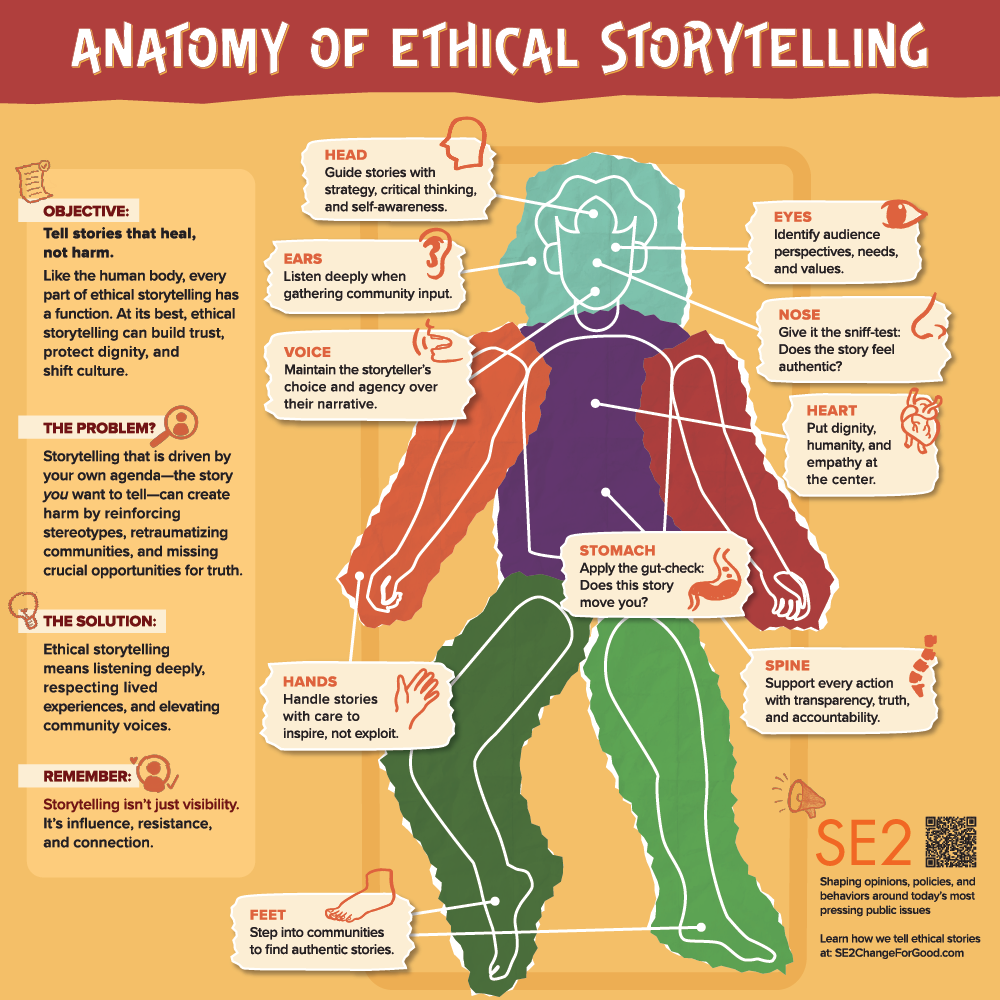
- Head – Strategy, critical thinking, and self-awareness guide the narrative.
- Eyes – We consider audience perspectives, needs, and values.
- Ears – We listen deeply to community input.
- Nose – We apply the “sniff test”: Does the story feel authentic?
- Voice – We ensure storytellers maintain agency over their own narratives.
- Heart – We center dignity, humanity, and empathy.
- Stomach – We use the “gut check”: Does the story move us?
- Hands – We handle stories with care to inspire, not exploit.
- Spine – We support storytelling with transparency, truth, and accountability.
- Feet – We step into communities to find authentic stories.
This framework isn’t just theoretical—it’s how we work every day. Whether we’re crafting a campaign, producing a video, or writing a feature, we strive to honor the people whose stories we tell. Download a PDF version of the Ethical Storytelling Framework here.
If you’re at ComNet25, come see the poster in person and let’s talk about how we can all do better by the stories we share. And if you’re curious to learn more, check out our other blogs.
Let’s keep storytelling human.
A Turning Point for Democracy & Belonging in Colorado
Last week’s killing of conservative political commentator and activist Charlie Kirk is a tragedy – for his loved ones, of course, and for anyone who believes in the principle of being able to express their opinions without fear or retribution.
It was another in a string of attacks on political leaders in recent years but hopefully is a turning point for a country that surely now sees that something inside us is broken.
We can’t look at political leaders, pundits, or influencers to solve this problem. It’s something only we can fix – one relationship, interaction, and conversation at a time.
Seeing the humanity in others and approaching conversations with tolerance and a commitment to working together is what a bold new effort here in Colorado is all about. Belonging Colorado is focused on bringing Coloradans together across lines of difference – regardless of their race, political affiliation, income, or where we are from – to foster a greater sense of belonging in our state. Across Colorado, people are stepping up to lead locally based efforts to bridge differences and create belonging in their communities.
This unique, innovative statewide approach includes support for community-based organizations that are bringing people together to connect around shared interests and address shared challenges; funding for entrepreneurs to pioneer new ways to increase connection and belonging; and training and support for community-led leadership networks that are working to spread strategies for bridging differences. The initiative is made possible by a special fund at The Denver Foundation and supported with the expertise of the Greater Good Science Center, Colorado Health Institute (CHI), and Startup Colorado.
The Belonging Colorado project is based on research conducted by CHI that found that only about half of Coloradans feel a strong sense of belonging in their local community. According to the 2024 Colorado Belonging Barometer:
“While a majority of Coloradans reported belonging, there was a significant percentage who felt uncertain, at best, about whether they belonged in the state, community, workplace, and in their child’s school. Socioeconomic factors, such as education level and income, as well as people’s feelings about belonging, loneliness, and political ideology, are most often associated with whether someone feels they belong.”
The effects and benefits of belonging range from individual to community wide.
“An emerging body of research,” the CHI report says, “indicates that belonging is associated with better physical and mental health, greater workforce retention, increased trust in one’s neighbors and in local government, more openness to diversity and less fear of demographic change, and greater satisfaction with U.S. democracy.”
Bridging our inevitable differences involves seeing the humanity of people whose backgrounds or views differ from our own and better understanding them. It does not ignore the differences that make us unique, nor does it mean agreeing on everything – or tolerating hate, bigotry, or incitement to violence. It is about valuing one another, extending mutual respect, and working towards shared goals and a future we can co-create.
Regardless of whether you shared Kirk’s opinions, no person deserves to be dehumanized or killed because of their views, background, or beliefs. Belonging means being valued and accepted for who you are, without the need to act in ways that erase your identity or what you believe.
When people are given a seat at the table and treated as valued participants in shaping their future, they feel heard, connected, and supported – which benefits everyone. Belonging ensures that progress for one person strengthens the whole community.
Colorado is not immune to many of the political and social dynamics that divide people. But, by focusing on ensuring all voices are welcome at the table to talk about our issues, we can walk out of this darkness together and create a brighter future in a state where everyone can thrive.


The Return of Things We Thought Were Gone
“Gays are not welcome here,” said the man through the window of the blacked-out Tesla.
My sheepish response, “Oh, really?” But in my defense, it’s not something you expect to hear while walking your dog with your husband of 21 years in the City Park neighborhood of Denver. After all, Denver is a fairly progressive, major city. And it had been years since the last time I had someone so brazenly verbally harass me in public. Had I expected it, I might have had a more thoughtful response that made him think twice about believing he could be so cavalier with his bigotry.
“Gays are not welcome here.” It kept ringing in my head all night.
If you haven’t been on the receiving end of hate speech, it’s difficult to imagine the violation you feel. It’s scary because you think, if someone can so easily say such awful things to a stranger, what might they be willing to do to you physically as a demonstration of their intolerance for who you are?
I think I have a somewhat interesting perspective on the issue of growing intolerance.
As a white, cisgender man who can “pass”, I can blend in. I see and experience the privilege that white, cisgender men have. But at the same time, I can also understand what it feels like to live as a minority. Certainly not in the same ways and to the same degree that many people experience it. But at least a little.
I have also been around long enough to have gained the perspective that time brings.
Back when my husband and I first met, it wasn’t ok to be gay. We faced nearly daily harassment. However, as time passed, things improved for us. I can now see that 20 years of progress are being lost.
Not just for the LGBTQ+ community, but for immigrants, women, people of color, people with disabilities, religious minorities, and anyone whose existence challenges the rigid boundaries of those who define belonging through fear.
It feels like we’re slipping backward into something darker—something we thought we’d outgrown as a country. And maybe that’s what unsettles me most. Not the words themselves, but the realization that this kind of hate can exist comfortably in daylight again, met too often with silence.
We tell ourselves it’s isolated. We scroll past the stories. We say, “That’s terrible,” and move on with our day. But silence is not neutrality. It’s permission. When we don’t speak up, when we look away, we make space for hate to take root and grow bolder.
This isn’t about politics. It’s about people, our neighbors, our friends, our families, being told they don’t belong. We all have a stake in the kind of community we choose to build.
So, if you’ve found yourself sitting on the fence, wondering whether it’s really that bad, I invite you to look closer. Listen to what’s being said in your neighborhood, your workplace, your statehouse. Pay attention to who’s being targeted and who’s staying quiet.
And if you know me — if you consider me a good neighbor, a friend, a colleague — I ask you to think about what it would feel like to watch someone stand by while I was told I don’t belong. Then extend that thought to the people you don’t know, the ones being targeted, dismissed, or dehumanized in ways that might feel distant from your own life.
Today, it’s, “Gays are not welcome here.” Tomorrow, it will be someone else. As Pastor Martin Niemöller warned:
“First they came for the socialists, and I did not speak out—because I was not a socialist. Then they came for the trade unionists, and I did not speak out—because I was not a trade unionist. Then they came for the Jews, and I did not speak out—because I was not a Jew. Then they came for me—and there was no one left to speak for me.”
Because being complacent is being complicit. And right now, what’s needed most isn’t outrage. It’s courage. The courage to see clearly, to speak up, and to stand beside those who are being pushed to the margins.
Progress doesn’t sustain itself. People do.

Reclaiming the Power of Story: Reflections from the 2025 Colorado Health Symposium
In volatile times, stories protect, connect, and keep culture alive
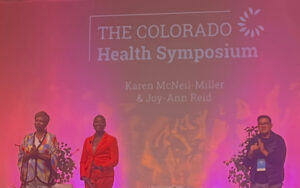 This year’s Colorado Health Symposium, hosted by The Colorado Health Foundation, was more than a conference; it was a gathering of people working on the frontlines of health, equity, and justice across Colorado. It served as a space to strengthen strategies, challenge assumptions, and fuel the resilience needed for the work ahead.
The theme was appropriate: Fortifying the Movement in Volatile Times.
Symposium speaker Joy Reid, in conversation with Colorado Health Foundation President and CEO Karen McNeil-Miller, reminded us why this moment matters. Institutions may falter. Systems may fail. But communities continue to show up for one another, creating safe, healthy spaces where people can live, connect, and thrive.
Storytelling as Strategy
SE2’s Telling the Truth with Care workshop, which I led with my colleagues Alvina Vasquez and Elizabet Garcia-Hernandez across three sessions, explored how to tell stories ethically and why it matters.
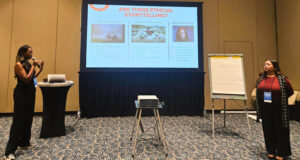 Ethical storytelling is crucial because stories shape perception, influence action, and can either reinforce harm or foster understanding. The sessions emphasized care for both the storyteller and the community, with key principles including centering people over agendas, seeking consent and collaboration, situating stories in social and cultural context, capturing layered identities rather than stereotypes, and using storytelling to build trust, understanding, and positive change.
Storytelling is never just about visibility. And it’s not a decorative add-on to research or programming. Done right, it drives change, helping people see themselves in the work, shifting not only what they feel but also how they act and connect.
The most powerful stories come from real people, but they must be told with intention and care.
“Story is the antidote to control. Story feeds the narrative.” – Joy Reid
When systems fail, stories protect.
They carry our truth when institutions can’t or won’t.
They clarify, connect, and keep culture alive.
A Call to Ethical Storytelling
At the Symposium, I left inspired by the work people across Colorado are already doing, and at times without resources, support, and for communities under attack. In communities everywhere, leaders are not just telling stories, they’re telling them ethically, urgently, and with care.
That matters. Because ethical storytelling isn’t about performance for power, it’s about honoring people. It’s about creating stories that are not just polished, but purposeful.
As our team shared in our session:
- You’re already doing the hard and beautiful work of telling real stories in your communities. Stories rooted in care, identity, and truth.
- In this moment, that work is essential. Systems are faltering, but stories hold. They’re how we look out for one another, how we preserve memory, share belonging, and shape what comes next.
- Storytelling isn’t just a campaign tool. It’s resistance. It’s legacy. It’s the one thing no one can take from our communities when it’s done with care and purpose.
Or as we put it:
“When the system forgets us, the story remembers. In the absence of justice, our stories still speak.”
The Work Ahead
 Now more than ever, it’s urgent to reclaim our narratives before they’re distorted, diluted, or erased altogether. Storytelling isn’t just personal, it’s collective. Together, we safeguard truth and ensure our communities remain visible on their terms.
The Colorado Health Symposium served as a poignant reminder of that truth. Seeing people from across the state share stories, strategies, and lessons was not just inspiring; it was fortifying.
Our movements aren’t held up by stories alone, but without them, the work risks being misunderstood, sidelined, or forgotten.
Because when we protect our stories, we protect our communities. And in volatile times, that may be the strongest tool we have.


Make It Easy for Your Audience: Accessibility Improves Every Message and Campaign
Improve Readability and Visual Connection
Most Americans read at a sixth-grade level (source)—yet too many marketing campaigns use language that’s overly complex. If a message takes too much effort to understand, people tune out. Plain, direct language always wins.
Start with strong, clear writing:
- Use simple, everyday words.
- Keep sentences short.
- Cut out jargon and acronyms.
- Write the way people talk.
Tip: Reading your copy out loud takes time—but it works. If it sounds awkward, it probably reads that way too.
Use visuals that support the story—not distract from it.
People want to see themselves—or people like them. Choose images that feel real and add meaning. Skip anything that adds clutter or confusion. And of course avoid cheesy stock photos that look staged.
- Make It Visually Accessible: Design choices can either include or exclude people. Accessibility helps everyone, especially people with vision impairments, learning differences, or just aging eyes.
- Use high-contrast colors: Black text on a white background remains one of the most readable combinations. Avoid light gray text, bright yellow text, or text over busy images. Use a contrast checker (like WebAIM) to confirm your design meets WCAG (Web Content Accessibility Guidelines) standards.
- Pick readable fonts—and size them up: Use sans serif fonts like Arial, Helvetica, or Verdana. Keep body text at least 16 point font. For printed materials, 12-point font or larger works best.
- Avoid ALL CAPS and italics: All caps slows reading speed. Italics can blur on screen. Use bold type for emphasis instead.
- Break up the page: Add white space between lines and sections. Use headers, bullet points, and short paragraphs. This keeps readers engaged and prevents overwhelm.
Go Beyond Compliance: Design with People in Mind
Accessible content isn’t just a box to check—it’s a mindset. We build stronger campaigns when we center them around the needs of the people we’re trying to reach.
More accessibility tips:
- Add image alt text for screen readers.
- Open caption videos.
- Avoid flashing elements.
- Write descriptive link text (“Read more about accessible design” beats “Click here”).
- Test your content with real users, not just internal teams.
Accessibility Is Good Strategy
When you make your message easier to understand, you expand your reach. It brings more people in, keeps them engaged, and shows you care enough to meet them where they are.
Want help building a more accessible campaign? Let’s talk.


Get Uncomfortable. Get Loud. Return to Pride’s Radical Roots.
Sponsors love rainbows until doing real work gets involved. They slap logos on floats, pump cash into parades, and post glossy allyship on June 1. Then they vanish.
This year, corporate sponsors ghosted Pride events faster than a closeted politician in an election year. Organizers announced cancellations. Cities scaled back. Brands blamed “safety concerns.” But let’s name it: These corporations folded under pressure. Far-right blowback scared them, and instead of standing with the LGBTQ+ community, they sprinted for the exit.
No explanation can excuse that.
If a company can’t show up when people face real threats, then it never stood with us in the first place. It stood with marketing. It stood with visibility, not vulnerability. And visibility without courage means nothing.
Stop Pretending Pride Needs Sponsors
Pride started as a riot. Not a brand partnership.
No one threw bricks at Stonewall for the chance to snag a Gatorade logo on a banner. They fought for survival, for dignity, for breath. Pride lived in alleyways, church basements, dance floors, clubs, and marches where no one handed out coupons. We showed up because we had each other. Not because someone handed us a branded stress ball.
And here’s where the mirror turns: some Pride organizers helped the shift to commercialization happen. Some traded people for polish. They built events that looked good on Instagram but felt hollow on the ground. They let brand money dictate the vibe. They chased clean, “family-friendly” images that erased the drag performers, trans folks, sex workers, and fierce femmes of color who built the movement.
So now, when those same brands flake out, we see the cost.
Kick Cowardice Out of the Parade
Corporations can’t lead this movement. They never did. But we can hold them accountable.
Stop calling them allies. Call them what they are—cowards.
Stop begging them back. Build something stronger.
Fill the gaps with local vendors, resource organizations, community mutual aid, and unapologetic queer joy. Fund drag shows with grassroots dollars. Pack parks and streets with families, elders, youth, and fierce-as-hell trans folks who never needed a bank logo behind them.
Queer people never relied on approval before. We don’t need it now.
Bring Pride Back to the Street
Let’s end the illusion: Rainbow capitalism won’t save us.
Community will.
We can’t let sponsors define our visibility. We can’t let glossy campaigns erase the mess, the grief, the joy, and the power that make Pride real. This moment calls for more than just celebration. It demands reckoning. And resurrection.
Let’s build Pride that scares cowards again.
Let’s build Pride that honors its roots—loud, sweaty, righteous, and bold.

Tune In, Not Out: Hearing Testing Is Easier Than Ever and It Could Help Your Overall Health
Apple’s earbuds came out with the iPod in 2001, but became iconic in the 2003 “silhouettes” ads—dancing shadows against bright backgrounds with white headphone cords. The message was clear: these little headphones connect you to music you love.
Twenty years later, we don’t have the cords anymore, but people can’t live without them.
The devices that once helped people ignore the world around them can now actually help us experience our surroundings better.
Noise canceling shuts out background noise when you need to focus, and ‘transparency’ modes amplify outside noise to make it sound like you aren’t wearing headphones at all.
It’s now normal to wear earbuds all the time. People don’t judge you for having “speakers stuck in your ears” anymore. In fact, someone wearing earbuds might hear you better than someone without them.
Apple recently received FDA approval for its new “Hearing Aid” feature for AirPods Pro 2. Delivered as a free software update, it helps to amplify noise for those with mild to moderate hearing impairment. Additionally, it offers the ability for users to take a validated hearing loss test and receive instant results, all from their home.
Reducing the barrier to entry for this first step of the process makes it more approachable and means more people might take a test earlier in life.
Importantly, the hearing test and hearing aid work together to respond to each person’s hearing needs. They customize the sound to reduce stress from straining to hear, whether you’re talking to people in person, listening to media, or making phone calls.
Taking care of your hearing is a key part of staying healthy as you age. When people can’t hear well and start avoiding social situations, they have a higher risk of developing Alzheimer’s disease. Most people don’t think about hearing health until they notice problems, but proactive protection can make a big difference.
When we talk openly about hearing loss, it’s easier for everyone to get help and prevent damage. Taking my first hearing test made me nervous—but doing it at home without an appointment made it much easier. Now I can share my experience with others and encourage them to try it. I also have a starting point to track my hearing in the future.
We need to start talking about simple actions like this that can change our lives later on. Tell your family, especially older relatives, about protecting or enhancing their hearing.
Eliminate the stigma and normalize the discussion.
If you already have these AirPods, take the hearing test. If you don’t have them, think about getting a hearing test – they’re easily accessible at ENT offices, audiology clinics, and even wholesale stores like Costco and Sam’s Club.
Or, use this technological advancement as an excuse to get a new pair of earbuds.


Break Barriers with Transcreation+: Adapt, Connect, Succeed
Words and images hold power, especially when they reach people in ways that make sense to them.
Too often, messaging and marketing get lost in translation—literally and figuratively. A word-for-word swap might capture meaning, but does it capture connection? Do the images connect across cultures? Do they hit home?
That’s where transcreation comes in. Instead of just translating, transcreation reshapes messaging to match cultural context, emotional nuance, and audience expectations.
When we think about culture and community, we need to understand values and lived experiences. The goal is to create a full experience—concepts, images, and language all working together.
Ensure Creative Matches the Audience
Translation is a word-by-word literal change to another language. Transcreation ensures impact.
- Translation: Converts words from one language to another. Additionally, interpretation takes spoken word to another language.
- Transcreation: Merriam-Webster defines transcreation as “The process of adapting a message from one language to another while maintaining its intent, style, tone, and context.”
Introducing Transcreation+
Transcreation+ expands the concept beyond translation to encompass all forms of marketing and communication to all types of audiences. It’s about adapting not just words, but also visuals, tone, and storytelling structures to ensure every message lands the right way with the right people – even if you’re an English speaker trying to reach a specific English-speaking audience, or a Spanish speaker trying to reach a specific Spanish-speaking audience, etc.
Because communication isn’t just about words, it’s about context, values, and cultural nuance.
Adapt Words, Images, and Concepts
Words don’t exist in a vacuum. Different audiences respond to different styles of communication and storytelling approaches.
- A middle-aged Spanish-speaking man might prefer a formal, respectful tone with traditional imagery.
- A bilingual Spanish-speaking teen might connect more with Spanglish, emojis, and dynamic visuals.
Transcreation+ isn’t just about translating between languages. It’s about adjusting how we communicate — verbally and visually — across different cultural and social groups.
Shape Stories That Resonate
Whether communicating in English, Spanish, or another language, Transcreation+ ensures messaging resonates—not just in words, but in the way they connect.
That means:
- Using images that reflect the audience and their experiences.
- Choosing words that feel natural and inviting.
- Structuring campaigns with concepts that align with cultural values.
Because when words, images, and ideas connect—change happens.
Invest Where it Counts
A one-size-fits-all campaign might seem like the most budget-friendly option, but it often falls flat—failing to connect with key audiences. Transcreation+ is a more complex approach, and it may require a larger budget.
Adapting messaging, visuals, and storytelling for multiple audiences takes time, research, and resources. But investing in the right strategy upfront prevents wasted spend on ineffective outreach. Instead of asking, “Can we afford this?” consider: “Can we afford not to?” Because real impact comes from messaging that truly resonates—and that’s worth the investment

Tumblr's New Politics-Free Position and Attempted Comeback
For a while, Tumblr seemed like a ghost town.
After its heyday in the early 2010s, the platform faded into the background as Instagram, Twitter (now X), and TikTok took center stage.
But lately, Tumblr has been creeping back into cultural conversation. Not as the chaotic free-for-all it once was, but as something better—or at least, something different.
They seem to be rebranding as a space safe from politics and toxic-masculinity – with new TV ads to boot. You can see info about their campaign here.
Can it reclaim its place as an internet haven, or is it just a relic of a bygone era? If the internet feels exhausting, Tumblr might be your refuge—or maybe not.
What Made Tumblr, Tumblr
In its prime, Tumblr felt like the Wild West of the internet.
People used it to build micro-communities around everything from niche aesthetic vibes to full-blown fandom empires.
Unlike other platforms, where clout and engagement metrics rule, Tumblr thrived on anonymity. You could be anyone, post anything (sometimes to a fault), and disappear into your curated world of memes, art, and hyper-specific obsessions.
Some of the things that made Tumblr unique:
- No Algorithms – Your feed showed posts in chronological order, not whatever the algorithm decided you should see.
- Micro-Communities – Whether you loved gothic architecture, vintage anime clips, or surreal memes, there was a corner for you.
- Creative Expression – Writing, art, and GIFs thrived without pressure for likes or shares.
For me, Tumblr was all about Superwholock— Frankenstein’s monster of fandoms combining Supernatural, Doctor Who, and Sherlock. That corner of the site lived on inside jokes, fan fiction, and GIFs moving at light speed.
I had around 5,000 followers, though most of what I did was reblogging content that aligned with my specific interests. My partner, on the other hand, was deep in “stoner Tumblr,” which was exactly what it sounds like.
The variety of subcultures made Tumblr feel endless—there was a place for everyone.
For others, like SE2 Associate (and self-described recovered Tumblr fanatic) Mikey Talley, it was a vision board before Pinterest, a space to curate dream outfits from fashion magazines, capture aesthetics and scenic escapes, and craft aspirational collages.
It became a hub for discovering underground music, fresh perspectives, and inspiring quotes while connecting with like-minded people across the globe. More than just a collection of images, it was a personal sanctuary—a little corner of the internet where creativity, exploration, and self-expression flourished.
The Vine Connection and Tumblr’s Influence
People forget how much Tumblr shaped internet culture. Many of the viral trends that defined early social media either started or thrived there. The now-defunct Vine owes a lot to Tumblr; many of its biggest moments first gained traction through reblogs before hitting wider audiences.
Some ways Tumblr influenced internet culture:
- Absurdist Humor – Nonsensical memes and inside jokes ran wild.
- Remixing Content – Users reworked and built on each other’s creations.
- Fan Culture – Fandoms grew deep roots, creating lore and traditions still seen today.
Why Tumblr Feels Right Again—Or Does It?
In a digital landscape dominated by Meta’s ad-choked feeds and X’s toxic free-for-all, Tumblr’s weirdness feels like a relief. But does it still have a place?
Some arguments for its renewed relevance include:
- No Pressure to Perform – There’s no race for engagement or clout.
- No Algorithm Manipulation – You see what you follow, nothing more.
- No Endless Ads – Unlike other platforms, Tumblr hasn’t turned into an ad-filled wasteland.
I’ve been tempted to dust off my old account, clean up the chaos, and get back into it.
Tumblr has always been silly, fun, and surprisingly pure in its weirdness. Maybe that’s exactly what the internet needs right now. Or maybe it’s just a nostalgic relic from a different era of the internet.
What do you think? Is Tumblr making a comeback, or is it just trying? Let’s talk about it.

Communications Lessons from 2024 and a Vision for 2025
As 2024 draws to a close, the marketing and communications world finds itself in a fascinating moment of transition. This year brought rapid technological advancements, shifting audience expectations, and putting an even greater demand for authenticity in a crowded media landscape.
At SE2, we’ve been navigating the challenges and opportunities that defined 2024 and exploring the trends that will shape the future.
2024: A Crisis in Confidence for Communicators
The most important shift in 2024 wasn’t just a new platform or technology—it was a change in audience expectations. “Audiences became increasingly skeptical and selective, seeking messages that resonate with their values,” said RJ Johnson, SE2’s content producer. With shrinking attention spans and heightened skepticism of traditional marketing tactics, authenticity emerged as a vital currency for building trust.
Video formats—especially short-form—cemented their dominance. As Public Relations and Community Outreach Specialist Elizabet Garcia noted, “Instagram and TikTok amplified the power of short videos. They’re the perfect length to deliver big messages without losing focus.”
At the same time, alternative channels like podcasts gained momentum, with political figures and brands alike exploring new ways to connect directly with these audiences.
AI wasn’t just a buzzword—it became a tool. “AI isn’t the enemy or the savior,” said Principal Eric Anderson. “It allows us to automate mundane tasks and elevate our focus on things only humans can do.”
Principal Susan Morrisey observed that AI matured from a novelty to a practical resource, reshaping workflows without replacing the core of good communication: human creativity.
2025: Authenticity Takes Center Stage
Looking ahead, authenticity will remain the bedrock of effective communication. “Audiences crave narratives grounded in genuine experiences—not polished campaigns,” shared RJ Johnson.
Real stories rooted in shared values will cut through the noise, fostering trust in a divided and cluttered media landscape.
AI will continue to grow in prominence, but its role will evolve. “People are becoming more attuned to recognizing how AI is used,” observed Mikhail Talley, associate. “They’ll place greater value on what AI can’t replicate: authentic human emotion.”
To stand out, brands must pair AI-driven efficiency with deeply human storytelling.
At the same time, face-to-face connections will reclaim importance. “In-person interactions build trust in ways AI and digital tools cannot,” said Eric Anderson. This trend highlights the need for human-centered strategies that go beyond screens, from meaningful community engagement to real-world collaborations.
And as misinformation and disinformation loom large, regulator shifts could redefine the boundaries of communication. “Emerging regulations like COPPA 2.0 could drastically impact how advertisers engage with young people,” said Jack Cohen, associate. COPPA 2.0 refers to proposed updates to the Children’s Online Privacy Protection Act (COPPA) aimed at strengthening online privacy protections for children, addressing emerging technologies, and expanding regulations to better safeguard minors’ data in the digital age.
Navigating these changes will require agility and a deep understanding of evolving platforms.
Bridge 2024 to 2025 and Beyond
The world of communications never stops evolving, and 2024 underscored the importance of adaptability. As we look to 2025, our focus remains on fostering connections, telling real stories, and meeting audiences where they are—whether through AI-enhanced strategies, video platforms, or in-person interactions.
At SE2, we’re committed to navigating the challenges ahead with creativity, resilience, and an unwavering dedication to the communities we serve. As Mikhail Talley summed up, “In an increasingly divided world, the most important thing is to focus on the common values that connect us all.”

Power Your Creativity: 4 Resources Every Designer Should Know and 1 Bonus Tip
Every designer has go-to resources that spark creativity and help bring ideas to life. For me, SE2’s graphic designer, the key is balancing discovery with the right digital tools. Browsing top rebrands, unique color combinations, and storytelling campaigns sharpens my design eye and keeps me inspired.
Here’s a look at my creative toolkit:
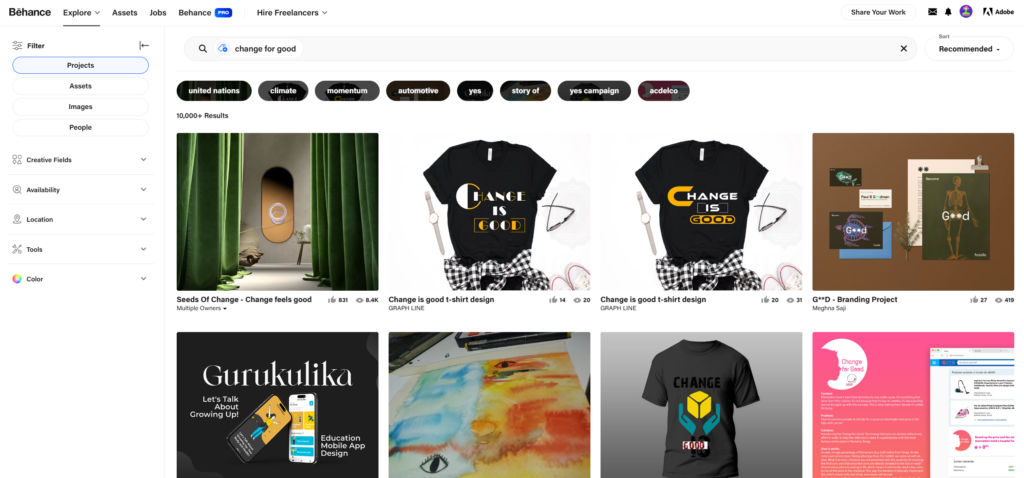 1. Behance
Behance showcases design solutions from freelancers and agencies worldwide. It’s my first stop for inspiration—whether I’m seeking visuals or practical resources like free mockups and fonts. It’s a global gallery of creativity.
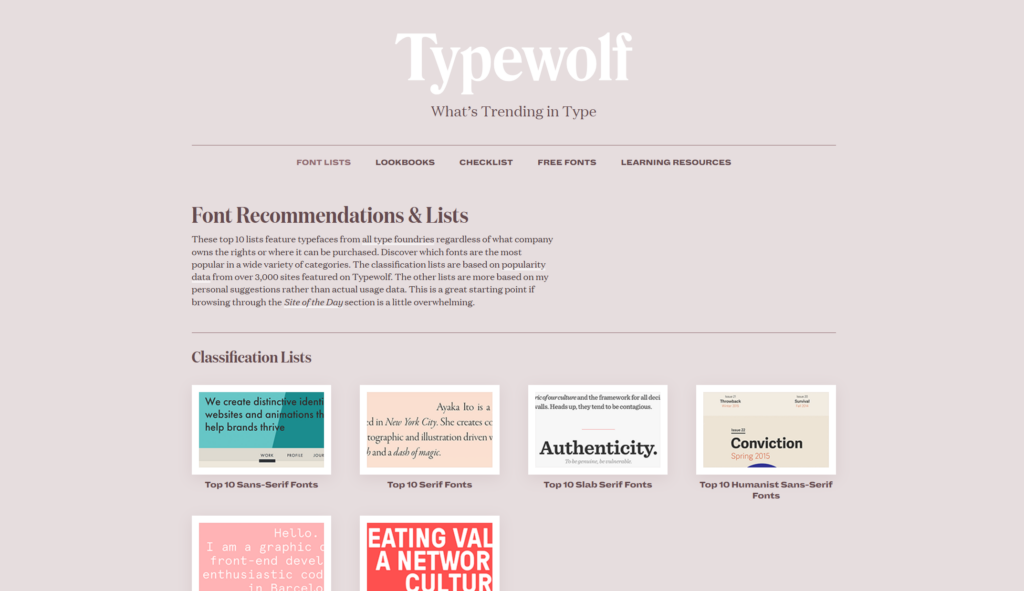 2. TypeWolf
When selecting fonts, TypeWolf helps me find the perfect type pairing. From classic choices to the latest in typography, it offers examples that capture the character and tone of any project.
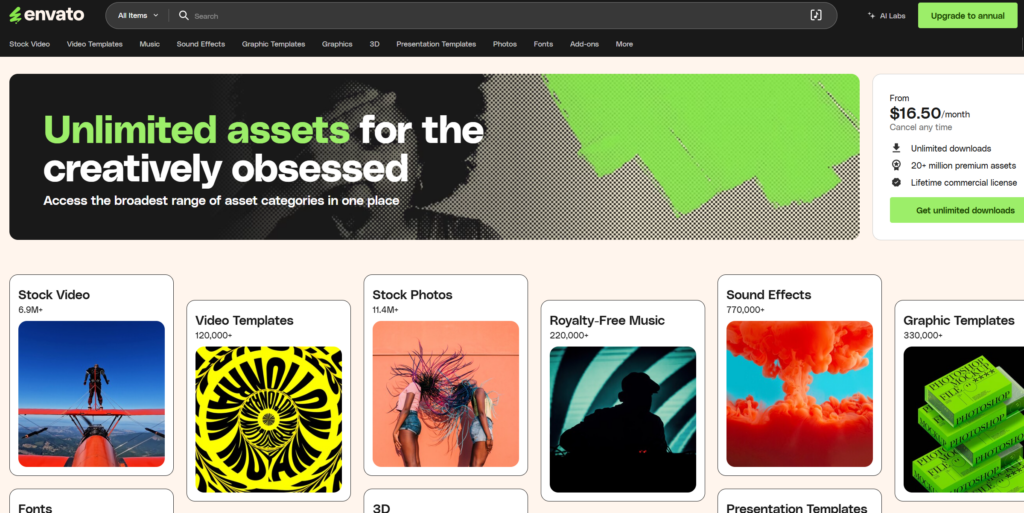 3. Envato Elements
Envato Elements provides everything from illustrations to high-quality stock photos. Our SE2 subscription covers a huge range of licensed materials, making it easy to find what I need to bring a concept to life.
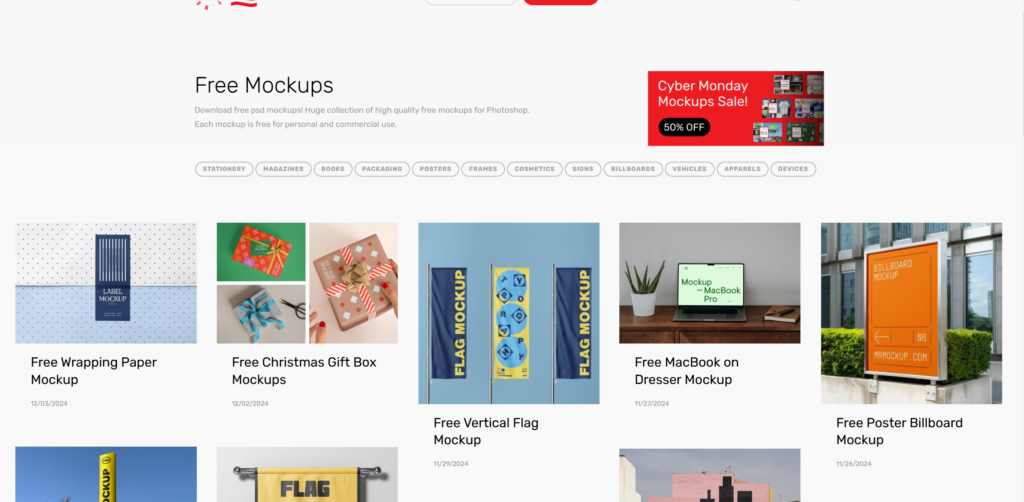 4. Mr. Mockup
Mockups help present designs in real-world settings. Mr. Mockup offers a variety of templates that give clients a vivid preview of the final result, enhancing their connection to the project.
Connect with Other Creatives
In-person events, like those by Creative Mornings, create opportunities to meet other creatives, exchange ideas, and discover even more resources.
These tools keep my work sharp and inspired. They make the creative process more dynamic and connect me to a community of designers who enrich my work every day. Whether through digital platforms or in-person networking, staying inspired is all about finding—and sharing—the right resources.


Cut the Fluff: Lessons in Smart Brevity from ComNet 24
Making complex stories scannable for busy readers? Easier said than done.
The training on Smart Brevity at The Communications Network’s ComNet 24 in Kansas City, led by Axios, reshaped my approach to content.
This piece? It’s me putting that training to work—trimming down, focusing on what’s relevant, and trying to keep you reading.
Key Lessons I’m Using Right Here:
- Shorter is stronger.
Axios laid out the facts: Only 5% of people finish an 800-word article. Aim for half that length. It’s not about cutting words; it’s about cutting fluff. This blog? Around 400 words max, so every sentence here earns its place.
- Hook them with what’s new.
You’ll notice we skipped a big intro here. That’s on purpose. Readers—especially busy communications pros—want to know what’s new right away.
- Be a “word surgeon.”
Words have weight. At ComNet, we practiced paring paragraphs down to a word or two. It’s about removing filler, and that’s why I’ve kept each lesson short here—you’re getting only what matters.
- Think story, not facts.
People remember stories, not fact after fact. Even in brevity, storytelling should guide us. This blog aims to share not just tips but tell the story, however brief, of how Smart Brevity changed how I think about my writing.
- Be human, not robotic.
Smart Brevity isn’t just stripping language down; it’s about clarity. Writing as if I’m speaking directly to you keeps it natural, conversational, and clear. Read it out loud—if it doesn’t sound right, refine it until it does.
Practical Tips Applied:
- Audience first. I’m writing with you in mind—one of SE2’s key audience members looking for actionable insights.
- Scannable structure. Notice the bold headers, bullet points, and the most important words first? This format lets you quickly decide whether to dive deeper or move on.
- Precise headline. Headlines should be 10 words or fewer. No clickbait. And yes, emojis boost engagement by 6%—which is why I added one here.
Why It Matters
Smart Brevity isn’t just a technique; it shows respect for your reader’s time. Making every word work double-duty requires us to put our audience first. As communicators, the challenge is clear: Write so they stay.

How to Create Memorable In-Person Events that Foster Connection: 3 Takeaways from An Expert (Plus Lessons I Learned from My Drag Show)
Creating memorable in-person events is a challenge and an opportunity in a post-pandemic world buzzing with virtual options. Recently, we gathered for an insightful training session led by Val Nosler-Beck, founder of Upstream and the Steady Network. Her wealth of experience in event planning, particularly in the political realm, gave us valuable tips to elevate our events.
Here’s what we learned, along with my own journey in event planning and how these insights apply to SE2 and the broader marketing landscape.
It’s All About the Experience
The landscape of event planning has changed dramatically. As audiences have grown accustomed to attending events from the comfort of their homes, they now seek in-person experiences that offer genuine value for their time.
Gone are the days of generic galas and dull dinners. Instead, people crave vibrant gatherings that engage and excite.
Organizers must be creative in building for each event. There is no one way to reach out; it’s best to use multiple platforms to reach the desired event participants. Going beyond emails and event pages, it is important to leverage personal connections—direct messages, phone calls, and even involving the venues themselves in outreach. This personal touch not only boosts attendance but also fosters a sense of community before the event begins.
One key takeaway—which has always been important—is the need for meticulous planning. As soon as you know an event is on the horizon, start organizing. Avoid or minimize days of emergencies and bumps in the road by establishing the event team’s clear roles and responsibilities. This clarity leads to a smoother process and allows for effective collaboration. In addition to defining roles, it’s crucial to set internal deadlines and regular check-ins throughout the planning process. These checkpoints help you assess progress, decide which elements to move forward with, and identify what may need to be adjusted or cut. As the event day approaches, make time to meet with your team and conduct thorough checks on the status of tasks. This will catch any oversights. To improve the process and take advantage of learning opportunities, gather your team within a day to discuss what worked, what didn’t, and how to improve for next time, fuels growth and enhances future planning efforts.
Lessons from my Journey with Event Planning
I’m RJ Johnson, a content producer at SE2 with over six years of experience in event planning. My journey began in college and took a vibrant turn as I embraced drag, became my drag king persona, George Not-Strait, and began to produce shows. Alongside my partner, who is also a drag performer, we launched StageFluid, a monthly open-stage drag show, in March 2022.
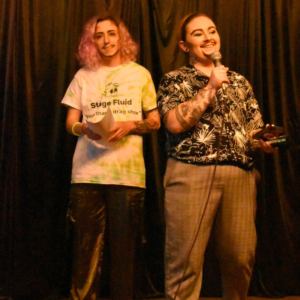
StageFluid began as a space for performers of all levels, inspired by the inclusive spirit of the “Rise of Kings” show that we both loved, which ended during COVID when the venue closed and the troupe producing it disbanded. Initially hosted at a smaller venue, we faced turnout and venue challenges. However, our event transformed into a beloved community gathering after moving to the Mercury Cafe in July 2023. We regularly pack the venue with 100 hundred attendees, fostering a lively atmosphere filled with creativity and talent.
StageFluid began as a space for performers of all levels, inspired by the inclusive spirit of the “Rise of Kings” show that we both loved, which ended during COVID when the venue closed and the troupe producing it disbanded. Initially hosted at a smaller venue, we faced turnout and venue challenges. However, our event transformed into a beloved community gathering after moving to the Mercury Cafe in July 2023. We regularly pack the venue with 100 hundred attendees, fostering a lively atmosphere filled with creativity and talent.
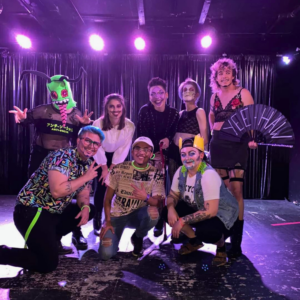
At StageFluid, we pride ourselves on creating an inclusive environment. There is no theme, allowing performers the freedom to express themselves in whatever way resonates with them. Performers can explore various roles—emcees, stagehands, DJs—gaining valuable experience that enhances their skills and confidence. We prioritize creating a safe space where everyone feels welcome, no matter their experience level.
We cater to two key audiences: performers and attendees. For our performers, we offer a welcoming space to express themselves freely, regardless of experience level. They can try new roles, explore creativity, and develop skills enhancing their drag careers. Many performers who have graced our stage have gone on to start their own shows, contributing to a thriving performer ecosystem.
Additionally, we foster collaboration within the drag community. We recommend other venues and events to our performers, creating a network that supports everyone involved. In turn, we also welcome other producers who invite us to participate in their shows, reinforcing a sense of unity and collaboration among creators.
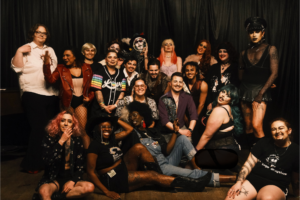
For our audience, we provide great entertainment and a chance to engage with and support the community. The more people who attend and have a fantastic experience, the more likely they are to return and invite others. This ripple effect cultivates interest in trying to drag and join the community.
Accessibility is paramount for us. We keep StageFluid free to attend, ensuring that anyone can enjoy the show without a cover fee. We heavily utilize Facebook for outreach, as we know that many drag performers and supporters are active on that platform. We actively engage with our community, inviting everyone to become a part of this celebration of creativity.

To promote our shows, we encourage our cast to invite friends and family and provide them with a toolkit of promotional materials to share across social media. I boost our event on Meta about $40 a month and share it in relevant groups to attract new attendees. Our approach to outreach emphasizes personal connections; I often send DMs or texts to invite people directly, making them feel valued.
Feedback is essential to our growth. At each show, we announce the next event, fostering anticipation. We listen to our community’s suggestions, ensuring that we evolve and meet their desires. This engagement cultivates a loyal audience eager to return month after month.
Our event has put into practice many of the practices Val brought up in her training; we just had to learn them the hard way. Some of our big takeaways have been that a venue can make or break an event, personal invites go way further than simply posting or sharing an event, and knowing your audience is critical to success. We have created a safe and fun experience for both our performers and our audience, which has led to tremendous interest and loyal attendees who come back month after month.
Transferring These Insights to Marketing and Communications Space
The lessons from event planning extend well beyond the logistics of execution—they’re about creating lasting impact and fostering genuine connection. Here are three key takeaways that can be applied to the marketing and communications space:
- Make It an Experience: People want something memorable, whether it’s an event or a marketing campaign. Beyond just delivering information—focus on creating an engaging experience that resonates with your audience and provides rdistinct value. Experiences stick with people and give them a reason to invest their time and attention.
- Know Your Audience and Invite Them Personally: Effective outreach starts with understanding your audience and tailoring your approach to meet them where they are. Personal connections make all the difference; whether direct messages, calls, or targeted outreach, inviting people individually makes them feel seen and valued. In marketing, this is how you create loyal customers who feel connected to your brand or mission.
- Always Reflect Post-Event: Consider what worked and what didn’t after every event or campaign. Immediate post-event or post-campaign analysis is critical for continuous improvement. Through these reflections, you can fine-tune your approach, ensuring future success and growth.
These principles—creating a memorable experience, fostering personal connections, and always reflecting— apply to all forms of engagement. In a crowded marketplace, making your interactions stand out, connecting with people personally, and constantly evolving is critical to building solid, lasting relationships that drive success.

Principal Brandon Zelasko on How to Rebuild Trust: LGBTQ+ Blood Donations
Brandon Zelasko’s latest article in Health Affairs sheds light on a critical issue that has impacted the LGBTQ+ community for nearly four decades: the exclusion of gay men from blood donation. A recent FDA policy change marks a significant milestone, but as Brandon points out, the work is far from over. His personal connection to the cause, coupled with years of advocacy, underscores why rebuilding trust, educating the public, and demonstrating impact are essential next steps.
For anyone interested in the intersection of health equity and LGBTQ+ rights, this is a must-read.
[nectar_btn size=”jumbo” open_new_tab=”true” button_style=”regular” button_color_2=”Accent-Color” icon_family=”default_arrow” text=”Read A New Era Begins for Blood Donation by Gay Men” url=”https://www.healthaffairs.org/content/forefront/new-era-begins-blood-donation-gay-men”]
Dive into some of Brandon’s other essential content on blood donation and LGBT issues.
[nectar_btn size=”large” open_new_tab=”true” button_style=”regular” button_color_2=”Accent-Color” icon_family=”none” text=”Gay Men May Be Allowed to Donate Blood FDA Blood Donation Rules” url=”https://www.9news.com/article/news/local/lgbtq/gay-men-may-be-allowed-to-donate-blood-fda-blood-donation-rules/73-dd286518-3ef9-418c-bb9c-8eeab1411029″]
[nectar_btn size=”large” open_new_tab=”true” button_style=”regular” button_color_2=”Accent-Color” icon_family=”none” text=”Coming Clean on Blood Donation and Gays” url=”https://www.denverpost.com/2013/12/27/coming-clean-on-blood-donation-and-gays/”]

Unleash the Power of Twitch for Marketing to Youth
In the ever-evolving digital marketing landscape, staying ahead of the curve is crucial, especially when engaging with youth. One platform that has been gaining significant traction is Twitch, a powerhouse in the world of live streaming and interactive content.
Let’s delve into what Twitch is, who uses it, and the potential pros and cons of marketing on this platform.
What is Twitch?
Twitch is a live streaming platform primarily focused on video games, but it has expanded to include diverse content, including music, art, cooking, and even talk shows. At its core, Twitch allows users to broadcast themselves playing video games or engaging in various activities. Viewers and streamers can interact via chat in real-time.
Who is the Audience?
The Twitch audience is predominantly comprised of young people, particularly millennials and Generation Z. Gen Z has grown up watching other people do everything, which has led to the popularity of platforms like Twitch and, earlier, YouTube. Gen Z is also passionate about gaming, entertainment, and connecting with like-minded individuals.
Marketing on Twitch: Pros and Cons
Pros:
- Highly Engaged Audience: Twitch boasts a highly engaged user base, with viewers spending hours watching their favorite streamers and interacting with the community. This presents a unique opportunity for marketers to capture the attention of an attentive audience.
- Authenticity: Unlike traditional advertising, marketing on Twitch often feels more authentic and genuine. Streamers have a close relationship with their audience, making sponsored content feel more like a recommendation from a friend rather than a blatant advertisement.
- Targeted Advertising: Twitch offers robust targeting options, allowing marketers to tailor their campaigns to specific demographics, interests, and gaming preferences. This precision targeting ensures that your message reaches the right audience.
Cons:
- Saturation: With Twitch’s increasing popularity, the platform has become saturated with content and advertisements. Standing out amid the noise can be challenging, requiring marketers to develop creative and innovative strategies to capture attention.
- Ad Aversion: Many Twitch users are ad-savvy and may have ad-blocking software, making it difficult to reach them through typical methods. Marketers must find alternative approaches, such as influencer partnerships and sponsored content.
- Community Backlash: While authenticity is a significant advantage of marketing on Twitch, it also comes with risks. If a sponsored campaign feels forced or insincere, it can lead to backlash from the community, damaging the sponsor’s reputation and credibility.
Another platform worth mentioning alongside Twitch is Discord. Originally popularized as a communication tool for gamers, Discord has evolved into a versatile platform for building communities around shared interests. Its integration with Twitch allows for seamless interaction between streamers and their audience, enhancing community engagement. Utilizing Discord in conjunction with Twitch can amplify marketing efforts by fostering deeper connections and creating a more immersive brand experience. By tapping into the synergistic potential of these platforms, brands can effectively engage with and grow their youthful audience base.
Leveraging Twitch for marketing to youth offers a dynamic and engaging way to connect with a tech-savvy, entertainment-focused audience. The platform’s unique combination of live interaction and diverse content streams provides an unparalleled opportunity for brands to showcase their authenticity and resonate with younger demographics. However, marketers must navigate the challenges of a saturated platform and the discerning nature of its users by employing creative, genuine, and targeted strategies.

AI's Risks and Opportunities: How Creatives Should/Shouldn't Use it in Their Work
AI is a powerful tool that can help everyone work smarter, more creatively, and more efficiently. It also creates significant risk if we don’t handle it with care. Check out this short guide from SE2’s Eric Anderson and Creative Law Network‘s Dave Ratner on how creatives should and should not use it in their work.

Beyond Happy Hours: Rethinking Alcohol-Centric Work Cultures
Drinking has long been woven into the fabric of our lives, from corporate events to networking gatherings. Whether it’s the Friday happy hour or the celebratory toast at a company event, alcohol often serves as the social thread that facilitates networking and team bonding. However, with the continued decline in alcohol consumption among younger generations, it’s essential to consider the needs and desires of those who choose not to drink.
The pervasive presence of alcohol in professional environments can pose challenges for individuals who choose not to drink for personal, religious, or health reasons. Moreover, it can create an exclusionary atmosphere that marginalizes those who do not partake in alcohol-related activities. It’s essential for companies to reevaluate their reliance on alcohol as the primary means of socialization and consider alternative approaches that promote inclusivity and well-being.
One way to redefine alcohol-centric work cultures is by expanding the range of social activities offered within the workplace. Instead of defaulting to happy hours or after-work drinks, companies can organize a variety of events that cater to diverse interests and preferences. This could include wellness workshops, team-building exercises, volunteer opportunities, or cultural outings, providing employees with meaningful ways to connect outside of the traditional drinking scene.
Promoting a culture of respect for individual choices is important in creating an inclusive work environment. This entails fostering an atmosphere where employees feel empowered to make decisions that align with their values and lifestyle preferences, without fear of judgment or ostracization. By cultivating a culture of inclusivity and acceptance, companies can foster a sense of belonging and camaraderie among their teams, regardless of their alcohol consumption habits.
In recent years, there has been a notable shift towards more inclusive and mindful approaches to workplace socialization. Companies are increasingly recognizing the importance of prioritizing employee well-being and creating environments that support diverse needs and preferences. This includes implementing policies that provide alternatives to alcohol-centered social events and promoting a culture of moderation and responsibility for alcohol consumption.
Creating inclusive spaces for socializing and team building is not about removing alcohol use entirely but rather acknowledging and respecting the choices of individuals who decide not to drink. From offering diverse non-alcoholic options to promoting organizing events that go beyond alcohol, industries can play an important role in creating a culture of understanding, respect and support.
Rethinking alcohol-centric work cultures requires a shift in mindset and behavior. By expanding the range of social activities, promoting a culture of respect and inclusivity, and prioritizing employee well-being, companies can create workplaces where everyone feels valued and supported, regardless of their relationship with alcohol. Ultimately, it’s about fostering a culture of connection and belonging that extends beyond the confines of traditional drinking norms.


How We Can Keep Pace with Change through Reskilling, Upskilling, and Next-Skilling
In the ever-evolving landscape of work, just one thing is guaranteed: change.
With automation, artificial intelligence, and digital transformation reshaping industries, the demand for a skilled and adaptable workforce has never been higher.
As we navigate this shifting terrain, reskilling, upskilling, and next-skilling emerge as crucial pillars in supporting workers to stay competitive, fostering diverse workplaces, and spurring economic development.
So we don’t further marginalize low-wage workers — who have the most to lose as workforce needs evolve — businesses, government agencies, and nonprofits must invest in these opportunities.
A Seismic Shift
The Fourth Industrial Revolution is upon us, marked by technological advancements radically transforming how we work.
According to the World Economic Forum, by 2025, 85 million jobs may be displaced by automation, while 97 million new roles may emerge, underscoring the urgent need for a workforce that can adapt and thrive in this dynamic environment.
It’s safe to assume none of us is immune.
Reskilling, Upskilling, Next-Skilling: What’s the Difference?
Staying competitive and adaptable goes beyond traditional education. There are three key strategies that individuals and organizations can employ to navigate the shifting landscape of work effectively:
- Reskilling involves learning new skills to transition to a different role or industry. It’s about equipping workers with the abilities needed for jobs that are in demand.
- Upskilling focuses on enhancing existing skills to keep pace with technological advancements within one’s current role or industry.
- Next-Skilling anticipates future skills requirements and prepares individuals for upcoming job roles, often leveraging emerging technologies and trends.
Robust reskilling, upskilling, and next-skilling initiatives hold tremendous promise in empowering diverse communities, addressing systemic inequities, and fostering inclusive economic growth. Historically marginalized groups, such as women, people of color, and individuals from lower-income backgrounds, frequently encounter formidable barriers when seeking access to education and employment opportunities. These barriers, ranging from financial constraints to discriminatory hiring practices, perpetuate cycles of inequality and hinder social mobility.
However, by implementing tailored training programs and support mechanisms, we can begin to dismantle these barriers and forge pathways for all individuals to excel in the workforce.
For example, targeted mentorship programs, like Next 100 Colorado, can provide invaluable guidance and support to women and people of color aspiring to enter traditionally white male-dominated fields, empowering them to break through glass ceilings and pursue fulfilling careers.
Additionally, initiatives that offer financial assistance, such as scholarships or subsidized training courses, can help alleviate the financial burdens that often deter individuals from underserved communities from pursuing further education and skill development.
Investing in reskilling, upskilling, and next-skilling initiatives is not just a matter of economic necessity; it is a moral imperative. We can build a more just, equitable, and prosperous society for all by prioritizing diversity, equity, and inclusion in our workforce development efforts. Through collective action and commitment to empowering marginalized communities, we can unlock the full potential of every individual and create a future where everyone can thrive.
An Economic Development Imperative
A skilled workforce also serves as the bedrock of economic growth, catalyzing innovation, productivity, and competitiveness in today’s rapidly evolving global economy. As industries undergo digital transformation and technological advancements reshape the nature of work, the demand for specialized skills continues to escalate.
When workers possess the expertise and proficiency required to excel in high-demand roles, they not only contribute to the success of their respective organizations but also drive broader economic development.
Investing in reskilling and upskilling programs has far-reaching implications for regional economic development.
Companies seeking to establish operations are drawn to regions with a talented and adaptable workforce capable of meeting evolving industry demands. By prioritizing investments in workforce development initiatives, governments and local authorities can position their communities as attractive destinations for businesses looking to set up shop. This, in turn, generates job opportunities, stimulates economic activity, and fosters a vibrant ecosystem of innovation and entrepreneurship.
But don’t just take my word for it. Review the research:
- Individual benefits. Individuals who continuously upskill and reskill are better equipped to adapt to evolving job requirements and technological advancements. Research by the World Economic Forum found that individuals who invest in lifelong learning and skills development are more resilient to job displacement and are less likely to experience periods of unemployment.
- Business benefits. A study by the Society for Human Resource Management found that companies with high employee turnover incur significant costs associated with recruitment, onboarding, and training new hires. By investing in upskilling and reskilling programs, businesses can reduce turnover rates and minimize these costs. The Center for American Progress estimates that the cost of replacing an employee can range from 16% to 213% of their annual salary, depending on the level of the position and the industry.
- Community benefits. National Employment Law Project research also shows that higher-wage jobs often have positive spillover effects on other sectors of the economy, creating multiplier effects that amplify economic growth and lead to job creation in industries such as retail and food services, as workers have more purchasing power to support local businesses.
Government and Private Sector Collaboration
Realizing the full potential of reskilling, upskilling, and next-skilling requires a concerted effort from both the public and private sectors. Governments play a vital role in setting policies, allocating funding, and creating frameworks that support lifelong learning and skills development.
Here in Colorado, the drivers of these changes are the Colorado Department of Labor and Employment’s Office of the Future of Work and the Colorado Workforce Development Council. This includes investing in education systems, incentivizing businesses to provide training opportunities, and fostering partnerships with industry stakeholders.
At the same time, private businesses must take proactive steps to prioritize employee development and invest in the future workforce. At SE2, we do this providing financial support to team members who seek to grow their skills, talents, and expertise.
As an alumnus, I am an energetic proponent of community colleges. Programs like Workforce Resilience Program, Career Advance, and Care Forward Colorado from the Colorado Community College System are making reskilling, upskilling and next-skilling more accessible to workers.
Finally, nonprofit organizations are leading the change. This includes a personal favorite, ActivateWork, which helps employers solve talent gaps by finding promising candidates who aspire to work in tech and preparing them to excel in new careers. It also includes former SE2 clients The Center for Workforce Education and Employment, Mi Casa Resource Center and Worklife Partnership.
A Call to Action for All of Us
As we stand on the cusp of a new era of work, reskilling, upskilling, and next-skilling represent powerful tools for navigating the challenges and seizing the opportunities that lie ahead.
By embracing lifelong learning, fostering diversity, and investing in our workforce, we can build a future where every one has the opportunity to thrive, and our economies are more resilient and inclusive than ever before.
It’s time to harness the transformative potential of skills development and pave the way for a brighter tomorrow.

AI Will Help Us Elevate Our Work, but Don't Expect More Free Time
When I was in elementary school in the 1970s, my teachers told us that automation would mean we would only have to work a few hours a week. In this promised utopia, we’d get to spend the rest of our time exploring our passions outside of the office or factory.
They lied.
Fast Company noted in 2019, “Today the average American works 47 hours a week, nearly a full day longer than the 40-hour workweek for which their forebears fought. Worse, 18% of full-time workers work 60-plus hours a week.”
What gives?
The promised technological innovations took place. Instead of a secretary for every executive or two, everyone started typing their own memos and scheduling themselves.
Manufacturing didn’t become completely automated, but robotics eliminated many routine tasks.
What did we do with all that free time? We elevated to work at higher levels, freed from rote tasks.
We were more creative, strategic, and productive. (And, yes, we spent a lot of time responding to email and surfing the web.)
Today some are saying that #artificialintelligence (AI) will make more of us obsolete.
But as this New York Times essay notes, for most of us it will just free us from mundane tasks that aren’t the best and highest use of our talents.
The essay’s author, Louis Hyman, writes: “Boring, repetitive tasks that I knew a computer should be able to do, but that I didn’t know how to make it do, suddenly became as easy as typing in my request.”
For those who think of AI as a threat to their job, it may become what they fear.
But for those who see AI as a booster — one that opens new horizons in their mind for new pursuits — the possibilities are limitless.

How We Work with a Niche E-newsletter to Reach an Influential Colorado Audience
It would be a great understatement to say that journalist-run startups typically put a lot more energy into reporting than planning for financial sustainability.
While this limits their financial growth, or even long-term sustainability, many keep plugging along, producing great content along the way.
Few pull the curtain back on their finances — unless they’re nonprofits, they have no responsibility for financial transparency — and grateful readers like me are just happy to see them succeed, or at least survive.
SE2 is happy to support some of them through subscriptions. And sometimes through sponsorships. (If they’re nonprofits, donations provide us with the usual tax benefits, which helps us justify bigger investments.)
When assessing the value of a sponsorship for our public issue marketing and communications agency — or for a client — we want to know what any advertiser would ask: Will they help us reach a target audience in an impactful way?
A target audience doesn’t necessarily mean one that’s big or powerful, at least in the traditional sense, just an audience that is critical to reaching our objectives for a specific project. (A long, long time ago, we pioneered buying advertising on The Denver Post editorial page to reach that wonky audience. It worked well, but we had to convince the Post to let us do it.)
Successful media organizations usually know a lot about their audiences and are happy to tell potential advertisers.
Axios, whose ad revenue appears to be supported significantly by tech companies that want to reach its plugged-in audience, monetized this reach for a cool $525 million.
SE2 has sponsored Axios Denver emails. For those of us who focus a lot on regional issues, these influential local audiences are key.
One important group of influencers is journalists themselves. How they frame issues, who they quote and which facts they choose to share influence the broad audiences they reach.
I spend a lot of time on Twitter, and I’ve curated a free-to-follow list of more than 1,000 Colorado journalists there, so that’s one way I stay in touch with media people.
Another great way to reach Colorado journalists is through Inside the News in Colorado.
My biggest complaint about this weekly e-newsletter is that publisher/author Corey Hutchins crams too much meaty news into each edition. (Corey might want to buy a copy of the Smart Brevity handbook published by the Axios founders. Or maybe just ask an Axios scribe for one of their six copies.)
This month, our client One Chance to Grow Up, which works to limit harm to kids from marijuana, sponsored Corey’s newsletter to promote an educational campaign highlighting a State of Colorado warning on marijuana concentrates.
Too often media coverage depicts marijuana with a leaf and describes it as a harmless plant when young people, whose brains are still growing, are increasingly dabbing nearly pure THC resin. Our hope is that by exposing more journalists to the State of Colorado warning, more coverage will reflect the known risks.
It’s been great to work with Corey on this sponsorship. I’d encourage others who want to reach his uniquely influential audience to consider In the News in Colorado as a cost-effective way to connect.
Like a lot of journalists, Corey is better at reporting than promoting himself. But he’s built an audience of roughly 2,000 subscribers, and his metrics show that well over half of subscribers open his newsletter each week. In other words, he’s created something of great value.
Now he just needs to keep monetizing it so it can continue and grow — and hopefully become a model for other journalism organizations like his!

By Embracing Electric Vehicle Adoption, Car Dealerships Can Find What Best Fits Consumers

As the climate change conversation heats up, federal and state policymakers will increasingly incentivize consumers to switch to electric vehicles. President Joe Biden’s infrastructure bill, which passed the U.S. House in November with a bipartisan vote, devotes $7.5 billion to expediting EV adoption and creating a comprehensive charging station network. Additionally, the auto industry has pledged that EVs will account for 40% to 50% of sales by 2030.
Plenty of variables will determine whether this target is feasible. However, this pledge is a signal that the automotive industry is serious about accelerating the transition away from gasoline cars. Major automakers — including Ford, General Motors, and Stellantis (formerly Fiat Chrysler) — have already set internal sales goals.
Over 61% of consumers prefer to buy from dealerships, so dealerships have an important role to play when it comes to encouraging adoption. By embracing the inevitable transition to electric, dealerships can capitalize on this trend and guide consumers to the vehicles that fit them best. Here’s how:
1. Remind legacy brands of what’s at stake.
Biden’s recently passed infrastructure bill will influence the pace at which consumers adopt electric vehicles. Additionally, a growing number of states have also called for stronger incentives for EV adoption. While combating climate change is usually the focal point of policy discussions, it’s not the only factor in play.
Though EV sales represented just 3% of all domestic new vehicle sales in the first half of 2021, global demand for electric vehicles is skyrocketing, particularly in China and Europe. It’s imperative that automakers meet the rising demand by producing more electric models and partnering with dealerships to promote sales.
2. Showcase the EV customer experience.
For many consumers, the choice between electric- and gas-powered cars ultimately boils down to criteria unrelated to performance. Americans who have never owned an EV before often assume that making the switch will require them to make other major changes, such as managing expensive in-home charging equipment or modifying routes to avoid getting stranded. For some, it just sounds like a hassle.
Dealership showroom design — and the entire EV car buying experience — should focus on alleviating these concerns. By educating prospective buyers on charging equipment and processes in the showroom, dealers can demonstrate the convenience and simplicity of owning EVs and help prospective buyers overcome perceived hurdles.
3. Incentivize EV sales.
If dealerships want to sell more EVs, they should make buying and maintaining them easier and more financially viable for customers. A recent McKinsey & Co. report highlights potential new finance and insurance products — including emergency charging services, extended warranties, and maintenance subscriptions — that could extend EV ownership opportunities to a larger segment of customers.
Modified finance and insurance products aren’t the only incentives dealerships can use to draw in new customers. Dealerships can also implement new servicing capabilities that give them an advantage over competitors. For instance, they could train technicians and other staff members to manage high-voltage systems safely and invest in the right tools to service electric vehicles.
By making small changes to operations now, dealerships can be sure they’re prepared and ahead of the game when the electric future finally arrives in full force.

Lessons for Today from the Colorado Resiliency Framework
After the tragic and disruptive 2012 wildfires and 2013 floods, the State of Colorado recognized the need to be more proactive in preparing for unprecedented events.
Enter the Colorado Resiliency Framework
In response, it established the Colorado Resiliency Office and released Colorado’s Resiliency Framework in 2015 — the first of its kind in the nation.
The Framework helps the state to uncover issues, improve conditions and better protect against future events and vulnerabilities. And while the Framework arose from the need to tackle many of the climate-related struggles that lie ahead, insights and lessons are applicable to the other challenges we face as a state — like a pandemic.
Key areas of focus in the 2015 Framework include:
- Maintaining Colorado’s economic success, supporting the workforce, and increasing the ability of the state and local economies to rebound from immediate stress or shock.
- Addressing the health and well-being of all community members.
- Supporting housing supply and stability.
- Supporting infrastructure maintenance and improvements.
With a 2020 update, the Colorado Resiliency Framework has evolved to include addressing social inequities and unique community needs, and pursuing economic diversity and vibrancy.

Using the Framework to Guide our Recovery
Together, the key sectors and themes highlight the interconnectedness of the challenges we face. The framework makes it clear that to solve these problems and become more resilient as a state, we must work across sectors, industries and communities.
Collaboration is in Colorado’s DNA. It helped us get to the thriving Colorado that worked for some people pre-pandemic, and it will get us back to a thriving Colorado that works for all people post-pandemic.
As we think of life beyond the pandemic, the Framework — and its collaborative and interconnected way of thinking — reminds us that nonprofit, business, and public entities all have a role to play.
And the new federal stimulus package, set to deliver billions of dollars to Colorado, provides the resources to help make that happen.
Strategies may include:
- Cross-sector and/or public-private collaborations that work at the intersection of these complex issues.
- Promoting programs that suffered during the pandemic to protect and support Colorado’s most vulnerable populations.
- Engaging all Colorado communities to understand their needs so that we can support resiliency within all populations.
- Creating innovative and inclusive approaches to encourage continued improvement and advancement of Colorado communities.
To move Colorado forward to a more resilient tomorrow, we must remember that we can only get there together. An opportunity exists for us to collaborate and cultivate new strategies. Let’s continue to work together, find new ways to support Coloradans, and make positive change within our communities.
Read the full 2020 Colorado Resiliency Framework.


The Role of Higher Education in the Future of Work
Economists are predicting that the employment rate may not go back to pre-COVID levels until the end of this decade, and that as many as 40 percent of the jobs lost during COVID will never come back.
Which has us thinking a lot about the role that higher education can play in getting people back to work and preparing them today for the jobs of the future.
Does this historic crisis present an opportunity to retool our workforce for tomorrow?
SE2 CEO Susan Morrisey sat down with leaders in the higher education field to gain insights on what getting students back to learning looks like – and what higher education can do now to help prepare people for the future of work post-COVID. Hear from:
- Dave Jarrat, senior vice president of strategic engagement, InsideTrack
- Joe Garcia, chancellor, Colorado Community College System
Watch the video below:
Additional insights from Joe Garcia, chancellor, Colorado Community College System (CCCS):
- “Students are really concerned with costs and crushing student loan debt. That concern has been exacerbated by the individual economic pressures caused by the fallout of COVID-19. The good news is that community colleges, like those that are part of the Colorado Community College System, are a more affordable way to get workers and learners engaged in education, and we have created specialized programs that get workers the skills they need without taking on significant student loan debt.”
- “On the topic of getting people back to work, business and community colleges are great partners to the private sector. Together, we can get people back to work, all while making our workers and workforce stronger than we were before COVID-19. For example, through our Colorado First and Existing Industry Customized Job Training Programs, we grant $4M per year to employers to train and reskill their workers and grow their Colorado-based workforce. Programs like these are a win for employers who can subsidize some of the costs of retraining workers for the future of work. And they are a win for workers who gain skills that will keep them competitive in the workforce.”
- “In terms of the future of work, American workers are staying in the workforce longer than ever. Additionally, any business owner knows that the rate of change in their industry is accelerating. Combined, these trends underscore the need for employers and policymakers to prepare for the future of work now. Community colleges can be great partners in helping you figure out where to start. Continued investment in, and incentives for developing our workforce are critical to meeting the future workforce demands, because the reality that most jobs of the future will require a post-secondary credential. And now is the time to work together to lay the foundation upon which our future economic success depends.”
Insights from Dave Jarrat, senior vice president of strategic engagement, InsideTrack:
- “In terms of getting students back into the classroom, there is a tremendous amount of uncertainty that requires constant backup planning. Additionally, many higher-ed administrators are worried about the existential thread that this poses particularly for those institutions whose value proposition depends on robust residential experience.”
- “We’re also seeing a lot of concern about the mental and emotional impact on students and faculty. Institutions are investing in coaching and capacity building – on topics like trauma-informed care – to better support staff and students. This support is essential to getting students back to learning.”
- “According to the Bureau of Labor Statistics, the American worker will have an average of 12 jobs over their adult lifetime. This means that workers need to constantly learn new skills to stay competitive. The future of work will require adaptability and resilience – not only for workers, but for employers as well. The future of work is constant reskilling and upskilling.”
- “We believe that by empowering students through coaching we can help them achieve the education that they need to be successful in their career. Through this coaching, we’re supporting colleges, employers and others in building a culture of student and employee success where education and work are continuously intertwined, which is so critically important as we look forward to the future of work.”