
Empowering Early Childhood Providers to Grow Through Clear, Actionable Guidance
The Challenge
Colorado’s Professional Development Information System (PDIS) and related guidelines outline the skills and competencies needed for early childhood professionals to advance in their careers and deliver high-quality care.
However, many early childhood professionals were unaware of available pathways or found the system difficult to navigate. At the same time, the early childhood sector faced ongoing workforce shortages, burnout, and barriers to entering and advancing in the field.
CDEC also sought to increase the number of licensed providers and elevate the overall quality of care across the state—goals directly tied to awareness and use of professional development resources. The challenge was to make professional development feel accessible, relevant, and worth pursuing, while reinforcing its role in supporting licensing, career growth, and the delivery of high-quality child care.
Our Approach
SE2 approached this work through a strategic communications lens—focusing on clarifying the value of professional development and positioning it as a pathway to both career growth and higher-quality care.
This included developing a clear communications strategy and messaging framework that made PDIS and the professional development guidelines easier to understand, navigate, and act on. Messaging emphasized real-world benefits for providers, including skill-building, career advancement, and the ability to deliver higher-quality experiences for children.
To activate this strategy, SE2 implemented an internal communications campaign targeting current providers. This effort focused on increasing awareness, building motivation, and encouraging deeper engagement with available tools and resources.
In parallel, SE2 extended outreach beyond the existing workforce through targeted paid media campaigns aimed at friend, family, and neighbor (FFN) caregivers—an audience often providing care informally. These efforts introduced the benefits of formal licensing and professional development, positioning it as an achievable and valuable next step.
Together, these efforts created a coordinated approach to both strengthen the current workforce and expand the pipeline of licensed, quality-focused providers across Colorado.


The Impact
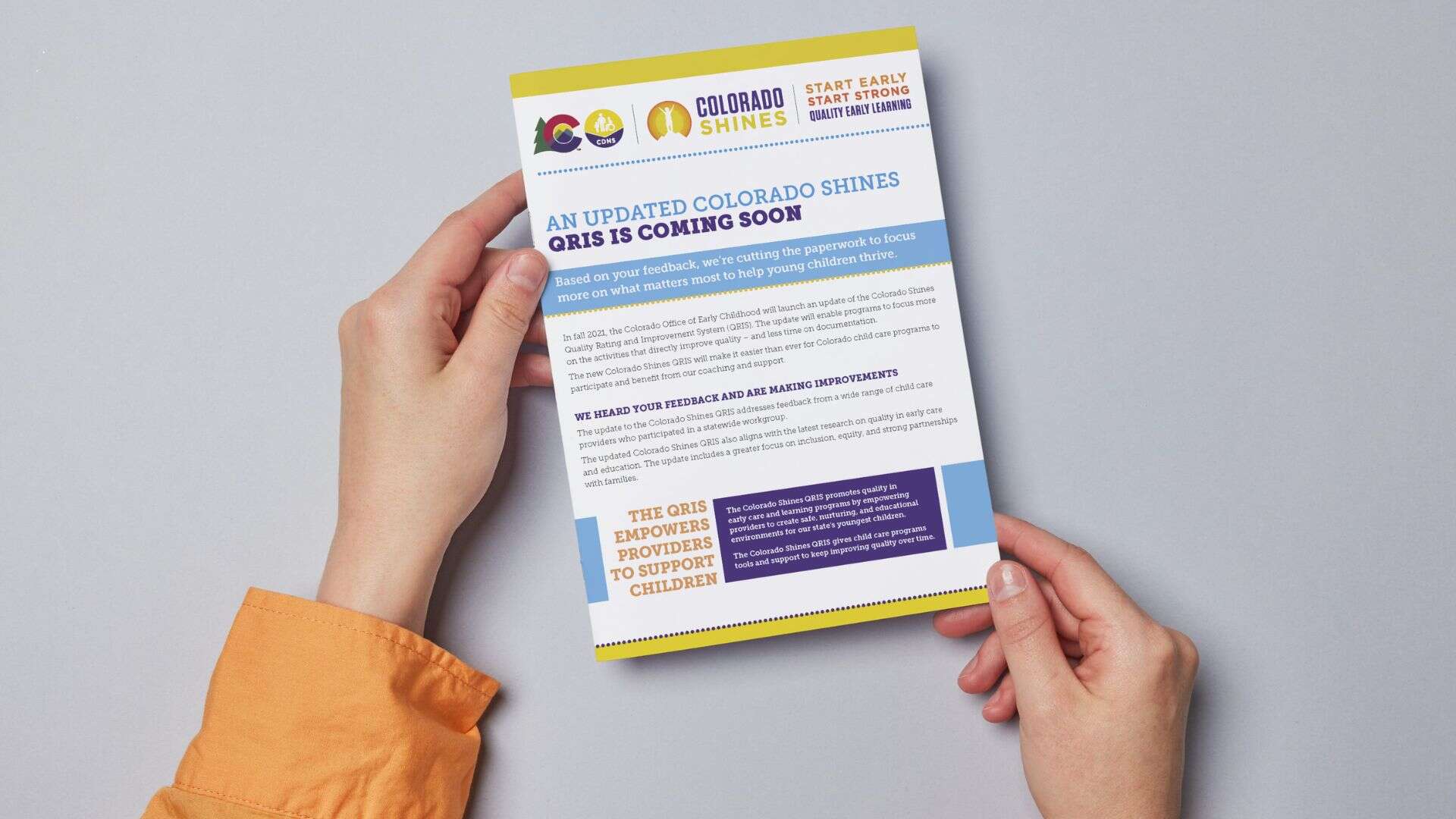
Evaluation findings showed that the videos and toolkit materials improved providers’ understanding of the Professional Development Guidelines and how to engage with the system. Providers reported greater clarity around available pathways, requirements, and next steps for advancing their careers.
The resources also made it easier for providers to navigate PDIS and related supports, increasing confidence in accessing tools, trainings, and opportunities. Overall, the work helped reduce barriers to engagement—making professional development feel more approachable, actionable, and relevant to providers across the state.


Launching Universal Preschool with Clear, Coordinated Communication
The Challenge
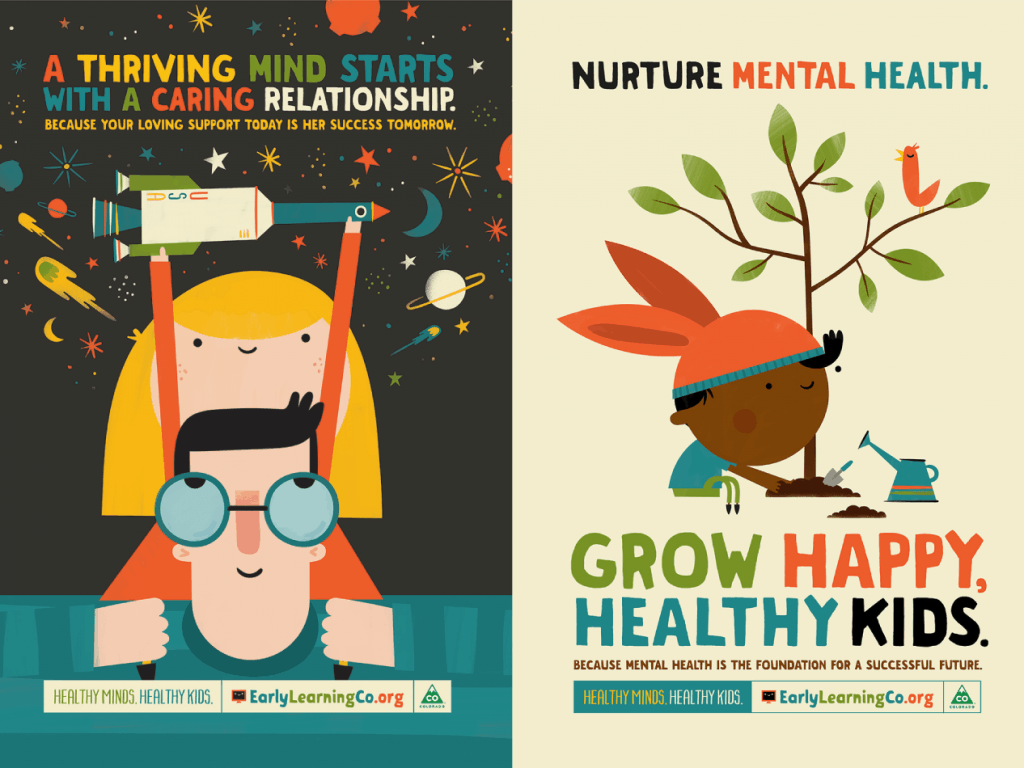
Colorado’s Universal Preschool (UPK) program launched as a major statewide effort to provide free, voluntary preschool access for children in the year before kindergarten. As a new and complex system, it required families, providers, and communities to quickly understand eligibility, enrollment, and how to participate.
Awareness gaps, confusion about the process, and variations in local implementation created friction at a critical moment. At the same time, the rollout carried significant visibility and scrutiny, as it was a top priority for the Governor and closely watched by legislators, stakeholders, and the media. The challenge was to deliver clear, consistent, and timely communication that built understanding, trust, and confidence—while driving enrollment during a high-stakes launch.
Our Approach
SE2 led communications strategy and messaging to support a clear, coordinated rollout of UPK across the state. This included developing plain-language messaging that simplified complex program details—helping families understand who qualifies, how to enroll, and what to expect.
SE2 worked to align messaging across audiences, ensuring consistency for families, providers, and community partners, even as implementation varied locally. Communications were designed to anticipate and address common points of confusion, reduce uncertainty, and build trust in the program.
Through this strategic approach, SE2 helped create a unified narrative for UPK—making a complex, high-profile policy initiative more accessible, understandable, and actionable for Coloradans.
The Impact
SE2’s work established a strong, strategic foundation for the Universal Preschool communications rollout. The client expressed confidence in the clarity, consistency, and usability of the messaging, noting that it provided a solid framework to guide communications across audiences and partners.
With aligned messaging and a coordinated approach in place, CDEC was better equipped to navigate the complexity of the launch—ensuring information could be delivered clearly and consistently during a high-visibility, high-stakes rollout.

Connecting More Families to the Food They Deserve
The Challenge
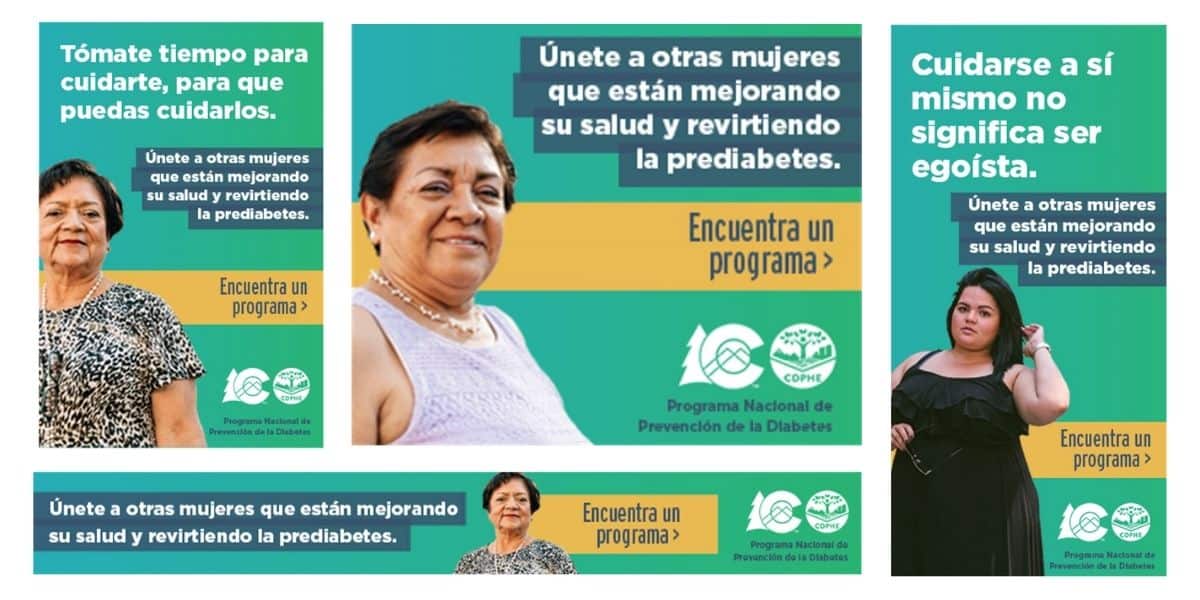
Food insecurity affects families across Colorado, yet participation in nutrition assistance programs is often limited by stigma, misinformation, and uneven access to trusted information. Families may not realize they are eligible for programs like free school meals or commodity food assistance, or they may avoid participation due to fear of judgment.
At the same time, schools, food banks, and community partners must deliver these programs while meeting complex standards and operational requirements. Food service workers and frontline staff need clear guidance and training to provide meals with consistency, dignity, and compliance.
The challenge was to increase utilization of food assistance programs for children and families while supporting the systems and workers responsible for delivering them—without reinforcing stigma.
Our Approach
Across Everyday Eats (CSFP), CDE’s Free School Meals, and Blueprint for Hunger, SE2 implemented a community-centered communications and outreach strategy focused on normalization, clarity, and trust.
For families, SE2 developed plain-language, culturally relevant messaging that reframed food assistance as a shared public good and emphasized that nutritious meals are something all kids deserve. Campaigns used inclusive visuals and affirming tone to reduce shame and make programs feel accessible.
SE2 paired mass and digital media with extensive community outreach, working through schools, community organizations, food banks, and local events to meet families in trusted, everyday spaces.
In parallel, SE2 supported workforce and system readiness by developing training materials and toolkits that translated program standards into clear, actionable guidance for food service workers and administrators. This alignment ensured that outreach to families matched on-the-ground program delivery.


The Impact
SE2’s work increased awareness and understanding of food assistance programs while helping reduce stigma around participation. Community-based outreach expanded reach to families facing language, access, or trust barriers, supporting more equitable utilization of school meals and supplemental nutrition programs.
At the same time, training and communications resources strengthened program implementation, helping food service workers deliver meals confidently, consistently, and with dignity. Together, this work helped ensure nutrition programs functioned as intended—supporting children’s health, learning, and long-term wellbeing.