Reclaiming the Power of Story: Reflections from the 2025 Colorado Health Symposium

In volatile times, stories protect, connect, and keep culture alive

This year’s Colorado Health Symposium, hosted by The Colorado Health Foundation, was more than a conference; it was a gathering of people working on the frontlines of health, equity, and justice across Colorado. It served as a space to strengthen strategies, challenge assumptions, and fuel the resilience needed for the work ahead.

The theme was appropriate: Fortifying the Movement in Volatile Times.

Symposium speaker Joy Reid, in conversation with Colorado Health Foundation President and CEO Karen McNeil-Miller, reminded us why this moment matters. Institutions may falter. Systems may fail. But communities continue to show up for one another, creating safe, healthy spaces where people can live, connect, and thrive.

Storytelling as Strategy 

SE2’s Telling the Truth with Care workshop, which I led with my colleagues Alvina Vasquez and Elizabet Garcia-Hernandez across three sessions, explored how to tell stories ethically and why it matters.

Ethical storytelling is crucial because stories shape perception, influence action, and can either reinforce harm or foster understanding. The sessions emphasized care for both the storyteller and the community, with key principles including centering people over agendas, seeking consent and collaboration, situating stories in social and cultural context, capturing layered identities rather than stereotypes, and using storytelling to build trust, understanding, and positive change.

Storytelling is never just about visibility. And it’s not a decorative add-on to research or programming. Done right, it drives change, helping people see themselves in the work, shifting not only what they feel but also how they act and connect.

The most powerful stories come from real people, but they must be told with intention and care.

“Story is the antidote to control. Story feeds the narrative.” – Joy Reid

When systems fail, stories protect.
They carry our truth when institutions can’t or won’t.
They clarify, connect, and keep culture alive.

A Call to Ethical Storytelling

At the Symposium, I left inspired by the work people across Colorado are already doing, and at times without resources, support, and for communities under attack. In communities everywhere, leaders are not just telling stories, they’re telling them ethically, urgently, and with care.

That matters. Because ethical storytelling isn’t about performance for power, it’s about honoring people. It’s about creating stories that are not just polished, but purposeful.

As our team shared in our session:

  • You’re already doing the hard and beautiful work of telling real stories in your communities. Stories rooted in care, identity, and truth.
  • In this moment, that work is essential. Systems are faltering, but stories hold. They’re how we look out for one another, how we preserve memory, share belonging, and shape what comes next.
  • Storytelling isn’t just a campaign tool. It’s resistance. It’s legacy. It’s the one thing no one can take from our communities when it’s done with care and purpose.

Or as we put it:

“When the system forgets us, the story remembers. In the absence of justice, our stories still speak.”

The Work Ahead

Now more than ever, it’s urgent to reclaim our narratives before they’re distorted, diluted, or erased altogether. Storytelling isn’t just personal, it’s collective. Together, we safeguard truth and ensure our communities remain visible on their terms.

The Colorado Health Symposium served as a poignant reminder of that truth. Seeing people from across the state share stories, strategies, and lessons was not just inspiring; it was fortifying.

Our movements aren’t held up by stories alone, but without them, the work risks being misunderstood, sidelined, or forgotten.

Because when we protect our stories, we protect our communities. And in volatile times, that may be the strongest tool we have.


Move Beyond Demographics: Communicate with Core Beliefs in Mind

How can shifting our focus from demographics to understanding values and motivations foster more meaningful conversations, even when discussing challenging topics? 

Perhaps never has this topic been timelier.  

More in Common’s session on Speaking to Values and Identities at The Communications Network’s ComNet24 last month challenged me to rethink how I approach and communicate perspectives outside my own.  

In our professional and personal lives, we often categorize people by race, sex/gender, age, or political affiliation.  From these labels, we make snap assumptions and conclusions about how someone might think, act, or navigate the world, which in turn shapes how we communicate with them.  

However, research from More in Common encourages us to look deeper — that real understanding goes beyond surface labels. Every person is different, why are we still only focusing on small parts of what makes someone human? 

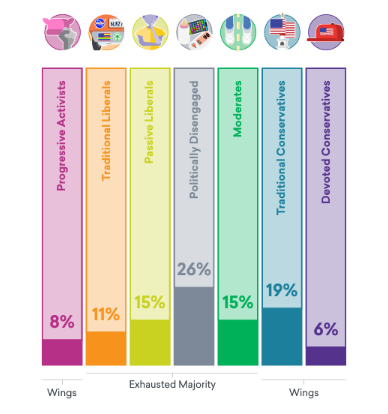
More in Common’s Hidden Tribes Study reveals that America’s divides stem from deeply held ideals rather than just race, politics, or socioeconomics. By focusing on values, motivations, and worldviews—referred to as “core beliefs”—we can connect more authentically. 

Core beliefs influence how individuals perceive the world and respond to social and political issues, providing a more nuanced perspective. Traditional demographic labels play a role in a person’s core beliefs, but they don’t tell the whole story. We can create communication that resonates authentically with each person’s lived experience better when considering their upbringing, current reality, and aspirations for the future. 

The study identifies five key dimensions that shape worldviews: 

  • Tribalism and group identification 
  • Fear and perception of threat 
  • Parenting style and authoritarian disposition 
  • Moral foundations 
  • Personal agency and responsibility 

These dimensions helped group Americans into seven “hidden tribes,” ranging from Progressive Activists to Devoted Conservatives. In the middle lies the Exhausted Majority—a group of ideologically flexible individuals, frustrated with the current state of the world but not strictly aligned with either “side”. This  majority in the middle may offer the most room to create change, if we can identify, understand and leverage their core values. 

More In Common’s Hidden Tribes  

>>> Discover more on the Hidden Tribe profiles <<  

>>Take the quiz to find your “Hidden Tribe”<< 

From ‘Who’ to ‘Why:’ Rethinking How We Understand and Engage Audiences 

To communicate more effectively, we need to shift our mindset from focusing solely on “who” our audience is to understanding “why” they think the way they do.  

For example, consider what values drive their beliefs about community and responsibility instead of assuming their stance on an initiative based on their race, age, or income. Are they motivated by a sense of fairness? Safety? Freedom? And how do these factors shape their views? 

Asking questions like these can create authentic communication that resonates with a person’s deeper concerns and priorities. 

Therefore, effective communication requires engaging with those who don’t share our views to better understand their core values, and bridge divides. If we only surround ourselves with like-minded individuals, we limit our understanding of others, making it challenging to connect with people who have different perspectives and experiences, people who could also potentially benefit from our work.  

And when we misunderstand or overlook core values, we risk mischaracterizing entire groups, leading to shallow communication or reinforcing divides. This creates what More in Common calls a “perception gap,” where we assume there is more division than actually exists, perpetuating stereotypes and further emphasizing disconnections. 

For instance, assuming that “traditional” values imply resistance to change can overlook potential motivations like stability or a desire for community. 

While focusing on values can potentially help bridge differences, it’s important to recognize its limits. When people hold very rigid or extreme views, emphasizing shared values might not just fall flat—it can be a non-starter, especially if those values clash outright with the core message.  

Values as a Bridge: Calling People In 

Starting with values can transform how we communicate and invite people into conversations that matter. A values-based approach creates opportunities to call people in—building dialogues that lead to sustained connections and change. 

People are complex, and so are their experiences. Whether crafting a campaign message or navigating a tough conversation, consider starting with values to foster understanding.  

By acknowledging the motivations that drive people, we can communicate in more genuine and impactful ways. In a world where it’s easy to talk right past each other, this kind of intentional, values-driven approach may be exactly what’s needed to bridge divides, build real connections and drive change towards a collaborative vision for the future


More than Ever, Authentic Community Engagement in Public Health Matters. Here’s Why

Rising vaping, alcohol abuse, food insecurity, gun violence, mental health disparities, and social isolation. Public health officials are working hard to find and communicate solutions for these pressing topics.  

Because these issues disproportionately affect low-income and minority populations, public health professionals must rethink how they can effectively each these communities and create long-term positive change.  

Increasingly, public health officials have turned to the most-impacted communities. After all, who best to innovate solutions than those closest to the issues?  

What does authentic community engagement look like?  

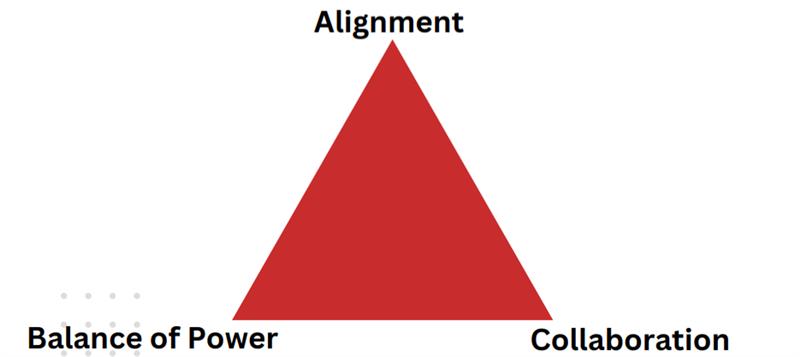
Authentic community engagement means more than public health entities simply surveying the community for their thoughts or allowing them to host events. It should aim to go past focus groups, or even just grants. The ideal version of these community partnerships should be community leaders and members at a shared table with officials. One way to model this could look like this:   

Graphic credit: Yu, E. (2022). Community engagement. American Public Health Association. 

Alignment  

For change to be sustained, communities’ values and behaviors must align with the solutions. Ensuring these align also ensures that a mutual investment is established to continue the work beyond any official public health partnership.  

It’s also important to align with communities on what is reasonable in terms of time, resources, and interest. Asking a community with limited leadership, volunteerism, or resources to take on a more prominent place in your partnership than they can reasonably sustain would not be aligned with the work.  

Balance of Power 

Successful community engagement should also balance power between communities and public health officials, with the ideal moving in the direction of community members. It’s not making room for communities at the table; it’s allowing them to create their own space.  

Collaboration  

The goal here is moving beyond community participation to community integration — from working for the community to working with communities as equal strategic partners.  

Ultimately this can be boiled down to the following quote. 

“What matters to community members matters the most.”  

Yu, E. (2022). Community engagement. American Public Health Association. 

Recently, we engaged with a youth LGBTQIA+ organization in a partnership that aimed to move beyond promotion or grant work. 

After digging into their social media and program work, we came up with specific ideas of what we thought might make sense for our campaign. But after meeting with them and listening to their priorities, our ideas seemed out of touch – because they were.  

These are the leaders, the folks doing the work, day in and day out, working firsthand with LGBTQIA+ youth.  

How can we engage with communities in our work?  

So how do we do it? The specifics around how to engage depend greatly on the work to be done, the community, and the resources available to do it. However, there are a few things to keep in mind while doing the work:  

  • Reduce barriers to participation.  
  • Ensure strategies are aligned.  
  • Create a culture of accountability, healing and trust and acknowledge, confront and work against power dynamics/ structures. 
  • Connect authentically.  
  • Be a vehicle to tell their stories for positive change.   

All these things have one thing in common: to release control. To truly engage with communities, we must release control over the outcome and listen to and let these communities lead.  

We must also connect authentically, consistently immersing ourselves in the issues and their work, not just as it serves our needs. Attending the events and coming to the table with a base knowledge of what they are all about and the power structures that oppose them are the first steps towards building the necessary relationships for community engagement.  

One of the most powerful, authentic, and successful ways we can do this in our work is through storytelling. We are storytellers who need stories. Stories about what’s going right and what may be going wrong to illustrate the issue.  

Why do we engage with communities in our work?  

“Do you understand what you intend to do and what you have the power to do?”  

-Jessica Mulcahy, MA + Emily Yu, MBA  

Yu, E. (2022). Community engagement. American Public Health Association. 

More importantly, beyond the how lies the why.  

Why is it important and valuable to prioritize marginalized communities in finding and implementing solutions to their public health issues? Because it challenges the status quo historically established against these groups’ autonomy. Because it makes the most sense and is just the right move. And frankly, its success can reverberate across governmental institutions.  

When we ask ourselves what we have the power to do when engaging with communities affected by the issues, the answer is quite powerful to imagine. When communities are trusted with their own solutions, trust is built, health equity is enhanced, and change is sustained, creating healthier communities overall.   

Recently, a campaign allowed us to meet unhoused youth at shelters statewide, asking for their experience for authentic messaging and feedback. Many of them spoke of being asked about their experiences as a step in the right direction. For some, it had been years of not feeling heard or valued by those outside of their community. Hearing their experiences firsthand provided us with knowledge that we literally wouldn’t have been able to find otherwise. And more importantly, it served as a great reminder of what is possible with this work.  

Authentic community engagement is more than just something to tack onto a campaign; it means giving those who feel voiceless the opportunity to be heard.  


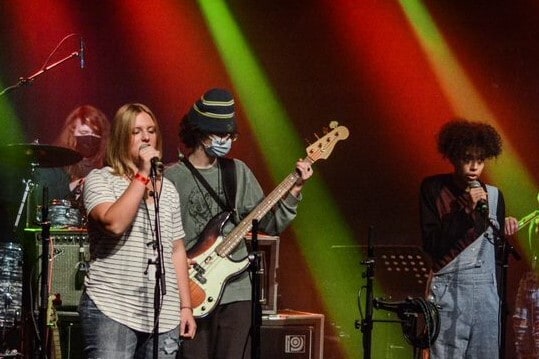
teens perform music at a concert

Forward Together Is Cultivating Connections Across Colorado

Recall for a moment being a teenager. The feelings of confusion around who you are, external forces telling you who you are “supposed to be,” and anxiety about well everything. It can be overwhelming. 

Now, consider what or rather who may have helped provide a bit of clarity during this incredibly confusing period. Maybe it was your grandparents or a family friend. It may have been a teacher or a coach.  Or perhaps you were able to bond with an adult at a local community organization or your boss at your first summer job. Whomever it may have been, finding community and forming connections with others can help us on our journeys more than we may think. And particularly at this critical age, it can quite literally be a lifesaver.  

Forward Together, an initiative launched by the Colorado Department of Public Health and Environment and Colorado Department of Human Services in 2020, seeks to help Colorado teens feel more connected to their peers, parents and other trusted adults. Research has shown that youth who are connected to positive relationships are less likely to smoke, drink, use other substances or have feelings of depression. Using the Developmental Relationship Elements Framework as a guide, the campaign has developed messaging and resources to help teens and parents form these strong connections.  
While getting the word out to Colorado youth and trusted adults on a macro level through traditional media efforts proved to be effective, the campaign strategized ways to get the campaign “on the ground” and integrated into local communities.  The team reached out to youth-serving organizations statewide, asking them to share what young people in their local communities needed to form valuable connections.   

The answers were as vastly diverse in project need as they were in geographic location across the state. Everything from music lessons in Fort Collins to youth-led murals in Leadville to outdoor exploration in Buena Vista was identified as “ways in” by these youth leaders to help teens in their communities form strong connections with mentors or peers. And after identifying 24 youth groups over the course of the year, Forward Together provided funding to bring these special mission-driven programs and projects to life through community-based organization sponsorships 

Here are three main takeaways we’ve had from our work:  

  1. Allow those doing the work to continue doing the work: Young people have said that advertisers are not always trusted sources of information for them, and, essentially, they can smell a canned public service announcement from a mile away. That means that while curated Snapchat advertisements and billboards are great for spreading the word, the campaign needed to get messages into the hands of these community’s trusted messengers, the youth organizations already doing everyday work with young people to help them form strong connections with peers and mentors. As the campaign aimed even further to reach marginalized groups of youth, it became clear these youth audiences would respond most effectively to fellow members and leaders of their specific communities. Mentees from BIPOC organizations such as Convivir, Spirit of the Sun and Muslim Youth for Positive Impact (MYPI) gave feedback to support this idea, with one young person from MYPI saying, “I got to talk to someone who had similar experiences as me, and she also went to high school in America as a hijabi, something that other adults in my life can’t relate to.” And young people from LGBTQIA+ organizations such as Four Corners Rainbow Youth and Inside Out Youth Services echoed these sentiments with one young person saying, “Rainbow Youth Center has the only safe adults in my life, and I can be myself, online or in person.” Our recommendation for those wanting to reach communities on a micro level: Hand messages over to these community leaders and empower them to disperse them in whatever ways they recommend. And to take it a step even further: Integrate community leaders in the development of campaign messaging from the start. That’s the campaign’s plan for the upcoming year, as they plan on collaborating with partners on more aspects of campaign development and implementation such as messages and greater creative control.
  2. Let young people lead whenever possible. A Developmental Framework Element, Sharing Power with young people has been proven to be very effective in developing strong and reciprocal relationships. Grantees continued to model this in their work as they brought projects like youth-led murals and block party concerts to life. We heard time and time again, from mentors and mentees alike, that letting young people take the lead makes the difference in their engagement with their projects and relationships with their mentors. As one mentor from Full Circle of Lake County said, “Kids love being represented and heard, and our mural is a great representation of that.”
  3. It works. Through Forward Together’s grantee program, the campaign has been able to directly reach over 1500+ Colorado young people and help them form strong connections with peers and trusted adults in their local communities. These are young people who may have seen Forward Together messaging in advertisements or on social media but were able to feel its purpose in a deeper way through these community efforts. The long-term effects of these projects and the campaign overall will not be able to be seen for quite some time (until we are able to survey these young people as adults). However, through the testimonials from young people and mentors, we can see that getting the campaign on the ground through direct community engagement and partnering with youth organizations as trusted messengers does work and strong connections are being formed.  

Over the past year, we have seen firsthand that community organizations across Colorado are affecting real change with young people and helping cultivate strong relationships. Relationships with young people matter and finding ways to create these relationships in local communities is paramount to their future and ours.  


Check out the Forward Together playlist spotlighting some of these projects Colorado Stories of Connection and check out the resource guide to help a teen in your life find organizations to get connected to. 


Solutions start with honest conversations. Tell us what you’re navigating now or building next. We’ll listen, ask questions, and help you think it through.

Schedule a complimentary conversation with one of our strategists.

Privacy Preference Center