The Challenge
For many Coloradans, nicotine use is intertwined with stress, mental health, identity, and long-standing routines. Quitting is rarely linear, yet public health messaging often treats it that way. Traditional cessation campaigns can unintentionally reinforce shame by focusing on advice, directives, or end results rather than lived experience.
At the same time, awareness of the Colorado QuitLine was high, but perceptions lagged. Dozens of focus groups and surveys conducted by our team told us that many people viewed it as a last resort. It was often seen as impersonal, clinical, or only for those who had already failed at quitting on their own. CDPHE needed a way to humanize the QuitLine, reduce stigma around nicotine use, and reflect the real complexity of quitting, especially for communities facing compounded stressors.
The challenge was not just to encourage quitting. It was to help people feel seen.
Our Approach
SE2 created the Colorado QuitLine Stories series to tell a different kind of story, one grounded in dignity, honesty, and collaboration.
Shot in a documentary style, the series centers participants as co-creators rather than subjects. Individuals were not scripted, coached, or shaped to fit a single narrative arc. Instead, they were invited to speak openly about their lives, their relationship with nicotine, and what quitting means to them on their own terms. Filmmaking choices prioritized presence over performance, allowing silence, reflection, and vulnerability to remain part of the story.
Visual storytelling played a critical role. Each film was grounded in places that mattered to the participant, including homes, neighborhoods, workplaces, and outdoor spaces. Environment became a quiet narrative device that reflected routine, stress, resilience, and change. These moments added emotional depth without instruction, voiceover, or persuasion.
Across nine short films, produced in English and Spanish, the series features diverse Coloradans. Participants ranged from lifelong tobacco users to younger people just beginning to recognize nicotine’s impact. Together, the films represent different products, different paths to quitting, and communities across the state. As a whole, the series challenges stigma and reframes the QuitLine as a human source of support rather than a last resort.
Distribution was intentional and respectful. Films were placed through targeted digital channels and timed dayparts, such as lunch breaks, to reach viewers in moments of pause and routine when reflection and connection are most likely.
The Impact
The Colorado QuitLine Stories series shifted the tone of cessation communications from directive to human. It invited viewers to see themselves reflected in the work.
Key outcomes included a reframed perception of the QuitLine as supportive, relatable, and non-judgmental, rooted in real people and real experiences rather than instructions or outcomes. The series drove strong emotional resonance and engagement through documentary storytelling that allowed complexity, vulnerability, and unfinished journeys to remain visible.
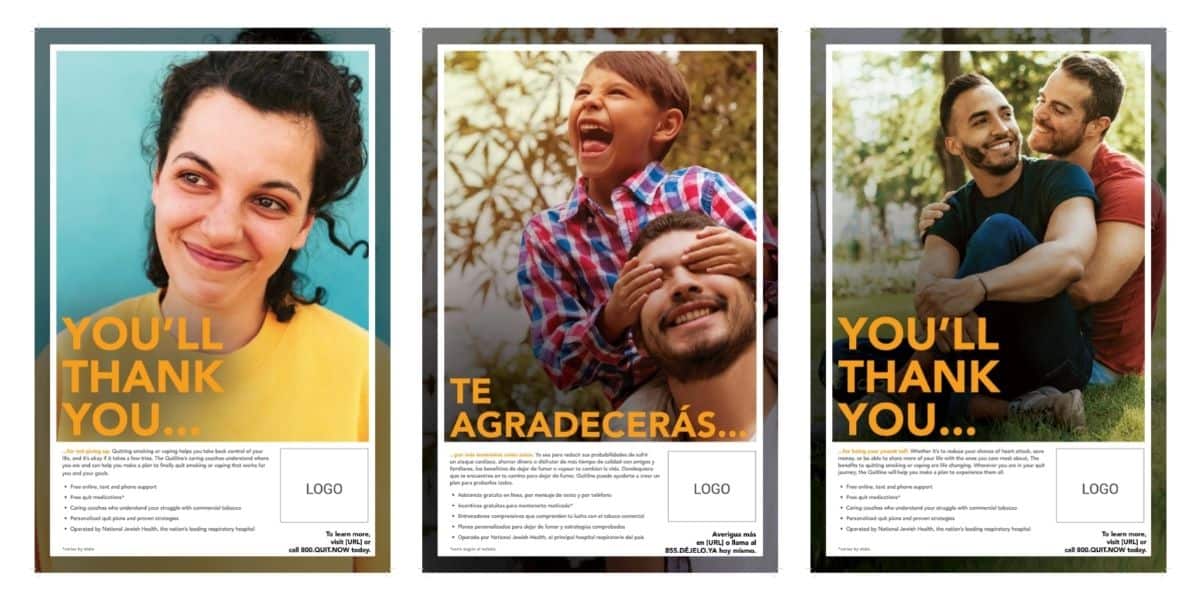
The work also strengthened relevance across diverse audiences through bilingual content and representation spanning age, geography, nicotine products, and readiness to quit.
In addition, the series became a durable storytelling asset that could be deployed across paid media, digital platforms, and partner channels, extending its impact beyond a single media flight.
Most importantly, the series helped normalize quitting as a lived experience. It showed that quitting can be complex, personal, and possible, especially when people feel seen, respected, and supported.