
Being the Change: A Weekend Neighborhood Cleanup
For months, I’d walk through my neighborhood, noticing the litter that collected along the sidewalks and in front of people’s homes. Candy wrappers, plastic bottles and cans, the occasional stray grocery bag—it was always there, and I always found myself wondering, Why doesn’t someone clean this up?
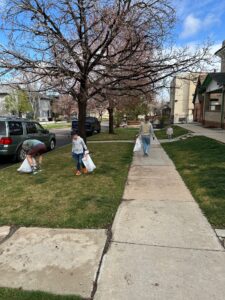 This weekend, I decided that someone could be me. And not just me—my niece, nephew, sister and husband joined in, turning what could have been a chore into something surprisingly fun and meaningful.
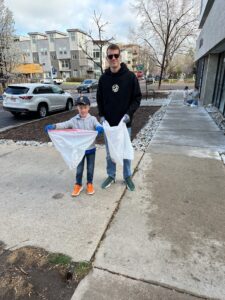
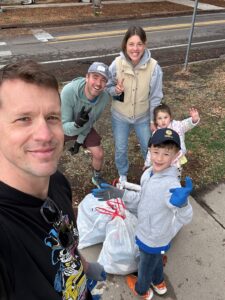 Armed with gloves, trash bags, and a sense of purpose, we spent a couple of hours picking up litter. It was simple, but the impact felt big. The streets looked better, of course, but more than that, it was a lesson in action. My niece and nephew got to see firsthand how small efforts add up, how being a good neighbor isn’t just about waving hello but about taking care of the place we all share.
 Beyond cleaning up the trash, we were also helping to create a new social norm for our community. When people see others taking pride in a clean neighborhood, it sets an example. It makes it more likely that others will step up too—or at the very least, think twice before littering in the first place. Change starts small, but when enough people see it happening, it becomes the new normal.
It’s easy to feel overwhelmed by problems bigger than us—climate change, pollution, all the chaos in the world. But this was one thing we could control. And in doing it, we felt just a little more hopeful, a little more empowered.
As we worked, a few neighbors stopped to say thank you. One even mentioned they might bring their own kids out to help next time. That’s the thing about small acts of change—they ripple outward. Maybe next time, there’ll be even more of us.
So if you’ve ever walked past a mess and thought, Someone should do something about that—maybe that someone is you. You might be surprised by how good it feels.


Move Beyond Demographics: Communicate with Core Beliefs in Mind
How can shifting our focus from demographics to understanding values and motivations foster more meaningful conversations, even when discussing challenging topics?
Perhaps never has this topic been timelier.
More in Common’s session on Speaking to Values and Identities at The Communications Network’s ComNet24 last month challenged me to rethink how I approach and communicate perspectives outside my own.
In our professional and personal lives, we often categorize people by race, sex/gender, age, or political affiliation. From these labels, we make snap assumptions and conclusions about how someone might think, act, or navigate the world, which in turn shapes how we communicate with them.
However, research from More in Common encourages us to look deeper — that real understanding goes beyond surface labels. Every person is different, why are we still only focusing on small parts of what makes someone human?
More in Common’s Hidden Tribes Study reveals that America’s divides stem from deeply held ideals rather than just race, politics, or socioeconomics. By focusing on values, motivations, and worldviews—referred to as “core beliefs”—we can connect more authentically.
Core beliefs influence how individuals perceive the world and respond to social and political issues, providing a more nuanced perspective. Traditional demographic labels play a role in a person’s core beliefs, but they don’t tell the whole story. We can create communication that resonates authentically with each person’s lived experience better when considering their upbringing, current reality, and aspirations for the future.
The study identifies five key dimensions that shape worldviews:
- Tribalism and group identification
- Fear and perception of threat
- Parenting style and authoritarian disposition
- Moral foundations
- Personal agency and responsibility
These dimensions helped group Americans into seven “hidden tribes,” ranging from Progressive Activists to Devoted Conservatives. In the middle lies the Exhausted Majority—a group of ideologically flexible individuals, frustrated with the current state of the world but not strictly aligned with either “side”. This majority in the middle may offer the most room to create change, if we can identify, understand and leverage their core values.
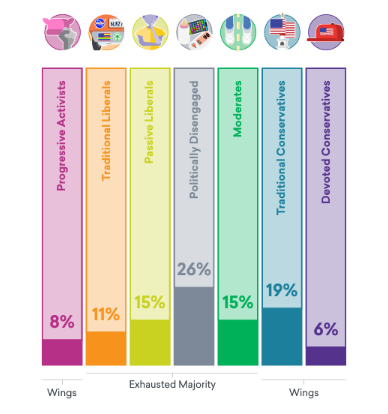 More In Common’s Hidden Tribes
>>> Discover more on the Hidden Tribe profiles <<
>>Take the quiz to find your “Hidden Tribe”<<
From ‘Who’ to ‘Why:’ Rethinking How We Understand and Engage Audiences
To communicate more effectively, we need to shift our mindset from focusing solely on “who” our audience is to understanding “why” they think the way they do.
For example, consider what values drive their beliefs about community and responsibility instead of assuming their stance on an initiative based on their race, age, or income. Are they motivated by a sense of fairness? Safety? Freedom? And how do these factors shape their views?
Asking questions like these can create authentic communication that resonates with a person’s deeper concerns and priorities.
Therefore, effective communication requires engaging with those who don’t share our views to better understand their core values, and bridge divides. If we only surround ourselves with like-minded individuals, we limit our understanding of others, making it challenging to connect with people who have different perspectives and experiences, people who could also potentially benefit from our work.
And when we misunderstand or overlook core values, we risk mischaracterizing entire groups, leading to shallow communication or reinforcing divides. This creates what More in Common calls a “perception gap,” where we assume there is more division than actually exists, perpetuating stereotypes and further emphasizing disconnections.
For instance, assuming that “traditional” values imply resistance to change can overlook potential motivations like stability or a desire for community.
While focusing on values can potentially help bridge differences, it’s important to recognize its limits. When people hold very rigid or extreme views, emphasizing shared values might not just fall flat—it can be a non-starter, especially if those values clash outright with the core message.
Values as a Bridge: Calling People In
Starting with values can transform how we communicate and invite people into conversations that matter. A values-based approach creates opportunities to call people in—building dialogues that lead to sustained connections and change.
People are complex, and so are their experiences. Whether crafting a campaign message or navigating a tough conversation, consider starting with values to foster understanding.
By acknowledging the motivations that drive people, we can communicate in more genuine and impactful ways. In a world where it’s easy to talk right past each other, this kind of intentional, values-driven approach may be exactly what’s needed to bridge divides, build real connections and drive change towards a collaborative vision for the future.

New Perspectives Highlight How to Use Positive Social Norms: Key Takeaways from SE2 Presentation with Montana Institute
Developing a positive community norms campaign can be challenging when you’re looking for new ways to communicate about evolving and critical issues like fentanyl and teen opioid misuse.
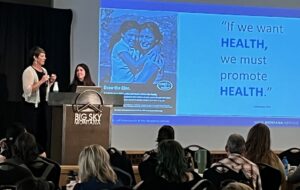
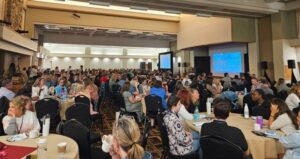
In July, I was honored to co-present at the Montana Summer Institute with the brilliant Sara Thompson, the Montana Institute’s director of communications and training. The summer event, which lasted four days in beautiful Big Sky, was attended by over 300 public health professionals from around the country, all seeking to learn more about using positive community norms to change behavior.
Highlighting positive community norms, also called social norms, can drive positive behavior change while discouraging risky behaviors.
Our presentation, The Question is the Answer, focused on asking new questions and finding new norms in the data to continue to promote the health and positives that already exist in the community.
Here are some of the key takeaways from the presentation and the approaches SE2 has used on a variety of issues, from youth prevention to childhood immunization, in behavior change campaigns across the nation.
- Identify the story you want to tell – what relevant positive norms exist in your community?
- What data is available to you? Are there any surveys that have been done recently, like a state survey?
- Based on the data available, what do you know? What hypothesis could be tested? What new questions could uncover new norms?
- What kinds of messages can you test that would highlight different norms?
- Descriptive norms, “what most people do,” describe what people actually do in a community or social circle. (Example: Most teens have never used fentanyl.)
- Injunctive norms, “what most people think or believe they should do or feel,” describe people’s attitude toward a protective behavior in a community or social circle. (Example: Most teens would support a friend who was trying to quit.)
- Bystander norm messaging says if most people perceive their peers support being active bystanders (in other words, taking action to protect others) then they may be more likely to personally support a peer.
- How are you reaching your intended audience in message testing? Can you partner with local organizations, like school districts, nonprofits, or community centers to distribute a survey?
- Finally, what new norms are appearing in your data?
A key issue is how to promote positive community norms without stigmatizing those who are outside the norm. On the issue of opioids, for example, stigma can be fatal by causing people to use opioids alone, which means no one is there to help if they overdose. Stigma can also deter people from seeking treatment.
One solution we discussed to avoid unintentional stigma was promoting positive bystander behavior. Try using bystander behavior like “x out of x teens support their friends in quitting x,” “x percent of teens would try and stop a friend from using x,” or “most teens would carry naloxone to protect a friend from overdose.” This creates a positive norm without stigmatizing those who have used or are using.
 Positive community norms campaigns can help discourage unhealthy behaviors like substance use or violence, and encourage people to change their behavior by correcting misperceptions about what is normal or typical in a group. These campaigns can also promote positive behaviors, attitudes, and the health and hope that already exists in a community.
For more than 25 years, the Montana Institute has been a leader on this topic, and we’re grateful for our long-time collaboration with the fantastic team there. Their insights have helped inform various prevention campaigns over the years, and we remain committed to sharing and educating people about the positive behaviors and attitudes that can save and change lives.


Why Are Men Presumed More Qualified Than Women in the Business World?
Yesterday the political world was shaken when President Biden stepped aside and decided to suspend his campaign to run for a second term. In his announcement he did not specify who he would support as a candidate. Political commentators spent nearly an hour speculating on whether he would back the natural and logical choice of the Vice President.
He later announced his support for Vice President Kamala Harris. The first Indian and African American woman to run for the high office. Questions of her experience and her qualifications quickly spread across the internet.
This reaction unfortunately is very normal, from the ground floor to the top floor, from large business to small business, women are presumed unqualified while men are presumed qualified. It seems asinine to question whether the woman who has been the Vice President for the past three and half years would not be qualified over someone who has NOT been the Vice President for the past three and half years.
In today’s progressive society, one would expect that gender equality has made significant strides, especially in the business world. However, an enduring bias remains, tipping the scales in favor of men when it comes to perceived qualifications. This bias isn’t just an issue of fairness; it has real-world implications on hiring practices, career advancement, and workplace dynamics.
How Bias Manifests in the Workplace
Hiring Practices
Studies have shown that identical resumes with male names receive more callbacks than those with female names. Even in industries where women have a strong presence, such as human resources, men are often preferred for leadership roles.
 Performance Evaluations
Men and women can perform the same task with similar outcomes, yet men are more likely to be rated higher in performance evaluations. This disparity often results in more promotions and greater earning potential for men.
Leadership Roles
Women make up nearly half of the workforce but occupy a much smaller percentage of executive positions. The “glass ceiling” is still very much in place, limiting the upward mobility of women in the corporate ladder.
The Impact of This Bias On Women
The presumption of male superiority affects women’s career prospects, earning power, and overall job satisfaction. Women may feel the need to work twice as hard to prove their worth, leading to burnout and job dissatisfaction.
On Organizations
Companies miss out on the diverse perspectives and innovative ideas that women bring to the table. A lack of gender diversity can result in a homogenous corporate culture, which stifles creativity and innovation.
On Society
When women are not given equal opportunities, society at large suffers. Gender equality in the workplace is not just a women’s issue; it’s a societal one. Ensuring that women are given equal opportunities benefits everyone by fostering a more just and equitable society.
Steps Toward Change
Awareness and Education
Organizations need to recognize and address the biases that exist within their culture. This starts with educating employees and management about unconscious biases and how they impact decision-making.
Mentorship and Sponsorship
Creating mentorship and sponsorship programs can help women advance in their careers. Having a mentor or sponsor who believes in their potential can make a significant difference in a woman’s career trajectory.
Policy Changes
Implementing policies that promote gender equality, such as flexible working hours, parental leave, and diversity hiring initiatives, can help level the playing field.
Accountability
Companies should hold themselves accountable by setting diversity and inclusion goals and regularly measuring their progress. Transparency in reporting these metrics can also drive change.
Conclusion
The presumption that men are more qualified than women in the business world is a deeply ingrained bias that requires concerted efforts to overcome. By acknowledging the problem and taking proactive steps, we can create a more equitable workplace where everyone has the opportunity to succeed.
Are you ready to take action? Join the conversation and be part of the change. Sign up for our newsletter to stay updated on the latest insights and strategies for promoting gender equality in the workplace.

Empathy is a Marketing Essential: Understanding Agricultural Communities and Beyond
Empathy and understanding are two of the most important qualities we can bring to marketing and life. When we take the time to connect with others on a deeper level, we can build stronger relationships, create more meaningful experiences, and ultimately achieve greater success.
Learning from the Colorado Farm Bureau


Rural Americans face stereotypes, prejudices, unique dynamics, and challenges like any community or group. SE2 has worked in these communities, spreading the word on mental health, ending stigma against addiction, and more. But to deepen our understanding, we brought in two experts from the Colorado Farm Bureau, Becca Edlund and Taylor (Lobato) Szilagyi.
Taylor, a former SE2 employee who grew up on a ranch in Center in the San Luis Valley, now holds the top staff position at the Colorado Farm Bureau.
Becca presented on the Colorado Agricultural Addiction and Mental Health Program.
As the largest agriculture association in Colorado, the Farm Bureau advocates for policy, offers leadership development, and supports farmers and ranchers living in the state.
I grew up on a cattle ranch, and I learned from the presentation that the vast majority of farms and ranches in Colorado are family-owned, like my family’s is.
Understanding Rural Coloradans
Farmers and ranchers face unique dynamics.
- They are family-oriented and community-motivated.
- Children face the stress of carrying on their parent’s legacies. They are often under scrutiny by their community, resulting in a fishbowl effect. Everyone knows everyone, and expectations are high.
- Money is often a hot topic.
- The average earnings for a family farm is $36,000 a year, which puts them below the national poverty line.
- In addition, they are at the mercy of volatile commodity prices (the prices at which raw materials or basic foodstuffs are bought and sold, such as the cost of cattle or fruit).
- They may have massive debt from purchasing equipment or even have to leverage their land and property to get operating loans. The legacy of debt falls not only on the adults but also on their children.
- Success is highly uncertain when your only paycheck comes once a year.
- Livelihoods depend on weather, water, health, and even public policy.
- Flooding, droughts, and diseases can kill crops and livestock.
- Who is in public office can change a farmer’s life.
- Unfortunately, insurance options are minimal, so if you lose your stock or something takes a turn for the worse, you’re often out the money.
- Creating prize-winning and profitable genetics (meaning a prize bull for breeding or a specific strain of corn) can take generations, and a single instance could destroy it.
- Work is hard and seasonal. Many workers travel with the season.
Bringing Much-Needed Resources
The suicide rate amongst farmers and ranchers is three and a half times higher than in the general population.
Rural and agricultural settings can be isolating and lonely, so when COVID-19 began in 2020, the program Becca described was created.
The Colorado Farm Bureau asked farmers what they needed and how to meet that need regarding mental health and addiction. The program offers farmers and ranchers six free mental health counseling sessions with a rural competent counselor who has completed a three-hour specific training.
Another critical resource for farmers has been online Alcoholics Anonymous, giving easy access that’s confidential and avoids the stigma of in-person sessions. Programs like these help address accessibility while continuing to spread awareness and fight stigma.
Applying Empathy Always
My biggest takeaway from the training wasn’t about rural people in particular; it was the emphasis on simply doing your best to understand others always.
“Always consider people’s challenges and boundaries in life. Stare at people and pick beneath the surface to understand them, ask questions, and see what their barriers to entry are,” Becca said.
Empathy is essential in marketing. By putting ourselves in our audiences’ shoes, we can better understand what motivates them, their challenges, and the solutions they seek. This allows us to create more effective marketing campaigns that resonate with our audiences.
But empathy is essential not just in marketing but also in life. When we take the time to listen to others and understand their perspectives truly, we can build stronger relationships, resolve conflicts more effectively, and create a more harmonious world.
One way to cultivate empathy is by sharing personal stories and experiences. Whether we are farmers or marketers, we all face unique challenges and struggles. We can create a more profound sense of connection and understanding by sharing these stories with others.
Let’s take the time to listen to others, share our stories, and show empathy and understanding in all we do, no matter who we’re talking to or about.


Turning Screens, Stages, and Stories into Youth Vaping Prevention Power
Challenge:
Teens in our state are vaping nicotine at twice the national average – the highest of all 37 states surveyed by the U.S. Centers for Disease Control and Prevention. While only 7 percent of high school students currently smoke cigarettes, one in four Colorado adolescents vapes nicotine – sometimes known as JUULing.
Then-Gov. John Hickenlooper of Colorado energetically engaged in the issue, eager to shed the state’s dubious distinction and protect the health of kids.
It was a disturbingly familiar story – an industry addicts youth through marketing tricks to hook the next generation of customers. It was time to amplify the voices of youth who refuse to be manipulated by these “vape tricks.”
Approach:
SE2 conceived of an event that would do more than fill an auditorium for a single day. It would give teens a visible platform to speak out — and generate immediate statewide attention around youth vaping.
Imagine 250 freshmen packed into the auditorium at Denver South High School, energized by performances from the drum line, cheerleaders, and dance team. More than 50 handmade posters dotted the crowd — #NoMoreVapeTricks, No Pods for My Squad, Don’t Cloud My Future. Former Gov. Hickenlooper joined student leaders at the podium, speaking not only to the teens in the room but to a throng of reporters and cameras capturing the moment.
The rally created strong earned media coverage and positioned youth as credible, authentic messengers in the prevention conversation.
At the same time, SE2 advanced a complementary multimedia prevention strategy designed to reach young people and the adults in their lives wherever they were — in schools, online, and in their communities.
Video storytelling played a central role. Separate from the event, SE2 developed compelling video content that elevated youth perspectives, addressed common myths about vaping, and modeled refusal and resilience. These videos were deployed across social media platforms and digital channels to sustain awareness and reinforce prevention norms beyond a single moment in time.
School-based advertising extended the message directly into student environments, placing prevention messaging in hallways and shared spaces where it could influence daily decision-making. Meanwhile, a customizable toolkit equipped local partners with ready-to-use materials — social posts, graphics, messaging guidance, and outreach assets — enabling consistent messaging across communities statewide.
Together, the live event and the broader multimedia campaign created layered reinforcement. The rally generated visibility and urgency. The videos, social media, school placements, and partner toolkit sustained reach and deepened engagement. By combining youth-led visibility with strategic media execution, SE2 helped ensure vape prevention messaging was not confined to one stage or one day — but echoed across platforms and throughout Colorado communities.


The Impact
Youth vaping in Colorado has declined sharply since its peak in the late 2010s. After reaching a statewide high of roughly 27 % of high school students reporting current vaping in 2019 — when Colorado led the nation in youth e-cigarette use — that rate dropped to about 16 % by 2021 and further to around 9 % by 2023–24.
While multiple factors contributed to this decline — including policy changes, pandemic disruptions, and broader public health action — targeted prevention work has played a role in shaping perceptions and norms. Efforts like statewide multimedia campaigns, youth-led events, and adult education helped reinforce the risks of vaping, correct misperceptions, and amplify protective messages in schools and communities. These activities, especially when paired with data-driven messaging and trusted voices, aligned with decreasing prevalence and contributed to a sustained downward trend in youth vaping.