Have you noticed that young women are increasingly sporting distractingly large diamonds on their engagement rings?
The secret is out: They’re often lab-grown.
For those who haven’t been jewelry shopping recently: Lab-grown diamonds are real diamonds. They’re just made in a lab, over weeks, not billions of years. They’re indistinguishable from natural diamonds, except for sometimes a microscopic laser inscription.
To be clear: These are not imitations like cubic zirconia. They are not artificial. These are completely real diamonds. But they’re much cheaper, allowing young couples with limited incomes a much more affordable way to commit – or to commit on a larger scale.
(The newlyweds might choose to spend the savings on a down payment on a house, for example. Houses still must be made by people, so remain very expensive.)
Lab-grown diamonds are also always “blood-free” and aren’t under the thumb of a global cartel.
What does this have to do with the price of tea in China – or, more specifically, writing?
A series of gotcha-style media coverage recently has exposed AI-assisted writing, complete with public shaming and (sometimes) denials.
Certainly, published work (articles, columns, books, academic papers) should be transparent about who or what made it, whether that includes ghostwriters, researchers, hands-on editors, inspiration from other works, or AI assistance. My guess is a lot of writing today has origins as complex and multifaceted as my genealogy, as Ancestry analyzed.
But for the casual reader, what matters more than what went into writing is what comes out: Is it engaging, insightful, accurate (if claiming to be non-fiction), enlightening and/or original?
Hallucinations are fine if you’re writing fiction. If you’re not, check every quote and every footnote. Twice.
AI helps people with great ideas and deep subject-matter expertise but little writing experience present their ideas in ways that engage audiences they might never otherwise reach. They can now just speak into their smartphone and then ask AI to turn the transcriptions into a well-crafted piece.
You could say then it democratizes publishing. Wealthy and famous people have always relied on ghostwriters to turn their stories and thoughts into prose. Now everyone can access writing assistance for free.
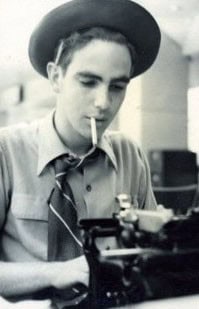
Predictably, the loudest voices against AI-assisted prose are the people who make their living writing and editing – essentially a very poorly paid, long-suffering, ink-stained cartel.
I feel for them, because I was one of them. I have ghostwritten far more words than I have published under my byline.
But time marches on and we all must adapt to technology, or we’re just modern-day Luddites, destroying the machines we fear instead of figuring out how to use them to our advantage.
If AI helped with your new book, give a shout-out to your pal Claude in the acknowledgments. If an outlet requires that you disclose, by all means disclose. And if an outlet prohibits AI assistance, don’t use AI or find a different place to publish. Or just self-publish an article like this.
Aim for good writing, no matter how you create it.
If the writing is lab-grown but scores highly on clarity, then it’s high-quality writing. Full stop.
Author’s note: I wrote this piece on a Google Doc, with Grammarly running in the background, and then sent it to my brother Chris Anderson (the best writer I know) for feedback. I found his comments irritating, but addressing them improved the piece greatly. Happy now?