The Challenge
In Colorado, car theft isn’t just a crime statistic—it’s a disruption to people’s lives, routines, and sense of safety. In 2023 alone, more than 30,000 vehicles were reported stolen statewide, putting Colorado among the highest per-capita auto theft rates in the country. Yet many Coloradans still don’t take simple actions that could prevent it.
CATPA (Colorado Auto Theft Prevention Authority), an effort of the Colorado Department of Public Safety, needed a campaign that could break through the noise, shift mindsets, and drive everyday behaviors like locking up, hiding valuables, and parking smart.
Our Approach
We leaned into emotion to spark action —and grounded it in data.
Before developing creative, we conducted robust statewide polling to understand how Coloradans perceive the risk of auto theft and what behaviors they were (or weren’t) taking to prevent it. The research revealed distinct audience segments with varying levels of awareness, perceived vulnerability, and motivation to act.
These findings became the foundation of the campaign strategy.
We created audience personas that reflected real-world attitudes and behaviors—then tailored messaging to address each group’s specific barriers and misperceptions. Some needed a wake-up call about risk. Others needed to know prevention was simple and worth doing.

The Impact
The campaign didn’t just make an impression—it changed behavior.
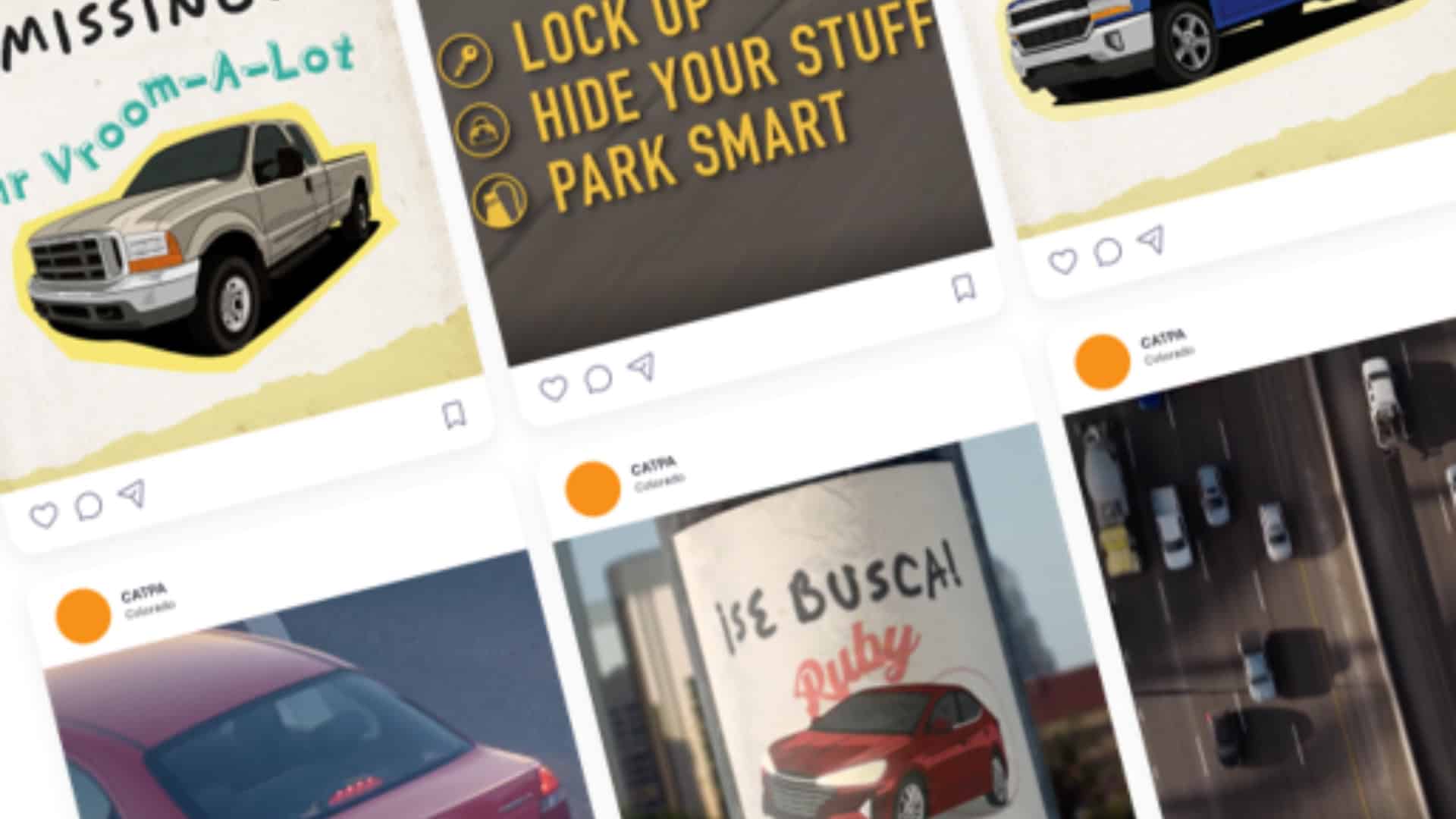
By tapping into emotion and pairing it with clear, doable actions, the “Missing” campaign motivated thousands of Coloradans to take steps to protect their vehicles.
In just five weeks the “Missing” campaign:
- Generated over 4.9 million impressions and 149,000 clicks
- Drove nearly 2,000 people to act—visiting pages with theft prevention tips or victim resources
- TikTok extended reach to younger audiences, with over 1.3 million views of campaign videos and over 90% view-through rate
The emotional storytelling, combined with clear prevention steps, helped Coloradans connect the dots between how they feel about their cars—and how they act to protect them.